Starting Your Karate Journey: Embrace the Beginner’s Mind

In the dimly lit corner of every traditional dojo, there is often a corner where new students wait, nervously adjusting their fresh, stiff white belts. Their eyes dart between the fluid movements of senior students and their own uncertain reflections in the mirror. Every person in that dojo – from the newest white belt to the most seasoned black belt – shares a common beginning: that first step onto the mat.

Lao Tzu told us that, “the journey of a thousand miles begins with a single step”, and in karate, that step often comes with a mix of excitement, uncertainty, and perhaps a touch of fear. It’s a profound moment of vulnerability, admitting that you know nothing and are ready to learn. This humility, rather than being a weakness, becomes the foundation of your entire martial arts journey.

Many newcomers to karate are surprised to learn that some of the most respected masters in history began their journeys with similar uncertainties. Gichin Funakoshi, often called the father of modern karate, started as a sickly child looking to improve his health. Mas Oyama, known for his incredible physical feats, was once a beginner struggling with basic techniques. These masters weren’t born with their skills – they developed them through years of dedicated practice, starting from the very beginning, just like everyone else.

One of the most common misconceptions about karate is that you need to be naturally athletic, flexible, or coordinated to begin. This couldn’t be further from the truth. Karate is a journey of personal transformation that meets you exactly where you are. Whether you’re young or old, athletic or sedentary, confident or shy, the dojo welcomes all who come with an open mind and willingness to learn.

The beauty of karate lies in its scalability. Every technique can be modified and adapted to suit your current ability level. As you progress, these modifications gradually fall away, replaced by more refined movements. This progressive approach ensures that everyone can practice safely while continuously challenging themselves to improve.

The Physical Journey Begins

The first few months of karate training typically focus on fundamental movements: basic punches (tsuki), kicks (geri), and blocks (uke). These foundations might seem simple, even repetitive, but they contain profound lessons that even advanced practitioners continue to explore decades into their training.

Consider the front punch (oi-zuki). At first glance, it appears straightforward – extend your fist forward with power. However, within this simple movement lies a complex interplay of body mechanics:

  • Proper weight distribution
  • Hip rotation
  • Shoulder alignment
  • Wrist positioning
  • Breath control
  • Mental focus

Each of these elements offers a lifetime of study and refinement. As you progress, you begin to understand that mastery isn’t about learning more techniques but about deepening your understanding of the basics.

Beyond the Physical: The Mental Transformation

While the physical aspects of karate are immediately apparent, the mental and spiritual development often catches newcomers by surprise. The dojo becomes a laboratory for self-discovery, where students learn as much about themselves as they do about martial arts.

The regular practice of karate naturally develops:

1. Mental Discipline – training requires focus and dedication. The simple act of showing up consistently, especially when motivation wanes, builds mental strength that extends far beyond the dojo.

2. Emotional Control – learning to control your body under pressure naturally leads to better emotional regulation. The calm focus required during kata and kumite becomes a valuable skill in daily life.

3. Self-Confidence – as you overcome challenges and master new techniques, you develop a quiet confidence that comes from genuine achievement rather than external validation.

4. Mindfulness – the intense focus required in karate training naturally promotes mindfulness. Students often find that their practice becomes a form of moving meditation.

The Social Dimension

One of the most unexpected aspects of karate training is the strong sense of community that develops. The dojo becomes more than just a place to learn martial arts — it becomes a second home where lasting friendships are forged through shared experiences and challenges.

This social aspect plays a crucial role in development. Training partners become mirrors, reflecting our strengths and weaknesses. Senior students provide guidance and inspiration, while helping newer students reinforces our own understanding. The relationship between teacher (Sensei) and student becomes a model for respectful learning that extends into other areas of life.

Embracing the Beginner’s Mind

In Japanese martial arts, there’s a concept called “shoshin” (初心), which translates to “beginner’s mind.” It refers to having an attitude of openness, eagerness, and lack of preconceptions, even when studying at an advanced level. This concept is crucial for understanding that being a beginner is not just a temporary state to be overcome, but a valuable mindset to maintain throughout your journey.

Every time you learn a new technique, face a new challenge, or train with a different partner, you can embrace the beginner’s mind. This approach keeps your training fresh and allows for continuous growth, even after years or decades of practice.

The Never-Ending Journey

As you progress in karate, you begin to understand that the path has no end. Each achievement opens the door to new challenges, deeper understanding, and further growth. The black belt, often seen as the ultimate goal by beginners, is really just the beginning of a deeper study.

This endless potential for growth makes karate such a powerful vehicle for self-discovery. There’s always another layer to uncover, another aspect to refine, another challenge to face. The journey becomes not about reaching a destination, but about who you become along the way.

Starting Your Own Journey

If you’re considering beginning your own karate journey, remember these key points:

1. Everyone Starts as a Beginner

No matter how skilled someone appears now, they once stood where you stand. Every expert was once a novice.

2. Progress at Your Own Pace – your journey is unique to you. Don’t compare your chapter one to someone else’s chapter twenty.

3. Embrace the Process – focus on small, consistent improvements rather than dramatic transformations. The joy is in the journey, not just the destination.

4. Stay Open-Minded – be ready to challenge your assumptions and learn from everyone around you, regardless of their rank or experience level.

5. Commit to Consistency – regular practice, even if brief, yields better results than sporadic intense training.

The journey of karate is ultimately a journey of self-discovery. Through consistent practice, mindful study, and patient progression, you’ll discover capabilities you never knew you had. You’ll face challenges that seem insurmountable, only to overcome them through persistence and dedication.

Remember, every master was once a beginner. The only difference between them and those who never achieve mastery is that they began the journey and stayed the course. Your own journey of self-discovery through karate awaits. The first step is simply showing up and being ready to learn.

Take that step. Tie on that white belt. Join the generations of practitioners who have discovered that karate is not just about learning to fight – it’s about learning to live with purpose, dignity, and continuous growth. Your journey begins now.

12 Effective Techniques to Master Your Kata

Standing in the dojo, facing a new kata for the first time, it’s natural to feel a mix of excitement and apprehension. Many practitioners find themselves worried about making mistakes, feeling self-conscious about their coordination, or concerned they won’t grasp the sequence quickly enough. These feelings are a completely normal part of the learning process – even the most accomplished martial artists were once beginners who had to learn their first kata. What sets successful practitioners apart isn’t natural talent or immediate understanding, but their approach to learning and their willingness to embrace the journey. The journey of learning kata is both an art and a science, requiring dedication, patience, and systematic practice.

This article summarises twelve proven methods for learning kata, each offering a different pathway to understanding these complex forms. Whether you’re a visual learner, prefer hands-on practice, or thrive on analytical approaches, these techniques can be combined and adapted to suit your individual learning style.


Traditional Step-by-Step Breakdown

Start by learning the basic sequence without power or speed.

Break the kata into smaller sections or combinations.

Practice each section until you can perform it smoothly before moving to the next.

Gradually connect the sections together.

Follow Along Learning

Train with an instructor who performs the movements while you follow.

Use video resources as supplementary aids at home.

Focus on getting the general pattern first before refining details.

Mirror Training

Practice in front of a mirror to check your form.

Pay attention to stance details, hand positions, and overall alignment.

Use the mirror to spot and correct common mistakes.

Line by Line Method

Learn the kata by directional changes or “lines” of movement.

Master each directional sequence before moving to the next.

Focus on proper turning and transitional movements.

Bunkai – Application Based Learning

Learn the practical applications of movements as you learn them.

Understanding the purpose helps you to memorise the sequence.

Practice with a partner to better grasp the techniques.

Visualisation Techniques

Mentally rehearse the kata.

Create memory aids like counting patterns or movement sequences.

Visualise opponents’ positions and attacks.

Video Recording

Record yourself performing the kata.

Review the footage to identify areas needing improvement.

Compare your performance with reference examples.

Pattern Walking

Practice just the footwork pattern without techniques.

Focus on proper stances and transitions.

Add upper body movements once the pattern is memorised.

Slow Motion Practice

Perform the entire kata in slow motion.

Focus on perfect form and breathing.

Gradually increase speed as proficiency improves.

Teaching Others

Explaining the kata to others helps reinforce your own understanding.

Break down complex movements for others.

Answer questions about details you might have overlooked.

Kata Journaling

Maintain a structured timeline of your kata progression by documenting each training session with specific details about what you practiced, challenges you encountered, and breakthroughs you experienced.

Create detailed technical breakdowns of each kata section, including notes on stance details, hand positions, weight distribution, and breathing patterns.

Use your journal to track feedback and corrections from instructors.

Kata Mapping

This spatial representation helps practitioners understand the overall flow and rhythm of the kata.

Gain deeper insights into the internal mechanics and energy flow of the kata.

Mapping out opponent positions, attack angles, and defensive responses transforms abstract movements into meaningful martial applications.


Learning a new kata is a journey that becomes more rewarding as you develop your own unique approach to mastering these traditional forms. The twelve methods outlined above aren’t meant to be used in isolation – they form a toolkit from which you can select and combine techniques that resonate with your learning style. Some days you might focus on slow-motion practice and visualisation, while others might call for pattern walking and mirror training.

Remember that every martial artist’s journey is different. What works best for one practitioner might not be the optimal approach for another. The key is to remain patient with yourself and maintain consistency in your practice. Start with methods that feel most natural to you, then gradually incorporate others as your confidence grows. Through regular practice and the systematic application of these learning techniques, you’ll find that even the most complex kata become accessible and meaningful.

Most importantly, don’t be afraid to make mistakes along the way – they’re an essential part of the learning process. Each training session, whether it feels successful or challenging, contributes to your growth as a martial artist. Trust in the process, stay dedicated to your practice, and remember that every master once stood where you stand now, learning their first kata one step at a time.


Understanding the Importance of Pinán Kata in Karate

In the world of traditional karate, few training sequences have shaped the development of practitioners quite like the Pinán kata series. These five fundamental forms, developed by Okinawan master Ankō Itosu in the early 1900s, revolutionised how karate was taught and continue to serve as cornerstone training methods in dojos worldwide.

The creation of the Pinán kata marked a pivotal moment in karate’s transition from a secretive martial art to a standardised educational system. Ankō Itosu, recognising the need for a more structured approach to teaching, ingeniously distilled complex movements from advanced kata—particularly the renowned Kusanku (Kanku Dai)—into more digestible sequences.

The name “Pinán” (平安), meaning “peaceful mind” in Okinawan, reflects the kata’s intended purpose: to provide students with a clear, systematic path to mastering karate’s fundamental principles. In other karate styles, these same forms are known as “Heian,” the Japanese pronunciation of the same characters.

The Pinán series consists of five progressive kata:

  • Pinán Shodan introduces basic stances and blocking techniques, establishing a strong foundation in fundamental movements.
  • Pinán Nidan builds upon basic techniques while introducing more complex combinations and transitional movements.
  • Pinán Sandan emphasises quick directional changes and introduces more advanced striking techniques, challenging students to maintain proper form during rapid transitions.
  • Pinán Yondan brings in more sophisticated defensive manoeuvres and combination techniques, often incorporating movements that simulate responses to multiple attackers.
  • Pinán Godan, the final form, integrates advanced techniques and concepts from the previous kata while introducing unique movements that prepare students for higher level training.

Today, the Pinán kata serve multiple crucial functions in karate training. At the most basic level, they provide a structured curriculum for developing proper technique, stance, and body mechanics. Each kata builds upon the previous ones, creating a comprehensive system for physical development and technical proficiency.

Beyond mere physical technique, these forms teach essential concepts of timing, distance, and angle of attack. Through regular practice, students develop a deeper understanding of martial principles such as economy of movement, power generation, and strategic positioning.

The Pinán series also serves as a bridge between basic training and advanced application. While the movements may appear simple, they contain layers of sophisticated applications (bunkai) that reveal themselves as practitioners advance in their training. This makes the Pinán kata valuable not just for beginners, but for advanced students who continue to discover new depths in these seemingly simple forms.

The genius of Itosu’s Pinán system lies in its adaptability. These katas are practiced across numerous karate styles, including Shotokan, Wado ryu, Shito ryu, and various Shorin ryu schools. While the specific details may vary between styles, the core principles remain consistent.

In modern dojos, the Pinán kata continue to fulfill their original purpose: providing a systematic method for developing strong fundamental skills while preparing students for more advanced training. Their endurance as training tools speaks to both their effectiveness and the wisdom of their design.

As karate continues to evolve in the 21st century, the Pinán katas remain relevant, offering practitioners a time-tested method for developing physical technique, mental discipline, and martial understanding. They stand as a testament to the importance of systematic training and the enduring value of traditional teaching methods in modern martial arts practice.

Whether practicing for self-defence, competition, or personal development, students of karate continue to find value in these century old forms, proving that Anko Itosu’s innovative teaching method remains as relevant today as when it was first developed.

Reishiki

“Bowing is an expression of gratitude and respect”

Gichin Funakoshi

JosiahReishiki comes from two Japanese words, the first is ‘Rei’ which can be interpreted as a bow, courtesy, thanks and appreciation.  The second word “Shiki” can be interpreted as a ceremony.  The word Reishiki can therefore be interpreted as ceremonial manners or etiquette.
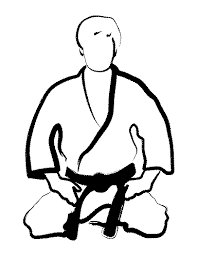
The Reishiki procedure that is observed at the beginning and the end of the class is as follows:

  • Ritsu rei – standing bow to Sensei.
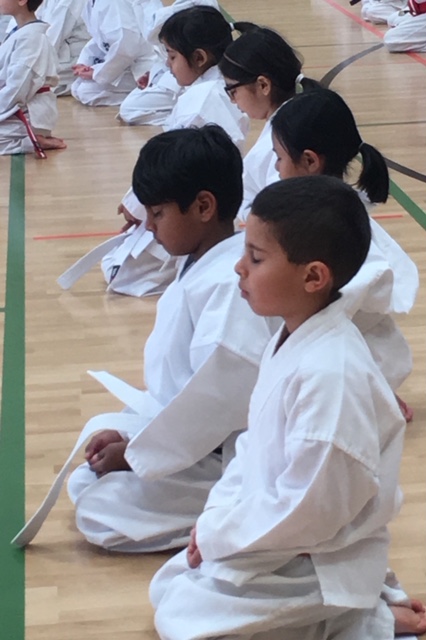
  • Seiza – Sensei sits (formal sitting position), the class sits in seiza facing shomen and prepares for class.
    • The head student (Sempai) calls out:
    • Mokuso – which means close your eyes and clear your mind  (Silence for approximately 1 minute or more)
    • Kaimokubowing 1meaning open your eyes or “Mokuso Yame” meaning finish meditation.


    • Zarei – next the class performs three zarei or sitting bows when the head student calls out –
    • Shomen ni rei – meaning bow to the front of the dojo.  After this the Sensei will turn around and face the class.
    • Sensei ni rei – meaning bow to the teacher. As the class bows to the teacher the teacher will return the bow.  As a student bows they recite “Onegaishimasu” which can be interpreted to mean please teach me.
    • Otagai ni rei – meaning bow to each other. Both the teacher and the students will bow to each other at the same time.  This is to acknowledge that we are all students of the art of Karate do.
  • At this point the Sensei will indicate that the class should stand up and training will begin.

After the training session is finished, the above procedure is followed again except in the Sensei ni rei section, the students bow and recite “Sensei arigato gozaimasu” which means thank you.

Dave Hatte – Sensei arigato gozaimasu.


We Don’t Tolerate Bullies!

We define bullying  as repeated aggressive action against another person.

A popular ideology is to work with both the bully and the victim to create a mutual respect, a bonding that will often dismiss the affect of the bullying on the victim and focuses on the state of mind of the bully.

Parents are reminded that bullies are often victims themselves and need to be understood and often this is true, however ‘healing’ the bully should not be at the expense of the victims safety, peace of mind and assurance children need to learn that it is okay to stand up for themselves.

Below are a few examples of bullying that have happened in schools to give you an idea of the type of bullying we are talking about.  It is often not an extreme attack,  bullies tend to pick away at the fibre of their victims over a period of time with repeated often unnoticed acts of aggression.


Thomas is overweight, asthmatic and short sighted.  During the summer months his allergies flair up and he is the sole reason for the nut ban at his school.  Thomas loves to read, and reads at a level well above his eight years but he doesn’t run well.  The other kids groan when he is put on their teams.  He spends his lunch times between the library and the empty friendship bench.

Jack and Aidan don’t like books so much.  Jack is good at making up names and rhymes  to torment Thomas.  Aidan echoes Jacks voice, one on either side of  Thomas as they cross the quadrangle to class in the morning.  Then they may unecessarily squeeze past Thoma’s desk during class and accidentally knock his books to the ground.

Last Tuesday they followed Thomas into the boys room and threw wads of wet paper over the stall door, while taunting and shouting names.  It was towards the end of lunchtime and some other boys joined in.  A few climbed up onto the toilet in the stall next door to peer over the wall to witness Thomas crying with clumps of toilet paper stuck to his hair and clothes.  It  continues for ten minutes, it isn’t stopped until the bell rings.  Thomas waits until the bathroom is silent before cautiously leaving the stall. He pulls the paper from his clothes and hair and  puts them in the bin.

toilet 1

When he returns to class the other boys snigger,  his teacher scolds him for being late, and asks Thomas to stay after class.  Later when Mr Reilly asks why Thomas was late from lunch Thomas says nothing and stares at his feet.

Are the other boys giving you a hard time?’ Thomas nods his head and talks into his chest ‘they call me names sometimes’

‘Anything else?’

Thomas shakes his head. ‘Not really’

‘Well names aren’t nice, maybe you should tell them how you feel, that it hurts your feelings. Sometimes it is helpful to not respond, you know pretend you didn’t hear them, that it doesn’t matter?’

Liane is playing a game of mixed soccer on the oval at lunch time. She scores another goal and two boys on the other team chase her down.  One trips her over, the other grabs her Bully 4so she falls into him and he punches her across the face.  She falls to the ground as the other boy takes an opportunity to kick her hard in the stomach. The teacher on duty didn’t see 9 year old Lianne a being taken to the staff room by two of her teammates.  Her parents are called, the boys are ‘spoken’ to and sent home with a bad behavior note.


Eleven year old Alistair walks ten minutes home from school everyday.  For the last two weeks  Paul, Alan and Ted wait at the school gate and take it in turn to punch him hard in the arm  and sometimes a flick across the back of the head.  Teachers and parents are always close by.  Alistair has bruises on his arms.  He prayers everyday for rain so that he doesn’t have to walk home, constantly nagging his mum to pick him up he complains that he is too tired to walk home after school.


So What happens at school?

School policies across the country vary, but the majority  promote a no tolerance to bullying,  however it is often reported that little is done or can be done within the limited framework and resources across our schools to affect a serious change.  It is true that often the bully is hurting and needs to be healed but this should never be to the detriment of protecting and caring for the bullies prey.  Situations where the victim is made to shake hands with his bully and not acceptable.  It is not okay to tolerate being treat abusively by another human, not matter the age or theatre.  Often times bullies are created at home, so there is little a school can change without the support and cooperation of the bullies parents.

Schools  do not always have the capacity to deal with every personality defect that is presented to them.  Bullies need help to see the error of their ways this is true, and I support the schools in their programs that try to do this but in the meantime, Alistair is still getting punched in the arms every day when he exits the school gate, Liane doesn’t play sports on the oval anymore, Thomas has been getting a lot of tummy aches lately.  All while the bully, the cause of their miseries carries on with their life as normal.

How Karate for Life can Help?

It is true that there is no first strike in Karate.  Karate students are taught this from the beginning.  The first move of all our Kata is a block, a defense against an attack.  Karate is not about kicking and punching it is about becoming who you are and feeling confident enough to say NO! Children do not have to tolerate being hit or abused by anyone not even another child.  The few examples giving above are stories we hear again and again in the dojo.

When asked about what action was taken at school all too often a parent will roll their eyes, shrug their shoulders in repeated disbelief and reply ‘nothing’.

You have seen the ads; karate builds confidence, self-respect, self-esteem, self-reliance and self-awareness.  There are a lot of ‘self’ in there because of the individual nature of karate training,  each student  develops at their own pace.

So they come to us, either through a referral,  or parents  desperately winging it looking for a solution  happen to stumble across our dojo.  Sensei Don our principal instructor lets his students breathe, to be who they are and to stand up and be counted.  No one is left in the background, every single person in that dojo is shown the respect and friendship they deserve.  This I believe is the true cure for bullying.  When people believe that they are worthwhile,  they don’t  act like arseholes to get the attention, respect and approval they crave.  On the other side students learn that you don’t have to tolerate the above mentioned arseholes who believe they have to push others down in order to elevate themselves.

As well as the above mentioned, Karate  builds compassion, resilience, kindness, humbleness, community and spirit.  This is the true defense against a bully, against all bullies in our society.


How to Choose a Karate Club for your child.

There are so many variables to consider when selecting a Karate Club for yourself or your children.  Do not be persuaded by a flashy cover, an exuberant instructor or well practised sales tactics.  Look at little deeper, and make sure that you are getting value for your money.

  • Location &  Timing – is an important consideration.  How far from home are you prepared to travel for classes twice a week?  Do the days and the times of the classes on offer suit your schedule?  Don’t forget to consider: school, work hours and other family members sport commitments.
  • Does the club offer appropriate classes and activities for a range of ages and skill levels?
  • Who is the principal instructor?  Is he/she approachable? What is their rank, training and experience.  Some clubs will encourage students as low as 7th Kyu (Yellow Belt) to become instructors. This is before they themselves have learned the style and correct execution of techniques.  Beware of these clubs.  There will often be a high turn over of instructors and students as little structure is offered within their karate system.  Some will claim that unlike other styles, they have been taught to teach and perhaps that is true, to the extent that they receive a manual of lesson plans, attend an occasional workshop and are awarded a certificate that says they can teach which often times is not worth the paper that it is written on. 
  • Look for a club whose principal instructor has not only spent years learning and perfecting their Karate style but is affiliated with governing bodies such as the Australian Karate Federation that ensure instructors maintain a standard of professionalism, education and on going development.
  • Where does their Karate originate from?  Karate is a Japanese Martial Art and as such a true Karate style will be able to trace back their lineage to the founding fathers of Karate.  Physical training techniques have advanced in many ways and a good instructor will incorporate these changes into their training.  However, the true spirit of Budo and the essence of a Kata driven style is strong, beautiful, and worth finding because its application is still relevant for today’s students.
  • Clubs will often try to get you in with special offers, one going around at the moment is $49 for a Karate uniform and five free lessons! Another club is offering free training until you reach your first belt (which is often within two weeks of joining).  Make sure that you know what the costs of training will be when this special offer runs out.  Ask what the cost of classes are:  if you miss a class do they offer a make up class?  How much are gradings?  Is there an ongoing registration fee?  What about seminars with visiting heads of styles, are these included in your membership?  Do your fees cover you for insurance and affiliation memberships?
  • How often does the club hold gradings?  What is the criteria for a student to grade? Check that the club does not hold mass grading where everyone can attend for a fee as long as they have a suitable attendance record.  Students should only be asked to grade once their Sensei has seen them consistently perform the required techniques at the skill level appropriate to the rank that they are attempting during class times.
  • When visiting the dojo look at how the students are being treated?  People are not numbers, does the instructor regularly use a persons name?  Does the instructor treat everyone with  respect sharing his/her time equally among all ranks from beginners to the most experienced?  What is the general feeling you get from the other students, are they friendly, helpful and approachable?  How do the students treat each other? What is the atmosphere within the dojo?

Do not let these questions overwhelm you.  When you are making inquiries do not be put off and have your questions brushed aside.  Consider that in the long term  you will invest a considerable amount of money into Karate training so make sure that you choose wisely.

DO NOT JOIN ANY CLUB WITHOUT ATTENDING A FREE TRIAL AND GETTING YOUR QUESTIONS ANSWERED!