The Benefits of Karate for Families: Training Together

In an era where family time often competes with screens and busy schedules, Karate offers families a unique opportunity to train, grow, and bond together. This martial art, with its emphasis on respect, discipline, and continuous improvement, has found a special place in our modern culture, where families increasingly seek meaningful activities they can share.

Traditional karate has evolved significantly since its introduction to Australia in the 1960s. What began as primarily individual training has transformed into a family oriented practice, with many dojos now offering specialised family classes. This shift reflects both the changing needs of families and a deeper understanding of karate’s potential to strengthen family bonds.

Traditional karate offers comprehensive physical development for all age groups:

For children (6 -12 years):

  • Development of fundamental movement skills
  • Improved coordination and balance
  • Enhanced flexibility and strength
  • Better posture and body awareness

For teenagers:

  • Increased strength and endurance
  • Enhanced athletic performance
  • Improved reflexes and reaction time
  • Healthy weight management

For adults:

  • Full-body workout
  • Increased cardiovascular fitness
  • Better joint mobility
  • Stress reduction through physical activity
  • Mental and Emotional Benefits

Karate’s impact extends far beyond physical fitness:

For children:

  • Improved focus and concentration
  • Enhanced self-discipline
  • Better emotional regulation
  • Increased confidence and self-esteem

For teenagers:

  • Stress management skills
  • Enhanced goal-setting abilities
  • Improved mental resilience
  • Better self-control and patience

For adults:

  • Stress reduction
  • Mindfulness development
  • Improved mental clarity
  • Enhanced work-life balance

Family Benefits

Training together creates unique opportunities for:

  • Shared goals and achievements
  • Quality time in a structured environment
  • Mutual support and encouragement
  • Cross generational learning and teaching

Managing Family Karate Training

1. Schedule Management:

  • Choose a dojo with flexible class times
  • Plan training sessions around school and work commitments
  • Consider weekend family classes for easier scheduling
  • Create a shared calendar for training days

2. Financial Planning:

  • Look for family membership discounts
  • Budget for equipment and grading fees
  • Consider multi-class packages
  • Plan for tournament and special event costs

3. Equipment Organisation:

  • Designate a specific area for karate gear
  • Create individual gear bags for each family member
  • Maintain a checklist for necessary equipment
  • Establish a routine for washing and maintaining gi (uniforms)

Overcoming Common Challenges

1. Different Skill Levels:

  • Embrace individual progress rates
  • Focus on personal improvement rather than comparison
  • Celebrate individual achievements
  • Use varied skill levels as teaching opportunities

2. Time Management:

  • Coordinate carpooling with other karate families
  • Combine training with other family commitments
  • Use travel time for family bonding
  • Plan meals around training schedule

3. Maintaining Motivation:

  • Set family and individual goals
  • Create a reward system for achievements
  • Document progress through photos and videos
  • Participate in community events and tournaments

Choosing the Right Dojo for Your Family

1. Teaching Philosophy:

  • Look for dojos that emphasise traditional values
  • Ensure the teaching style suits all family members
  • Check the instructor’s experience with family training
  • Observe multiple classes before committing

2. Facility Requirements:

  • Convenient location
  • Clean and safe training environment
  • Adequate changing facilities
  • Family friendly atmosphere

3. Class Structure:

  • Age appropriate instruction
  • Clear progression system
  • Family class options
  • Flexible scheduling

Getting Started

1. Initial Research:

  • Research local dojos
  • Read reviews and testimonials
  • Check accreditation and affiliations
  • Contact current members if possible

2. Trial Period:

  • Take advantage of trial classes
  • Observe different class times
  • Meet the instructors
  • Assess family comfort level

3. Equipment and Preparation:

  • Purchase appropriate gi (uniforms)
  • Invest in necessary safety equipment
  • Create a training schedule
  • Set initial family goals

Building Sustainable Practice

1. Create a Support System:

  • Connect with other karate families
  • Join dojo social events
  • Participate in community activities
  • Share experiences with extended family

2. Maintain Balance:

  • Set realistic training goals
  • Allow for flexibility in schedule
  • Respect individual preferences
  • Celebrate small victories

3. Progress Tracking:

  • Keep a family training journal
  • Document belt progressions
  • Record tournament participation
  • Share achievements on social media


Integrating Karate Values at Home

1. Physical Practice:

  • Designate a home training area
  • Practice basic movements together
  • Incorporate karate exercises into daily routine
  • Create family training challenges

2. Mental Application:

  • Use karate principles in problem solving
  • Apply dojo etiquette at home
  • Practice mindfulness techniques
  • Discuss karate philosophy during family time

Karate offers families a unique opportunity to grow together while maintaining individual development paths. The success stories of families like the Thompsons demonstrate that with proper planning and commitment, karate can become a transformative family activity.

The key to success lies in finding the right balance between commitment and flexibility, choosing an appropriate dojo, and maintaining open communication within the family. As more families discover the benefits of training together, traditional karate continues to develop as a powerful tool for family bonding and personal development.

Every family’s journey is unique, and the path to success may look different for each one. The most important aspect is the shared experience, and the memories created along the way. Whether your goal is physical fitness, mental development, or family bonding, traditional karate provides a comprehensive framework for achieving these objectives together.

As you embark on your family’s karate journey, remember that the benefits extend far beyond the dojo walls. The principles and values learned through traditional karate training can strengthen family bonds, improve communication, and create lasting positive changes in all aspects of life.

For families considering this path, the growing community of karate practitioners offers support, guidance, and inspiration. The journey may begin with a single step into the dojo, but it can lead to a lifetime of shared growth, achievement, and family unity.

Understanding the Importance of Pinán Kata in Karate

In the world of traditional karate, few training sequences have shaped the development of practitioners quite like the Pinán kata series. These five fundamental forms, developed by Okinawan master Ankō Itosu in the early 1900s, revolutionised how karate was taught and continue to serve as cornerstone training methods in dojos worldwide.

The creation of the Pinán kata marked a pivotal moment in karate’s transition from a secretive martial art to a standardised educational system. Ankō Itosu, recognising the need for a more structured approach to teaching, ingeniously distilled complex movements from advanced kata—particularly the renowned Kusanku (Kanku Dai)—into more digestible sequences.

The name “Pinán” (平安), meaning “peaceful mind” in Okinawan, reflects the kata’s intended purpose: to provide students with a clear, systematic path to mastering karate’s fundamental principles. In other karate styles, these same forms are known as “Heian,” the Japanese pronunciation of the same characters.

The Pinán series consists of five progressive kata:

  • Pinán Shodan introduces basic stances and blocking techniques, establishing a strong foundation in fundamental movements.
  • Pinán Nidan builds upon basic techniques while introducing more complex combinations and transitional movements.
  • Pinán Sandan emphasises quick directional changes and introduces more advanced striking techniques, challenging students to maintain proper form during rapid transitions.
  • Pinán Yondan brings in more sophisticated defensive manoeuvres and combination techniques, often incorporating movements that simulate responses to multiple attackers.
  • Pinán Godan, the final form, integrates advanced techniques and concepts from the previous kata while introducing unique movements that prepare students for higher level training.

Today, the Pinán kata serve multiple crucial functions in karate training. At the most basic level, they provide a structured curriculum for developing proper technique, stance, and body mechanics. Each kata builds upon the previous ones, creating a comprehensive system for physical development and technical proficiency.

Beyond mere physical technique, these forms teach essential concepts of timing, distance, and angle of attack. Through regular practice, students develop a deeper understanding of martial principles such as economy of movement, power generation, and strategic positioning.

The Pinán series also serves as a bridge between basic training and advanced application. While the movements may appear simple, they contain layers of sophisticated applications (bunkai) that reveal themselves as practitioners advance in their training. This makes the Pinán kata valuable not just for beginners, but for advanced students who continue to discover new depths in these seemingly simple forms.

The genius of Itosu’s Pinán system lies in its adaptability. These katas are practiced across numerous karate styles, including Shotokan, Wado ryu, Shito ryu, and various Shorin ryu schools. While the specific details may vary between styles, the core principles remain consistent.

In modern dojos, the Pinán kata continue to fulfill their original purpose: providing a systematic method for developing strong fundamental skills while preparing students for more advanced training. Their endurance as training tools speaks to both their effectiveness and the wisdom of their design.

As karate continues to evolve in the 21st century, the Pinán katas remain relevant, offering practitioners a time-tested method for developing physical technique, mental discipline, and martial understanding. They stand as a testament to the importance of systematic training and the enduring value of traditional teaching methods in modern martial arts practice.

Whether practicing for self-defence, competition, or personal development, students of karate continue to find value in these century old forms, proving that Anko Itosu’s innovative teaching method remains as relevant today as when it was first developed.

Reishiki

“Bowing is an expression of gratitude and respect”

Gichin Funakoshi

JosiahReishiki comes from two Japanese words, the first is ‘Rei’ which can be interpreted as a bow, courtesy, thanks and appreciation.  The second word “Shiki” can be interpreted as a ceremony.  The word Reishiki can therefore be interpreted as ceremonial manners or etiquette.
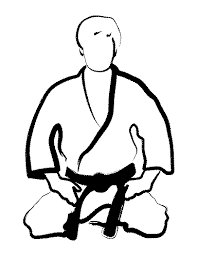
The Reishiki procedure that is observed at the beginning and the end of the class is as follows:

  • Ritsu rei – standing bow to Sensei.
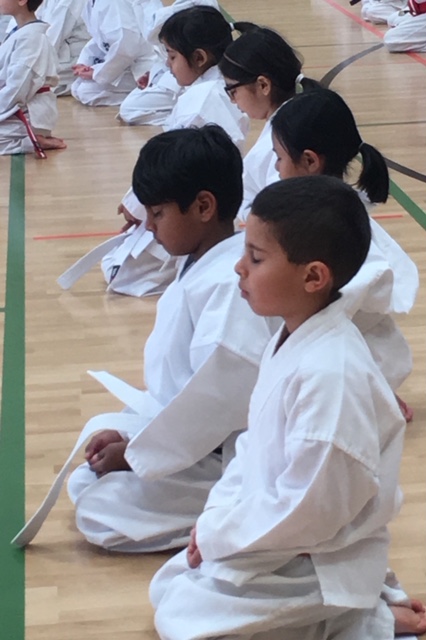
  • Seiza – Sensei sits (formal sitting position), the class sits in seiza facing shomen and prepares for class.
    • The head student (Sempai) calls out:
    • Mokuso – which means close your eyes and clear your mind  (Silence for approximately 1 minute or more)
    • Kaimokubowing 1meaning open your eyes or “Mokuso Yame” meaning finish meditation.

    • Zarei – next the class performs three zarei or sitting bows when the head student calls out –
    • Shomen ni rei – meaning bow to the front of the dojo.  After this the Sensei will turn around and face the class.
    • Sensei ni rei – meaning bow to the teacher. As the class bows to the teacher the teacher will return the bow.  As a student bows they recite “Onegaishimasu” which can be interpreted to mean please teach me.
    • Otagai ni rei – meaning bow to each other. Both the teacher and the students will bow to each other at the same time.  This is to acknowledge that we are all students of the art of Karate do.
  • At this point the Sensei will indicate that the class should stand up and training will begin.

After the training session is finished, the above procedure is followed again except in the Sensei ni rei section, the students bow and recite “Sensei arigato gozaimasu” which means thank you.

Dave Hatte – Sensei arigato gozaimasu.


We Don’t Tolerate Bullies!

We define bullying  as repeated aggressive action against another person.

A popular ideology is to work with both the bully and the victim to create a mutual respect, a bonding that will often dismiss the affect of the bullying on the victim and focuses on the state of mind of the bully.

Parents are reminded that bullies are often victims themselves and need to be understood and often this is true, however ‘healing’ the bully should not be at the expense of the victims safety, peace of mind and assurance children need to learn that it is okay to stand up for themselves.

Below are a few examples of bullying that have happened in schools to give you an idea of the type of bullying we are talking about.  It is often not an extreme attack,  bullies tend to pick away at the fibre of their victims over a period of time with repeated often unnoticed acts of aggression.


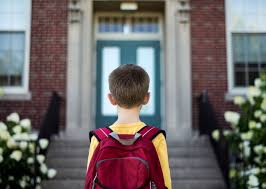
Thomas is overweight, asthmatic and short sighted.  During the summer months his allergies flair up and he is the sole reason for the nut ban at his school.  Thomas loves to read, and reads at a level well above his eight years but he doesn’t run well.  The other kids groan when he is put on their teams.  He spends his lunch times between the library and the empty friendship bench.

Jack and Aidan don’t like books so much.  Jack is good at making up names and rhymes  to torment Thomas.  Aidan echoes Jacks voice, one on either side of  Thomas as they cross the quadrangle to class in the morning.  Then they may unecessarily squeeze past Thoma’s desk during class and accidentally knock his books to the ground.

Last Tuesday they followed Thomas into the boys room and threw wads of wet paper over the stall door, while taunting and shouting names.  It was towards the end of lunchtime and some other boys joined in.  A few climbed up onto the toilet in the stall next door to peer over the wall to witness Thomas crying with clumps of toilet paper stuck to his hair and clothes.  It  continues for ten minutes, it isn’t stopped until the bell rings.  Thomas waits until the bathroom is silent before cautiously leaving the stall. He pulls the paper from his clothes and hair and  puts them in the bin.

toilet 1

When he returns to class the other boys snigger,  his teacher scolds him for being late, and asks Thomas to stay after class.  Later when Mr Reilly asks why Thomas was late from lunch Thomas says nothing and stares at his feet.

Are the other boys giving you a hard time?’ Thomas nods his head and talks into his chest ‘they call me names sometimes’

‘Anything else?’

Thomas shakes his head. ‘Not really’

‘Well names aren’t nice, maybe you should tell them how you feel, that it hurts your feelings. Sometimes it is helpful to not respond, you know pretend you didn’t hear them, that it doesn’t matter?’

Liane is playing a game of mixed soccer on the oval at lunch time. She scores another goal and two boys on the other team chase her down.  One trips her over, the other grabs her Bully 4so she falls into him and he punches her across the face.  She falls to the ground as the other boy takes an opportunity to kick her hard in the stomach. The teacher on duty didn’t see 9 year old Lianne a being taken to the staff room by two of her teammates.  Her parents are called, the boys are ‘spoken’ to and sent home with a bad behavior note.


Eleven year old Alistair walks ten minutes home from school everyday.  For the last two weeks  Paul, Alan and Ted wait at the school gate and take it in turn to punch him hard in the arm  and sometimes a flick across the back of the head.  Teachers and parents are always close by.  Alistair has bruises on his arms.  He prayers everyday for rain so that he doesn’t have to walk home, constantly nagging his mum to pick him up he complains that he is too tired to walk home after school.


So What happens at school?

School policies across the country vary, but the majority  promote a no tolerance to bullying,  however it is often reported that little is done or can be done within the limited framework and resources across our schools to affect a serious change.  It is true that often the bully is hurting and needs to be healed but this should never be to the detriment of protecting and caring for the bullies prey.  Situations where the victim is made to shake hands with his bully and not acceptable.  It is not okay to tolerate being treat abusively by another human, not matter the age or theatre.  Often times bullies are created at home, so there is little a school can change without the support and cooperation of the bullies parents.

Schools  do not always have the capacity to deal with every personality defect that is presented to them.  Bullies need help to see the error of their ways this is true, and I support the schools in their programs that try to do this but in the meantime, Alistair is still getting punched in the arms every day when he exits the school gate, Liane doesn’t play sports on the oval anymore, Thomas has been getting a lot of tummy aches lately.  All while the bully, the cause of their miseries carries on with their life as normal.

How Karate for Life can Help?

It is true that there is no first strike in Karate.  Karate students are taught this from the beginning.  The first move of all our Kata is a block, a defense against an attack.  Karate is not about kicking and punching it is about becoming who you are and feeling confident enough to say NO! Children do not have to tolerate being hit or abused by anyone not even another child.  The few examples giving above are stories we hear again and again in the dojo.

When asked about what action was taken at school all too often a parent will roll their eyes, shrug their shoulders in repeated disbelief and reply ‘nothing’.

You have seen the ads; karate builds confidence, self-respect, self-esteem, self-reliance and self-awareness.  There are a lot of ‘self’ in there because of the individual nature of karate training,  each student  develops at their own pace.

So they come to us, either through a referral,  or parents  desperately winging it looking for a solution  happen to stumble across our dojo.  Sensei Don our principal instructor lets his students breathe, to be who they are and to stand up and be counted.  No one is left in the background, every single person in that dojo is shown the respect and friendship they deserve.  This I believe is the true cure for bullying.  When people believe that they are worthwhile,  they don’t  act like arseholes to get the attention, respect and approval they crave.  On the other side students learn that you don’t have to tolerate the above mentioned arseholes who believe they have to push others down in order to elevate themselves.

As well as the above mentioned, Karate  builds compassion, resilience, kindness, humbleness, community and spirit.  This is the true defense against a bully, against all bullies in our society.


Benefits of Karate for Children’s Development

In the age of instant gratification, everyday rewards and entitlements Karate teaches us that persistence, respect and humility are the ways forward.  As parents we want the best for our kids and we want our kids to be able to achieve their best.  We want them to be the best version of themselves.

The following list is compiled of the six attributes Karate training in the right dojo will promote in your child.  They only have to turn up, walk through the door and listen.

  1.  Confidence:  Walking through the door on that first day takes courage, curiosity and maybe a little push dappled with parental assurance.  New experiences get easier to approach in time and while the fear never goes away completely, the more times you put yourself in a new situation the more coping mechanisms you build.  Kids learn instinctively that they need to make eye contact, start a conversation, simply smile. Making friends greatly improves all new situations and this is just in the beginning, wait until you see what learning new techniques,  mastering complicated routines and achieving the next phase in their syllabus will do.
  2. Focus: Classes usually run for an hour at a time and are often made up of drills, partner work, group work and solo training.  What a student gets from his class depends on the time actually spent being mindful in the dojo and their ability to do this will increase with practise.  It is a skill they can develop and that will automatically be transferred into all other areas of their lives.
  3. Self-Discipline:  This starts with  getting ready, looking after your gi and equipment, walking through the door and turning up to class, even when it is too hot, or too cold and your favourite show is on the television.
  4. Self-Defense: A common reason to start training but it is not the be all and end all of a students achievement in the dojo.  Rarely do karate students need to defend themselves, they learn to avoid dangerous situations, to take care to themselves and importantly they learn how to behave in situations so that they do not escalate.
  5. Leadership: As a student progresses through the ranks they become a role model for new and younger students.  A good club will encourage students (under guidance) to share their knowledge with others to improve the development of everyone within the dojo.
  6. Respect:  “Karate starts with etiquette and finishes with etiquette”   K Tomiyama,  Fundamentals of Karate-do (1990).  Shihan Tomiyama goes on to write more about rei – a bow or more broadly etiquette [that]”.. signifies the utmost importance of proper etiquette in karate.  Not only karate but all Japanese martial arts stress the importance of proper etiquette as a means of self-defence ……….. A person of good etiquette possesses an aura of dignity and quite naturally gains respect from those he is in contact with.  Thus there is much less chance of his being involved in arguments and being forced to defend himself physically.  This teaching does not stop there,  the real aim of practising the martial arts is to develop a complete person, fit physically and mentally, which is consequently beneficial to society...” p15

For more information visit  Karate for Life