
The Benefits of Karate for Families: Training Together

In an era where family time often competes with screens and busy schedules, Karate offers families a unique opportunity to train, grow, and bond together. This martial art, with its emphasis on respect, discipline, and continuous improvement, has found a special place in our modern culture, where families increasingly seek meaningful activities they can share.
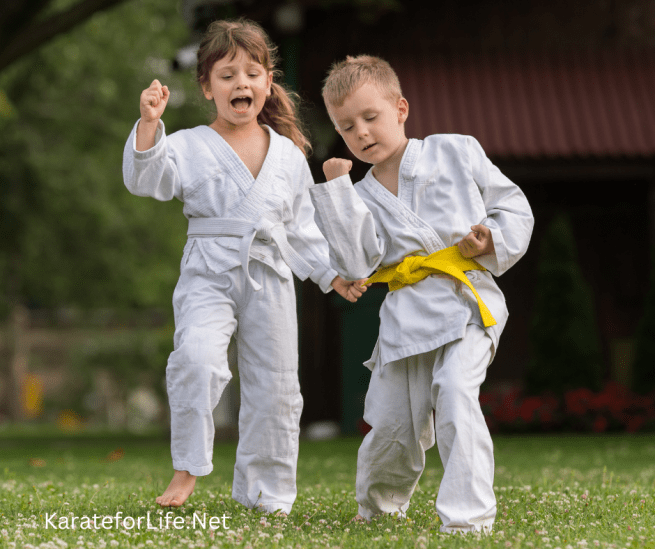
Traditional karate has evolved significantly since its introduction to Australia in the 1960s. What began as primarily individual training has transformed into a family oriented practice, with many dojos now offering specialised family classes. This shift reflects both the changing needs of families and a deeper understanding of karate’s potential to strengthen family bonds.

Traditional karate offers comprehensive physical development for all age groups:

For children (6 -12 years):

  • Development of fundamental movement skills
  • Improved coordination and balance
  • Enhanced flexibility and strength
  • Better posture and body awareness

For teenagers:

  • Increased strength and endurance
  • Enhanced athletic performance
  • Improved reflexes and reaction time
  • Healthy weight management

For adults:

  • Full-body workout
  • Increased cardiovascular fitness
  • Better joint mobility
  • Stress reduction through physical activity
  • Mental and Emotional Benefits

Karate’s impact extends far beyond physical fitness:

For children:

  • Improved focus and concentration
  • Enhanced self-discipline
  • Better emotional regulation
  • Increased confidence and self-esteem

For teenagers:

  • Stress management skills
  • Enhanced goal-setting abilities
  • Improved mental resilience
  • Better self-control and patience

For adults:

  • Stress reduction
  • Mindfulness development
  • Improved mental clarity
  • Enhanced work-life balance

Family Benefits

Training together creates unique opportunities for:

  • Shared goals and achievements
  • Quality time in a structured environment
  • Mutual support and encouragement
  • Cross generational learning and teaching

Managing Family Karate Training

1. Schedule Management:

  • Choose a dojo with flexible class times
  • Plan training sessions around school and work commitments
  • Consider weekend family classes for easier scheduling
  • Create a shared calendar for training days

2. Financial Planning:

  • Look for family membership discounts
  • Budget for equipment and grading fees
  • Consider multi-class packages
  • Plan for tournament and special event costs

3. Equipment Organisation:

  • Designate a specific area for karate gear
  • Create individual gear bags for each family member
  • Maintain a checklist for necessary equipment
  • Establish a routine for washing and maintaining gi (uniforms)

Overcoming Common Challenges

1. Different Skill Levels:

  • Embrace individual progress rates
  • Focus on personal improvement rather than comparison
  • Celebrate individual achievements
  • Use varied skill levels as teaching opportunities

2. Time Management:

  • Coordinate carpooling with other karate families
  • Combine training with other family commitments
  • Use travel time for family bonding
  • Plan meals around training schedule

3. Maintaining Motivation:

  • Set family and individual goals
  • Create a reward system for achievements
  • Document progress through photos and videos
  • Participate in community events and tournaments

Choosing the Right Dojo for Your Family

1. Teaching Philosophy:

  • Look for dojos that emphasise traditional values
  • Ensure the teaching style suits all family members
  • Check the instructor’s experience with family training
  • Observe multiple classes before committing

2. Facility Requirements:

  • Convenient location
  • Clean and safe training environment
  • Adequate changing facilities
  • Family friendly atmosphere

3. Class Structure:

  • Age appropriate instruction
  • Clear progression system
  • Family class options
  • Flexible scheduling

Getting Started

1. Initial Research:

  • Research local dojos
  • Read reviews and testimonials
  • Check accreditation and affiliations
  • Contact current members if possible

2. Trial Period:

  • Take advantage of trial classes
  • Observe different class times
  • Meet the instructors
  • Assess family comfort level

3. Equipment and Preparation:

  • Purchase appropriate gi (uniforms)
  • Invest in necessary safety equipment
  • Create a training schedule
  • Set initial family goals

Building Sustainable Practice

1. Create a Support System:

  • Connect with other karate families
  • Join dojo social events
  • Participate in community activities
  • Share experiences with extended family

2. Maintain Balance:

  • Set realistic training goals
  • Allow for flexibility in schedule
  • Respect individual preferences
  • Celebrate small victories

3. Progress Tracking:

  • Keep a family training journal
  • Document belt progressions
  • Record tournament participation
  • Share achievements on social media


Integrating Karate Values at Home

1. Physical Practice:

  • Designate a home training area
  • Practice basic movements together
  • Incorporate karate exercises into daily routine
  • Create family training challenges

2. Mental Application:

  • Use karate principles in problem solving
  • Apply dojo etiquette at home
  • Practice mindfulness techniques
  • Discuss karate philosophy during family time

Karate offers families a unique opportunity to grow together while maintaining individual development paths. The success stories of families like the Thompsons demonstrate that with proper planning and commitment, karate can become a transformative family activity.

The key to success lies in finding the right balance between commitment and flexibility, choosing an appropriate dojo, and maintaining open communication within the family. As more families discover the benefits of training together, traditional karate continues to develop as a powerful tool for family bonding and personal development.

Every family’s journey is unique, and the path to success may look different for each one. The most important aspect is the shared experience, and the memories created along the way. Whether your goal is physical fitness, mental development, or family bonding, traditional karate provides a comprehensive framework for achieving these objectives together.

As you embark on your family’s karate journey, remember that the benefits extend far beyond the dojo walls. The principles and values learned through traditional karate training can strengthen family bonds, improve communication, and create lasting positive changes in all aspects of life.

For families considering this path, the growing community of karate practitioners offers support, guidance, and inspiration. The journey may begin with a single step into the dojo, but it can lead to a lifetime of shared growth, achievement, and family unity.
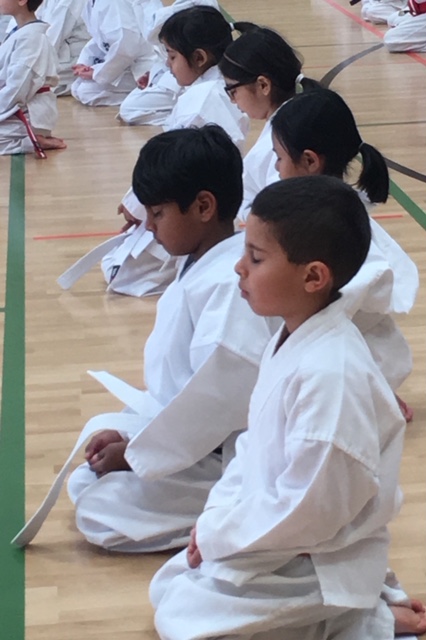
Starting Your Karate Journey: Embrace the Beginner’s Mind

In the dimly lit corner of every traditional dojo, there is often a corner where new students wait, nervously adjusting their fresh, stiff white belts. Their eyes dart between the fluid movements of senior students and their own uncertain reflections in the mirror. Every person in that dojo – from the newest white belt to the most seasoned black belt – shares a common beginning: that first step onto the mat.

Lao Tzu told us that, “the journey of a thousand miles begins with a single step”, and in karate, that step often comes with a mix of excitement, uncertainty, and perhaps a touch of fear. It’s a profound moment of vulnerability, admitting that you know nothing and are ready to learn. This humility, rather than being a weakness, becomes the foundation of your entire martial arts journey.

Many newcomers to karate are surprised to learn that some of the most respected masters in history began their journeys with similar uncertainties. Gichin Funakoshi, often called the father of modern karate, started as a sickly child looking to improve his health. Mas Oyama, known for his incredible physical feats, was once a beginner struggling with basic techniques. These masters weren’t born with their skills – they developed them through years of dedicated practice, starting from the very beginning, just like everyone else.

One of the most common misconceptions about karate is that you need to be naturally athletic, flexible, or coordinated to begin. This couldn’t be further from the truth. Karate is a journey of personal transformation that meets you exactly where you are. Whether you’re young or old, athletic or sedentary, confident or shy, the dojo welcomes all who come with an open mind and willingness to learn.

The beauty of karate lies in its scalability. Every technique can be modified and adapted to suit your current ability level. As you progress, these modifications gradually fall away, replaced by more refined movements. This progressive approach ensures that everyone can practice safely while continuously challenging themselves to improve.

The Physical Journey Begins

The first few months of karate training typically focus on fundamental movements: basic punches (tsuki), kicks (geri), and blocks (uke). These foundations might seem simple, even repetitive, but they contain profound lessons that even advanced practitioners continue to explore decades into their training.

Consider the front punch (oi-zuki). At first glance, it appears straightforward – extend your fist forward with power. However, within this simple movement lies a complex interplay of body mechanics:

  • Proper weight distribution
  • Hip rotation
  • Shoulder alignment
  • Wrist positioning
  • Breath control
  • Mental focus

Each of these elements offers a lifetime of study and refinement. As you progress, you begin to understand that mastery isn’t about learning more techniques but about deepening your understanding of the basics.

Beyond the Physical: The Mental Transformation

While the physical aspects of karate are immediately apparent, the mental and spiritual development often catches newcomers by surprise. The dojo becomes a laboratory for self-discovery, where students learn as much about themselves as they do about martial arts.

The regular practice of karate naturally develops:

1. Mental Discipline – training requires focus and dedication. The simple act of showing up consistently, especially when motivation wanes, builds mental strength that extends far beyond the dojo.

2. Emotional Control – learning to control your body under pressure naturally leads to better emotional regulation. The calm focus required during kata and kumite becomes a valuable skill in daily life.

3. Self-Confidence – as you overcome challenges and master new techniques, you develop a quiet confidence that comes from genuine achievement rather than external validation.

4. Mindfulness – the intense focus required in karate training naturally promotes mindfulness. Students often find that their practice becomes a form of moving meditation.

The Social Dimension

One of the most unexpected aspects of karate training is the strong sense of community that develops. The dojo becomes more than just a place to learn martial arts — it becomes a second home where lasting friendships are forged through shared experiences and challenges.

This social aspect plays a crucial role in development. Training partners become mirrors, reflecting our strengths and weaknesses. Senior students provide guidance and inspiration, while helping newer students reinforces our own understanding. The relationship between teacher (Sensei) and student becomes a model for respectful learning that extends into other areas of life.

Embracing the Beginner’s Mind

In Japanese martial arts, there’s a concept called “shoshin” (初心), which translates to “beginner’s mind.” It refers to having an attitude of openness, eagerness, and lack of preconceptions, even when studying at an advanced level. This concept is crucial for understanding that being a beginner is not just a temporary state to be overcome, but a valuable mindset to maintain throughout your journey.

Every time you learn a new technique, face a new challenge, or train with a different partner, you can embrace the beginner’s mind. This approach keeps your training fresh and allows for continuous growth, even after years or decades of practice.

The Never-Ending Journey

As you progress in karate, you begin to understand that the path has no end. Each achievement opens the door to new challenges, deeper understanding, and further growth. The black belt, often seen as the ultimate goal by beginners, is really just the beginning of a deeper study.

This endless potential for growth makes karate such a powerful vehicle for self-discovery. There’s always another layer to uncover, another aspect to refine, another challenge to face. The journey becomes not about reaching a destination, but about who you become along the way.

Starting Your Own Journey

If you’re considering beginning your own karate journey, remember these key points:

1. Everyone Starts as a Beginner

No matter how skilled someone appears now, they once stood where you stand. Every expert was once a novice.

2. Progress at Your Own Pace – your journey is unique to you. Don’t compare your chapter one to someone else’s chapter twenty.

3. Embrace the Process – focus on small, consistent improvements rather than dramatic transformations. The joy is in the journey, not just the destination.

4. Stay Open-Minded – be ready to challenge your assumptions and learn from everyone around you, regardless of their rank or experience level.

5. Commit to Consistency – regular practice, even if brief, yields better results than sporadic intense training.

The journey of karate is ultimately a journey of self-discovery. Through consistent practice, mindful study, and patient progression, you’ll discover capabilities you never knew you had. You’ll face challenges that seem insurmountable, only to overcome them through persistence and dedication.

Remember, every master was once a beginner. The only difference between them and those who never achieve mastery is that they began the journey and stayed the course. Your own journey of self-discovery through karate awaits. The first step is simply showing up and being ready to learn.

Take that step. Tie on that white belt. Join the generations of practitioners who have discovered that karate is not just about learning to fight – it’s about learning to live with purpose, dignity, and continuous growth. Your journey begins now.

Reishiki

“Bowing is an expression of gratitude and respect”

Gichin Funakoshi

JosiahReishiki comes from two Japanese words, the first is ‘Rei’ which can be interpreted as a bow, courtesy, thanks and appreciation.  The second word “Shiki” can be interpreted as a ceremony.  The word Reishiki can therefore be interpreted as ceremonial manners or etiquette.
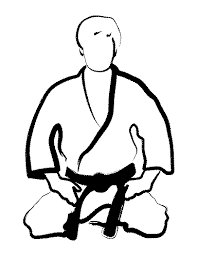
The Reishiki procedure that is observed at the beginning and the end of the class is as follows:

  • Ritsu rei – standing bow to Sensei.
  • Seiza – Sensei sits (formal sitting position), the class sits in seiza facing shomen and prepares for class.
    • The head student (Sempai) calls out:
    • Mokuso – which means close your eyes and clear your mind  (Silence for approximately 1 minute or more)
    • Kaimokubowing 1meaning open your eyes or “Mokuso Yame” meaning finish meditation.
    • Zarei – next the class performs three zarei or sitting bows when the head student calls out –
    • Shomen ni rei – meaning bow to the front of the dojo.  After this the Sensei will turn around and face the class.
    • Sensei ni rei – meaning bow to the teacher. As the class bows to the teacher the teacher will return the bow.  As a student bows they recite “Onegaishimasu” which can be interpreted to mean please teach me.
    • Otagai ni rei – meaning bow to each other. Both the teacher and the students will bow to each other at the same time.  This is to acknowledge that we are all students of the art of Karate do.
  • At this point the Sensei will indicate that the class should stand up and training will begin.

After the training session is finished, the above procedure is followed again except in the Sensei ni rei section, the students bow and recite “Sensei arigato gozaimasu” which means thank you.

Dave Hatte – Sensei arigato gozaimasu.


Benefits of Karate for Children’s Development

In the age of instant gratification, everyday rewards and entitlements Karate teaches us that persistence, respect and humility are the ways forward.  As parents we want the best for our kids and we want our kids to be able to achieve their best.  We want them to be the best version of themselves.

The following list is compiled of the six attributes Karate training in the right dojo will promote in your child.  They only have to turn up, walk through the door and listen.

  1.  Confidence:  Walking through the door on that first day takes courage, curiosity and maybe a little push dappled with parental assurance.  New experiences get easier to approach in time and while the fear never goes away completely, the more times you put yourself in a new situation the more coping mechanisms you build.  Kids learn instinctively that they need to make eye contact, start a conversation, simply smile. Making friends greatly improves all new situations and this is just in the beginning, wait until you see what learning new techniques,  mastering complicated routines and achieving the next phase in their syllabus will do.
  2. Focus: Classes usually run for an hour at a time and are often made up of drills, partner work, group work and solo training.  What a student gets from his class depends on the time actually spent being mindful in the dojo and their ability to do this will increase with practise.  It is a skill they can develop and that will automatically be transferred into all other areas of their lives.
  3. Self-Discipline:  This starts with  getting ready, looking after your gi and equipment, walking through the door and turning up to class, even when it is too hot, or too cold and your favourite show is on the television.
  4. Self-Defense: A common reason to start training but it is not the be all and end all of a students achievement in the dojo.  Rarely do karate students need to defend themselves, they learn to avoid dangerous situations, to take care to themselves and importantly they learn how to behave in situations so that they do not escalate.
  5. Leadership: As a student progresses through the ranks they become a role model for new and younger students.  A good club will encourage students (under guidance) to share their knowledge with others to improve the development of everyone within the dojo.
  6. Respect:  “Karate starts with etiquette and finishes with etiquette”   K Tomiyama,  Fundamentals of Karate-do (1990).  Shihan Tomiyama goes on to write more about rei – a bow or more broadly etiquette [that]”.. signifies the utmost importance of proper etiquette in karate.  Not only karate but all Japanese martial arts stress the importance of proper etiquette as a means of self-defence ……….. A person of good etiquette possesses an aura of dignity and quite naturally gains respect from those he is in contact with.  Thus there is much less chance of his being involved in arguments and being forced to defend himself physically.  This teaching does not stop there,  the real aim of practising the martial arts is to develop a complete person, fit physically and mentally, which is consequently beneficial to society...” p15

For more information visit  Karate for Life