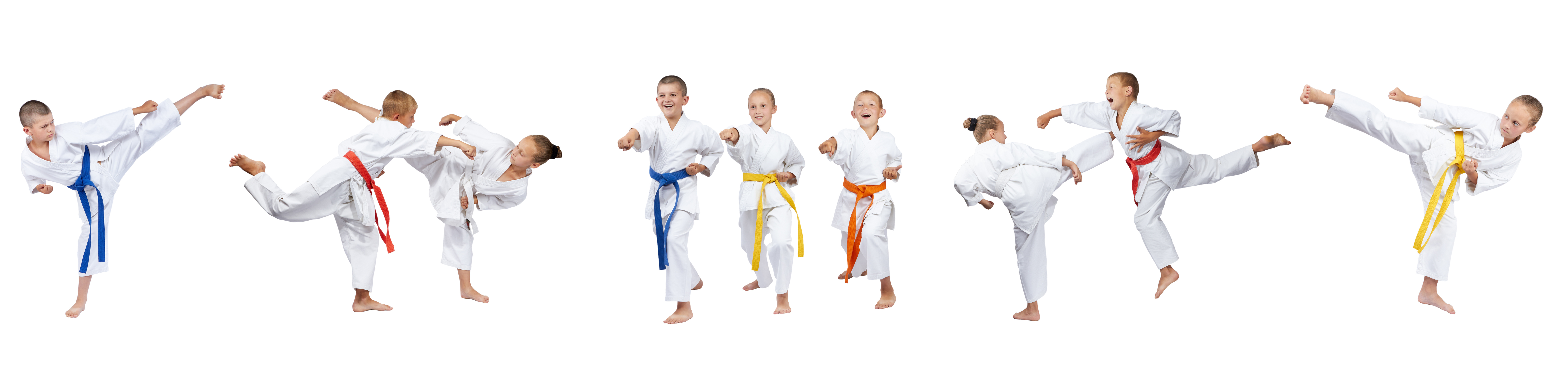
The Benefits of Karate for Families: Training Together

In an era where family time often competes with screens and busy schedules, Karate offers families a unique opportunity to train, grow, and bond together. This martial art, with its emphasis on respect, discipline, and continuous improvement, has found a special place in our modern culture, where families increasingly seek meaningful activities they can share.

Traditional karate has evolved significantly since its introduction to Australia in the 1960s. What began as primarily individual training has transformed into a family oriented practice, with many dojos now offering specialised family classes. This shift reflects both the changing needs of families and a deeper understanding of karate’s potential to strengthen family bonds.

Traditional karate offers comprehensive physical development for all age groups:

For children (6 -12 years):

  • Development of fundamental movement skills
  • Improved coordination and balance
  • Enhanced flexibility and strength
  • Better posture and body awareness

For teenagers:

  • Increased strength and endurance
  • Enhanced athletic performance
  • Improved reflexes and reaction time
  • Healthy weight management

For adults:

  • Full-body workout
  • Increased cardiovascular fitness
  • Better joint mobility
  • Stress reduction through physical activity
  • Mental and Emotional Benefits

Karate’s impact extends far beyond physical fitness:

For children:

  • Improved focus and concentration
  • Enhanced self-discipline
  • Better emotional regulation
  • Increased confidence and self-esteem

For teenagers:

  • Stress management skills
  • Enhanced goal-setting abilities
  • Improved mental resilience
  • Better self-control and patience

For adults:

  • Stress reduction
  • Mindfulness development
  • Improved mental clarity
  • Enhanced work-life balance

Family Benefits

Training together creates unique opportunities for:

  • Shared goals and achievements
  • Quality time in a structured environment
  • Mutual support and encouragement
  • Cross generational learning and teaching

Managing Family Karate Training

1. Schedule Management:

  • Choose a dojo with flexible class times
  • Plan training sessions around school and work commitments
  • Consider weekend family classes for easier scheduling
  • Create a shared calendar for training days

2. Financial Planning:

  • Look for family membership discounts
  • Budget for equipment and grading fees
  • Consider multi-class packages
  • Plan for tournament and special event costs

3. Equipment Organisation:

  • Designate a specific area for karate gear
  • Create individual gear bags for each family member
  • Maintain a checklist for necessary equipment
  • Establish a routine for washing and maintaining gi (uniforms)

Overcoming Common Challenges

1. Different Skill Levels:

  • Embrace individual progress rates
  • Focus on personal improvement rather than comparison
  • Celebrate individual achievements
  • Use varied skill levels as teaching opportunities

2. Time Management:

  • Coordinate carpooling with other karate families
  • Combine training with other family commitments
  • Use travel time for family bonding
  • Plan meals around training schedule

3. Maintaining Motivation:

  • Set family and individual goals
  • Create a reward system for achievements
  • Document progress through photos and videos
  • Participate in community events and tournaments

Choosing the Right Dojo for Your Family

1. Teaching Philosophy:

  • Look for dojos that emphasise traditional values
  • Ensure the teaching style suits all family members
  • Check the instructor’s experience with family training
  • Observe multiple classes before committing

2. Facility Requirements:

  • Convenient location
  • Clean and safe training environment
  • Adequate changing facilities
  • Family friendly atmosphere

3. Class Structure:

  • Age appropriate instruction
  • Clear progression system
  • Family class options
  • Flexible scheduling

Getting Started

1. Initial Research:

  • Research local dojos
  • Read reviews and testimonials
  • Check accreditation and affiliations
  • Contact current members if possible

2. Trial Period:

  • Take advantage of trial classes
  • Observe different class times
  • Meet the instructors
  • Assess family comfort level

3. Equipment and Preparation:

  • Purchase appropriate gi (uniforms)
  • Invest in necessary safety equipment
  • Create a training schedule
  • Set initial family goals

Building Sustainable Practice

1. Create a Support System:

  • Connect with other karate families
  • Join dojo social events
  • Participate in community activities
  • Share experiences with extended family

2. Maintain Balance:

  • Set realistic training goals
  • Allow for flexibility in schedule
  • Respect individual preferences
  • Celebrate small victories

3. Progress Tracking:

  • Keep a family training journal
  • Document belt progressions
  • Record tournament participation
  • Share achievements on social media


Integrating Karate Values at Home

1. Physical Practice:

  • Designate a home training area
  • Practice basic movements together
  • Incorporate karate exercises into daily routine
  • Create family training challenges

2. Mental Application:

  • Use karate principles in problem solving
  • Apply dojo etiquette at home
  • Practice mindfulness techniques
  • Discuss karate philosophy during family time

Karate offers families a unique opportunity to grow together while maintaining individual development paths. The success stories of families like the Thompsons demonstrate that with proper planning and commitment, karate can become a transformative family activity.

The key to success lies in finding the right balance between commitment and flexibility, choosing an appropriate dojo, and maintaining open communication within the family. As more families discover the benefits of training together, traditional karate continues to develop as a powerful tool for family bonding and personal development.

Every family’s journey is unique, and the path to success may look different for each one. The most important aspect is the shared experience, and the memories created along the way. Whether your goal is physical fitness, mental development, or family bonding, traditional karate provides a comprehensive framework for achieving these objectives together.

As you embark on your family’s karate journey, remember that the benefits extend far beyond the dojo walls. The principles and values learned through traditional karate training can strengthen family bonds, improve communication, and create lasting positive changes in all aspects of life.

For families considering this path, the growing community of karate practitioners offers support, guidance, and inspiration. The journey may begin with a single step into the dojo, but it can lead to a lifetime of shared growth, achievement, and family unity.

Starting Your Karate Journey: Embrace the Beginner’s Mind

In the dimly lit corner of every traditional dojo, there is often a corner where new students wait, nervously adjusting their fresh, stiff white belts. Their eyes dart between the fluid movements of senior students and their own uncertain reflections in the mirror. Every person in that dojo – from the newest white belt to the most seasoned black belt – shares a common beginning: that first step onto the mat.

Lao Tzu told us that, “the journey of a thousand miles begins with a single step”, and in karate, that step often comes with a mix of excitement, uncertainty, and perhaps a touch of fear. It’s a profound moment of vulnerability, admitting that you know nothing and are ready to learn. This humility, rather than being a weakness, becomes the foundation of your entire martial arts journey.

Many newcomers to karate are surprised to learn that some of the most respected masters in history began their journeys with similar uncertainties. Gichin Funakoshi, often called the father of modern karate, started as a sickly child looking to improve his health. Mas Oyama, known for his incredible physical feats, was once a beginner struggling with basic techniques. These masters weren’t born with their skills – they developed them through years of dedicated practice, starting from the very beginning, just like everyone else.

One of the most common misconceptions about karate is that you need to be naturally athletic, flexible, or coordinated to begin. This couldn’t be further from the truth. Karate is a journey of personal transformation that meets you exactly where you are. Whether you’re young or old, athletic or sedentary, confident or shy, the dojo welcomes all who come with an open mind and willingness to learn.

The beauty of karate lies in its scalability. Every technique can be modified and adapted to suit your current ability level. As you progress, these modifications gradually fall away, replaced by more refined movements. This progressive approach ensures that everyone can practice safely while continuously challenging themselves to improve.

The Physical Journey Begins

The first few months of karate training typically focus on fundamental movements: basic punches (tsuki), kicks (geri), and blocks (uke). These foundations might seem simple, even repetitive, but they contain profound lessons that even advanced practitioners continue to explore decades into their training.

Consider the front punch (oi-zuki). At first glance, it appears straightforward – extend your fist forward with power. However, within this simple movement lies a complex interplay of body mechanics:

  • Proper weight distribution
  • Hip rotation
  • Shoulder alignment
  • Wrist positioning
  • Breath control
  • Mental focus

Each of these elements offers a lifetime of study and refinement. As you progress, you begin to understand that mastery isn’t about learning more techniques but about deepening your understanding of the basics.

Beyond the Physical: The Mental Transformation

While the physical aspects of karate are immediately apparent, the mental and spiritual development often catches newcomers by surprise. The dojo becomes a laboratory for self-discovery, where students learn as much about themselves as they do about martial arts.

The regular practice of karate naturally develops:

1. Mental Discipline – training requires focus and dedication. The simple act of showing up consistently, especially when motivation wanes, builds mental strength that extends far beyond the dojo.

2. Emotional Control – learning to control your body under pressure naturally leads to better emotional regulation. The calm focus required during kata and kumite becomes a valuable skill in daily life.

3. Self-Confidence – as you overcome challenges and master new techniques, you develop a quiet confidence that comes from genuine achievement rather than external validation.

4. Mindfulness – the intense focus required in karate training naturally promotes mindfulness. Students often find that their practice becomes a form of moving meditation.

The Social Dimension

One of the most unexpected aspects of karate training is the strong sense of community that develops. The dojo becomes more than just a place to learn martial arts — it becomes a second home where lasting friendships are forged through shared experiences and challenges.

This social aspect plays a crucial role in development. Training partners become mirrors, reflecting our strengths and weaknesses. Senior students provide guidance and inspiration, while helping newer students reinforces our own understanding. The relationship between teacher (Sensei) and student becomes a model for respectful learning that extends into other areas of life.

Embracing the Beginner’s Mind

In Japanese martial arts, there’s a concept called “shoshin” (初心), which translates to “beginner’s mind.” It refers to having an attitude of openness, eagerness, and lack of preconceptions, even when studying at an advanced level. This concept is crucial for understanding that being a beginner is not just a temporary state to be overcome, but a valuable mindset to maintain throughout your journey.

Every time you learn a new technique, face a new challenge, or train with a different partner, you can embrace the beginner’s mind. This approach keeps your training fresh and allows for continuous growth, even after years or decades of practice.

The Never-Ending Journey

As you progress in karate, you begin to understand that the path has no end. Each achievement opens the door to new challenges, deeper understanding, and further growth. The black belt, often seen as the ultimate goal by beginners, is really just the beginning of a deeper study.

This endless potential for growth makes karate such a powerful vehicle for self-discovery. There’s always another layer to uncover, another aspect to refine, another challenge to face. The journey becomes not about reaching a destination, but about who you become along the way.

Starting Your Own Journey

If you’re considering beginning your own karate journey, remember these key points:

1. Everyone Starts as a Beginner

No matter how skilled someone appears now, they once stood where you stand. Every expert was once a novice.

2. Progress at Your Own Pace – your journey is unique to you. Don’t compare your chapter one to someone else’s chapter twenty.

3. Embrace the Process – focus on small, consistent improvements rather than dramatic transformations. The joy is in the journey, not just the destination.

4. Stay Open-Minded – be ready to challenge your assumptions and learn from everyone around you, regardless of their rank or experience level.

5. Commit to Consistency – regular practice, even if brief, yields better results than sporadic intense training.

The journey of karate is ultimately a journey of self-discovery. Through consistent practice, mindful study, and patient progression, you’ll discover capabilities you never knew you had. You’ll face challenges that seem insurmountable, only to overcome them through persistence and dedication.

Remember, every master was once a beginner. The only difference between them and those who never achieve mastery is that they began the journey and stayed the course. Your own journey of self-discovery through karate awaits. The first step is simply showing up and being ready to learn.

Take that step. Tie on that white belt. Join the generations of practitioners who have discovered that karate is not just about learning to fight – it’s about learning to live with purpose, dignity, and continuous growth. Your journey begins now.

Tips for Learning Karate Online

With the restrictions in place during the COVID-19 crisis we have to change the way that we deliver and receive our learning.  Students are moving into a homeschooling  model with support from their school and their parents. This will continue for the foreseeable future, it could only be weeks but will more than likely be for months.


Shihan Bo 1 2019

How will this affect your karate training?

Learning anything online is hard, but not impossible. Online studies requires both discipline and commitment on your part. In saying that, just because something is hard that does not mean that it cannot become an important part of your karate journey.  Adaptability is the key to successful online learning.


To get the most out of online classes:

  • Be prepared –

    • Ensure that your device is charged, plugged in, has video and sound drink bottlecapabilities and is connected to the internet.
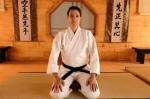
    • Make sure your surroundings are clear of hazards (that there is nothing that you can trip on or come into contact with when you are performing techniques)
    • Allow yourself some time before class for warm up and afterwards for cool down.
    • Have a drink bottle close by.
    • Be ready to start class on time.


  • Speak up –

    • Live classes will give you the opportunity to ask questions just as you would in the dojo. Sometimes you may be muted and have to ‘raise your hand’ or else send a text message using the program hosting the meetings such as Zoom to a live IT assistant who can relay your messages to the instructor.
    • Use feedback opportunities offered by your instructor. Our principal instructor invites you to send in short videos via Facebook messenger of your kata or combinations and will provide you with corrections as required and tips to help you move forward in your training.
    • Use your clubs Facebook page to keep in contact with your training buddies.  At a time when we are self-isolating we will miss the feeling of spending time with our training buddies, the banter and general chat that goes on before and after class will be sorely missed so engage with each other when possible on Facebook and other chat media.
  • Keep a training journal:

    • Keep a note book close by to use straight after class and record anything that you are learning while it is still fresh in your mind following a live class.
    • Use a journal for Kata mapping a kata or combination that you are learning on video use the stop start features on your device.  Try writing out the kata in long hand to help commit the moves to your memory.
  • Get the dojo feel at home-

    • I mentioned above about clearing a space suitable for you to train in, this KK Dojocould be a corner of the family room, your bedroom, carport, garage or in the garden.  Do what you can to make the space suitable for your training.

    • If you can create your own space, bring out your grading certificates, old belts, photos of you and your dojo friends at tournaments, camps or gradings, photos of the past masters of your style,  the logo of your style, bonsai tree, inspirational quotes, your dojo kun and so on.. basically anything that makes you get your karate on.
    • Put your gi and belt on before class, this helps to set your mindset for the class to come.

These are interesting times that we are moving into and there is a lot of speculation on how we will look on the other side.  Let’s uphold our traditions and practices with as much diligence and grace as we can muster.  It won’t be long before we are seeing each other in the dojo again, but until then, do whatever you must to keep your karate spirit alive.

The Meaning of the Kofukan Logo


The Kofukan logo combines three swords and a circle.

Swords have special meaning in Japanese society.  During the samurai era, samurai were the ruling class.  A samurai sword was said to the ‘soul of a samurai’ it represented a code of honour.kofukan-international-logo

The samurai sword represents ‘spiritual purity’.  Its mirror like surface reflects one’s weak mind and improper thoughts. Its razor sharp blade will cut them away.  Many Shinto shrines have swords as their treasure.

The three swords in the logo represent the ‘shin’ (Mind) ‘Gi’ (technique) and ‘tai’ (body).  These are the three main purposes of martial arts training.  Through practice, a martial artist should develop a ‘strong body’, ‘correct techniques’ and ‘correct attitude’ and hopefully attain a high level of spiritual achievement.

The circle represents ‘harmony’ and ‘perfection’.  These three aspects should develop in kofukan-international-logoharmony and into perfection. In the design, the circle of harmony joins the three principles together.

So the Kofukan logo represents the purpose of martial arts training in general and of karate study within our association in particular.

The three Japanese letters within the circle mean ‘Kofukan’ the two larger letters at either side of the circle read ‘shito’ (our style). Also the area inside the circle represents the lower abdomen (tanden) as the linking point of the three aspects that is mind, body and technique.

We chose the colours black and yellow gold for our association badges as they are the colours of the tiger and in order to make a link with the name of Kofukan, which literally means ‘tiger, wind, establishment.

The Meaning of KOFUKAN

  • Ko – is the tiger
  • Fu – is the wind
  • Kan- establishment, group or organization

According to Chinese legend the king of the sky is the dragon and the king of the land is the tiger and when the tiger appears the wind blows and when the dragon appears so do the clouds.


We Don’t Tolerate Bullies!

We define bullying  as repeated aggressive action against another person.

A popular ideology is to work with both the bully and the victim to create a mutual respect, a bonding that will often dismiss the affect of the bullying on the victim and focuses on the state of mind of the bully.

Parents are reminded that bullies are often victims themselves and need to be understood and often this is true, however ‘healing’ the bully should not be at the expense of the victims safety, peace of mind and assurance children need to learn that it is okay to stand up for themselves.

Below are a few examples of bullying that have happened in schools to give you an idea of the type of bullying we are talking about.  It is often not an extreme attack,  bullies tend to pick away at the fibre of their victims over a period of time with repeated often unnoticed acts of aggression.


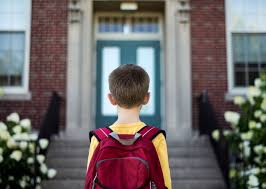
Thomas is overweight, asthmatic and short sighted.  During the summer months his allergies flair up and he is the sole reason for the nut ban at his school.  Thomas loves to read, and reads at a level well above his eight years but he doesn’t run well.  The other kids groan when he is put on their teams.  He spends his lunch times between the library and the empty friendship bench.

Jack and Aidan don’t like books so much.  Jack is good at making up names and rhymes  to torment Thomas.  Aidan echoes Jacks voice, one on either side of  Thomas as they cross the quadrangle to class in the morning.  Then they may unecessarily squeeze past Thoma’s desk during class and accidentally knock his books to the ground.

Last Tuesday they followed Thomas into the boys room and threw wads of wet paper over the stall door, while taunting and shouting names.  It was towards the end of lunchtime and some other boys joined in.  A few climbed up onto the toilet in the stall next door to peer over the wall to witness Thomas crying with clumps of toilet paper stuck to his hair and clothes.  It  continues for ten minutes, it isn’t stopped until the bell rings.  Thomas waits until the bathroom is silent before cautiously leaving the stall. He pulls the paper from his clothes and hair and  puts them in the bin.

toilet 1

When he returns to class the other boys snigger,  his teacher scolds him for being late, and asks Thomas to stay after class.  Later when Mr Reilly asks why Thomas was late from lunch Thomas says nothing and stares at his feet.

Are the other boys giving you a hard time?’ Thomas nods his head and talks into his chest ‘they call me names sometimes’

‘Anything else?’

Thomas shakes his head. ‘Not really’

‘Well names aren’t nice, maybe you should tell them how you feel, that it hurts your feelings. Sometimes it is helpful to not respond, you know pretend you didn’t hear them, that it doesn’t matter?’

Liane is playing a game of mixed soccer on the oval at lunch time. She scores another goal and two boys on the other team chase her down.  One trips her over, the other grabs her Bully 4so she falls into him and he punches her across the face.  She falls to the ground as the other boy takes an opportunity to kick her hard in the stomach. The teacher on duty didn’t see 9 year old Lianne a being taken to the staff room by two of her teammates.  Her parents are called, the boys are ‘spoken’ to and sent home with a bad behavior note.


Eleven year old Alistair walks ten minutes home from school everyday.  For the last two weeks  Paul, Alan and Ted wait at the school gate and take it in turn to punch him hard in the arm  and sometimes a flick across the back of the head.  Teachers and parents are always close by.  Alistair has bruises on his arms.  He prayers everyday for rain so that he doesn’t have to walk home, constantly nagging his mum to pick him up he complains that he is too tired to walk home after school.


So What happens at school?

School policies across the country vary, but the majority  promote a no tolerance to bullying,  however it is often reported that little is done or can be done within the limited framework and resources across our schools to affect a serious change.  It is true that often the bully is hurting and needs to be healed but this should never be to the detriment of protecting and caring for the bullies prey.  Situations where the victim is made to shake hands with his bully and not acceptable.  It is not okay to tolerate being treat abusively by another human, not matter the age or theatre.  Often times bullies are created at home, so there is little a school can change without the support and cooperation of the bullies parents.

Schools  do not always have the capacity to deal with every personality defect that is presented to them.  Bullies need help to see the error of their ways this is true, and I support the schools in their programs that try to do this but in the meantime, Alistair is still getting punched in the arms every day when he exits the school gate, Liane doesn’t play sports on the oval anymore, Thomas has been getting a lot of tummy aches lately.  All while the bully, the cause of their miseries carries on with their life as normal.

How Karate for Life can Help?

It is true that there is no first strike in Karate.  Karate students are taught this from the beginning.  The first move of all our Kata is a block, a defense against an attack.  Karate is not about kicking and punching it is about becoming who you are and feeling confident enough to say NO! Children do not have to tolerate being hit or abused by anyone not even another child.  The few examples giving above are stories we hear again and again in the dojo.

When asked about what action was taken at school all too often a parent will roll their eyes, shrug their shoulders in repeated disbelief and reply ‘nothing’.

You have seen the ads; karate builds confidence, self-respect, self-esteem, self-reliance and self-awareness.  There are a lot of ‘self’ in there because of the individual nature of karate training,  each student  develops at their own pace.

So they come to us, either through a referral,  or parents  desperately winging it looking for a solution  happen to stumble across our dojo.  Sensei Don our principal instructor lets his students breathe, to be who they are and to stand up and be counted.  No one is left in the background, every single person in that dojo is shown the respect and friendship they deserve.  This I believe is the true cure for bullying.  When people believe that they are worthwhile,  they don’t  act like arseholes to get the attention, respect and approval they crave.  On the other side students learn that you don’t have to tolerate the above mentioned arseholes who believe they have to push others down in order to elevate themselves.

As well as the above mentioned, Karate  builds compassion, resilience, kindness, humbleness, community and spirit.  This is the true defense against a bully, against all bullies in our society.


Benefits of Karate for Children’s Development

In the age of instant gratification, everyday rewards and entitlements Karate teaches us that persistence, respect and humility are the ways forward.  As parents we want the best for our kids and we want our kids to be able to achieve their best.  We want them to be the best version of themselves.

The following list is compiled of the six attributes Karate training in the right dojo will promote in your child.  They only have to turn up, walk through the door and listen.

  1.  Confidence:  Walking through the door on that first day takes courage, curiosity and maybe a little push dappled with parental assurance.  New experiences get easier to approach in time and while the fear never goes away completely, the more times you put yourself in a new situation the more coping mechanisms you build.  Kids learn instinctively that they need to make eye contact, start a conversation, simply smile. Making friends greatly improves all new situations and this is just in the beginning, wait until you see what learning new techniques,  mastering complicated routines and achieving the next phase in their syllabus will do.
  2. Focus: Classes usually run for an hour at a time and are often made up of drills, partner work, group work and solo training.  What a student gets from his class depends on the time actually spent being mindful in the dojo and their ability to do this will increase with practise.  It is a skill they can develop and that will automatically be transferred into all other areas of their lives.
  3. Self-Discipline:  This starts with  getting ready, looking after your gi and equipment, walking through the door and turning up to class, even when it is too hot, or too cold and your favourite show is on the television.
  4. Self-Defense: A common reason to start training but it is not the be all and end all of a students achievement in the dojo.  Rarely do karate students need to defend themselves, they learn to avoid dangerous situations, to take care to themselves and importantly they learn how to behave in situations so that they do not escalate.
  5. Leadership: As a student progresses through the ranks they become a role model for new and younger students.  A good club will encourage students (under guidance) to share their knowledge with others to improve the development of everyone within the dojo.
  6. Respect:  “Karate starts with etiquette and finishes with etiquette”   K Tomiyama,  Fundamentals of Karate-do (1990).  Shihan Tomiyama goes on to write more about rei – a bow or more broadly etiquette [that]”.. signifies the utmost importance of proper etiquette in karate.  Not only karate but all Japanese martial arts stress the importance of proper etiquette as a means of self-defence ……….. A person of good etiquette possesses an aura of dignity and quite naturally gains respect from those he is in contact with.  Thus there is much less chance of his being involved in arguments and being forced to defend himself physically.  This teaching does not stop there,  the real aim of practising the martial arts is to develop a complete person, fit physically and mentally, which is consequently beneficial to society...” p15

For more information visit  Karate for Life

Is Karate Right for Your Child?

Blows and throws in perfoming little athletes collage

Do you wonder if Karate is right for your child?    Our junior Karate program is designed to help kids grow into strong, vibrant adults who can navigate the challenges of growing up outside of the dojo.

10 Benefits of Karate for Kids:

  1. Without raising a fist your child will learn how to deter a potential bully.  
  2. Karate is a self paced activity. The dojo brings together all levels of training and each student is encouraged to advance to the next level at their own pace.
  3. Confidence.   We have heard many stories over the years from parents of our students about how their child is more confident outside the dojo and is performing better at school. 
  4. Karate is a year round sport – (with the exception of school holidays). Your child will learn and train consistently throughout the year, and I promise you that there will be no early morning muddy field, rainy day events for you to attend at our dojo.
  5. Our instructors understand how to talk to children to bring out the best in them when they feel challenged
  6. We are facing an obesity epidemic.  Kids need to move and if not in the dojo then elsewhere just please keep them moving!    Karate is not a weight-loss class but it will help your child to improve their strength, flexibility and agility.  
  7. Karate is a family activity,  Mum and Dad can join in with the kids, younger brothers and sisters are welcome too.
  8. Knowing self defence is priceless.
  9. A dojo provides another community group that you and your child can interact in.  Being part of something is important at all ages.
  10. Karate is a life long pursuit of perfection,  just like life.  We all strive to be our best and of course we want what is best for our children too.

Karate for Life offers free trials throughout the year.  Contact us now for details.