Sen, Go no Sen, and Sen no Sen

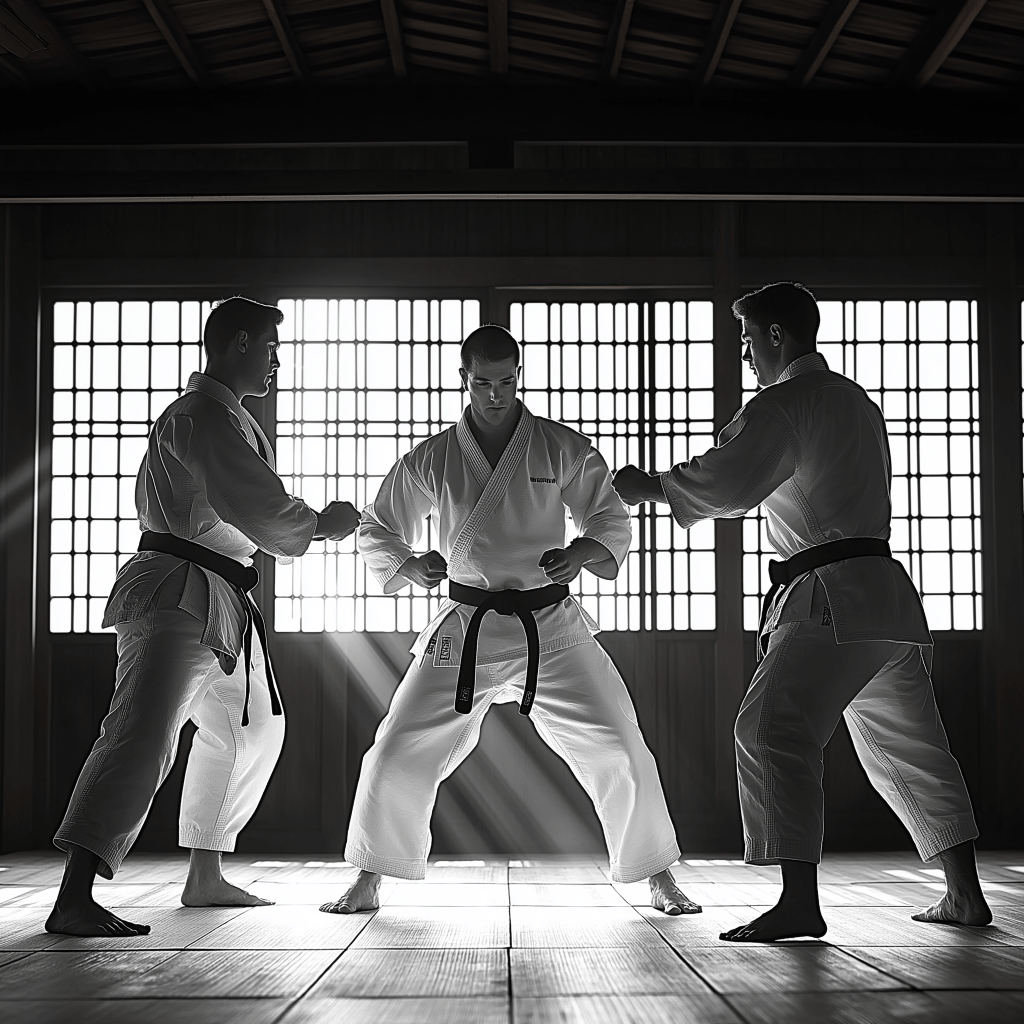
In Japanese martial arts, success in combat often hinges not just on what technique you use, but when you choose to use it. This mastery of timing, developed over centuries of martial tradition, is encapsulated in three fundamental principles: Sen, Go no Sen, and Sen no Sen. These concepts, which can be thought of as initiative in combat, form the backbone of strategic movement in styles like Shito-ryu Karate and extend far beyond simple attack and defence. While they may appear straightforward at first glance – attacking first, countering, or pre-empting – these principles represent increasingly sophisticated levels of martial awareness and tactical thinking. Understanding and applying these concepts transforms basic techniques into effective combat strategies, elevating a practitioner’s ability from mere mechanical reproduction to intuitive mastery.

Sen, Go no Sen, and Sen no Sen are fundamental concepts in Japanese martial arts that deal with the timing of defensive and offensive actions. In Shito-ryu Karate, which combines elements of both Naha-te and Shuri-te traditions, these principles are particularly important.

Sen (先) – basic initiative. This is the simplest form of timing, where you take the initiative to attack first. In Shito-ryu, this is often demonstrated through techniques like mae-geri (front kick) or gyaku-zuki (reverse punch) as opening moves. However, pure Sen is considered somewhat basic because it can be predictable and leaves you potentially vulnerable.

Go no Sen (後の先) – late/reactive initiative. This principle involves letting your opponent initiate the attack, then countering. This is often practiced through defensive techniques followed by immediate counters. For example, when an opponent throws a chudan-zuki (middle punch), you might execute a chudan-uke (middle block) followed by a counter-strike. The timing must be precise – you’re essentially stealing your opponent’s momentum and using it against them.

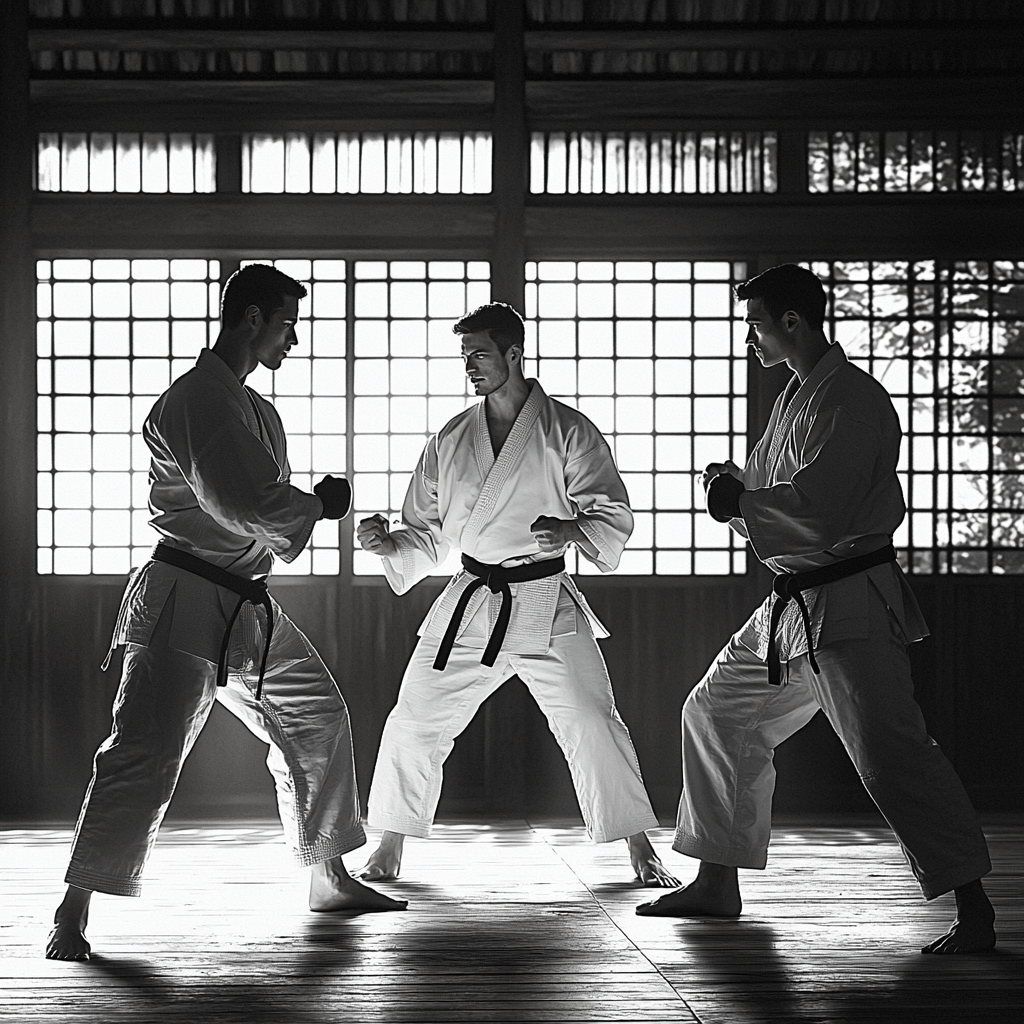
Sen no Sen (先の先) – pre-emptive initiative. This is considered the most advanced of the three principles. In Sen no Sen, you anticipate your opponent’s attack and move at the same moment they begin their technique, essentially intercepting them before their attack can fully develop. In Shito-ryu, this might manifest as a simultaneous block and counter or moving off-line while striking as the opponent begins their movement. This requires precise reading of your opponent’s intentions (yomi) and precise timing.

Underlying all three timing principles is the concept of zanshin (残心) – a state of continued awareness and readiness. Without zanshin, these timing principles become merely mechanical movements rather than effective martial techniques. Zanshin provides the mental foundation that allows a practitioner to effectively choose and execute the appropriate timing principle in any given situation.

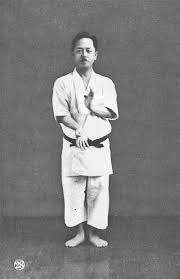
Kenwa Mabuni

Shito-ryu’s founder, Kenwa Mabuni, emphasised the importance of understanding these principles through both hard (go) and soft (ju) applications. The style’s combination of Shorei-ryu (emphasizing power) and Shorin-ryu (emphasising speed) elements means that these timing principles can be applied with either powerful, direct techniques or lighter, more circular movements.

The development of Sen, Go no Sen, and Sen no Sen follows a specific learning progression that mirrors the traditional martial arts concept of “Shu-Ha-Ri” (守破離) – the stages of learning from rigid adherence to principles, through breaking with convention, to transcendent understanding. This framework helps us understand how to structure training methods effectively:

Initial Phase (Understanding)

  • Each timing principle first must be understood in isolation.
  • Students develop basic pattern recognition through controlled practice.
  • Physical techniques are practiced with deliberate speed to build proper form.
  • Mental aspects focus on single-point awareness.

Integration Phase (Application)

  • Combinations of timing principles are introduced.
  • Speed and power are gradually increased.
  • Focus shifts to reading opponent’s intention (yomi).
  • Development of peripheral awareness while maintaining centre.
  • Introduction of variable timing and rhythm (hyoshi).

Advanced Phase (Intuition)

  • Seamless transition between timing principles.
  • Development of mushin (無心) – the “no-mind” state where action becomes intuitive.
  • Integration of zanshin with natural movement.
  • Understanding of maai (間合い) – the relationship between space, time, and opportunity.

This theoretical progression informs how we structure training methods, moving from:

  • Isolated practice (kihon) where each principle is trained separately.
  • Combined practice where principles are linked together.
  • Adaptive practice where principles are applied spontaneously based on circumstance.

The key to this progression is understanding that each timing principle represents not just a physical action, but a mental state and strategic approach. For example:

  • Sen requires the mental clarity to recognise opportunities and the confidence to seize them.
  • Go no Sen develops patience and the ability to remain calm under pressure.
  • Sen no Sen cultivates heightened awareness and the ability to read subtle cues.

In Shito-ryu training, these principles are often practiced through:

  • Kihon (basics): understanding the fundamental timing through basic techniques.
  • Kata: many Shito-ryu kata contain sequences that demonstrate all three principles.
  • Kumite: where these principles are applied in real-time against an opponent.

The goal in Shito-ryu is to master all three principles and know when to apply each one appropriately, rather than relying too heavily on any single approach.


Zanshin (残心) – the state of continued awareness and readiness – is absolutely crucial in mastering Sen, Go no Sen, and Sen no Sen.

In relation to Sen:

  • Zanshin ensures that after taking the initiative to attack, you remain aware and prepared for potential counters.
  • Without proper zanshin, executing Sen becomes dangerous as you may be vulnerable after your initial attack.
  • The maintenance of zanshin helps you assess whether your Sen technique was effective and allows you to adapt if needed.

In Sen no Sen:

  • This principle requires the highest level of zanshin as you must maintain constant awareness of your opponent’s subtle movements and intentions.
  • Proper zanshin allows you to detect the earliest signs of an attack, making true Sen no Sen possible.
  • The maintained awareness helps you adjust your timing and technique during the execution of Sen no Sen.

In Practice:

  • Zanshin should be maintained before, during, and after executing techniques.
  • It involves both physical and mental aspects: proper posture, breathing, and mental alertness.
  • Even in kata practice, zanshin should be maintained as if facing a real opponent.
  • The kime (focus) at the end of each technique should be accompanied by continued zanshin.

Without proper zanshin, these timing principles become merely mechanical movements rather than effective martial techniques.

Training methods to improve each of these timing concepts:

Sen Development:

  • Practice kihon (basics) with full commitment and power, focusing on clean, direct techniques.
  • Use makiwara or pad training to develop confidence in initial attacks.
  • Practice stepping drills focusing on explosive movement from a neutral stance.
  • Work with a partner on predetermined attack sequences, emphasising proper distance and timing.
  • Incorporate reaction drills starting from various kamae.

Go no Sen Improvement:

  • Practice blocking drills with immediate counters, gradually increasing speed.
  • Work with a partner doing semi-free sparring where you must wait for their attack before countering.
  • Use mirror training to improve reaction speed to incoming techniques.
  • Practice kata bunkai focusing on the defensive-to-offensive transitions.
  • Use multiple attackers in training to develop awareness of timing opportunities.

Sen no Sen Development:

  • Practice reading body language through partnered exercises, starting slowly.
  • Work on simultaneous block/strike combinations.
  • Use slow-motion sparring to develop sensitivity to movement initiation.
  • Practice intercepting techniques from various angles and distances.
  • Study video analysis of your own movement to identify earlier opportunities for technique application.

Integration Training:

  • Practice transitioning between all three timing principles in free sparring.
  • Use position sparring where you must apply specific timing principles based on your position.
  • Work with senior practitioners who can create realistic attack scenarios.
  • Practice kata with different timing emphases to understand how the principles are embedded.
  • Use blindfolded sensitivity drills to develop better reading of opponent’s intentions.

Sen, Go no Sen, and Sen no Sen principles can be found within Pinán Nidan (平安二段), also known as Heian Nidan in some styles. To illustrate these principles in practical application, we can examine Pinán Nidan (平安二段), which serves as the first Pinán kata introduced in our style’s curriculum and provides clear examples of all three timing concepts within its sequences.

Sen (Basic Initiative):

  • The opening sequence where you step out into nekoashi-dachi with a tetsui-uke movement demonstrates Sen. You’re taking the initiative to establish a defensive position while simultaneously preparing for a counter.
  • The double nukite (spear hand) strikes in the kata also demonstrate Sen – they are direct, initial attacks showing basic initiative.

Go no Sen (Reactive Initiative):

  • The sequence with the age-uke (rising block) followed by the gyaku-zuki (reverse punch) clearly demonstrates Go no Sen. Here you’re blocking an incoming attack (typically a downward strike) and then countering – a classic example of reactive timing.
  • The gedan-barai (downward sweep) followed by gyaku-zuki is another Go no Sen application. The initial movement defends against an attack before launching your counter.

Sen no Sen (Pre-emptive Initiative):

  • The age-uke sequence can be applied as Sen no Sen. While often practiced as a block, one bunkai (application) shows it as simultaneously deflecting an incoming attack while striking the opponent’s attacking arm or body – catching them at the very initiation of their movement.

Understanding these principles in Pinán Nidan helps develop proper timing and initiative, which becomes increasingly important in the more advanced Pinán kata.

Japanese martial arts principles, Sen, Go no Sen, and Sen no Sen represent far more than mere tactical options—they embody a comprehensive philosophy of engagement that transcends technical execution. These timing concepts, woven into the fabric of Shito-ryu Karate through both its Naha-te and Shuri-te lineages, provide a framework not only for combat effectiveness but for deeper martial understanding.

The progression from Sen to Go no Sen to Sen no Sen mirrors the traditional learning path of Shu-Ha-Ri—moving from fundamental understanding through practical application to intuitive mastery. This journey is clearly illustrated in kata such as Pinán Nidan, where practitioners can identify and refine these principles through consistent practice. The opening tetsui-uke from nekoashi-dachi demonstrates basic Sen, while the age-uke followed by gyaku-zuki sequences embody Go no Sen, and the more sophisticated applications reveal Sen no Sen opportunities.

Critical to the mastery of these principles is the cultivation of zanshin, that state of continued awareness which transforms mechanical movements into effective martial techniques. Without zanshin, even perfectly executed techniques lack the vital dimension of readiness that enables a practitioner to adapt to changing circumstances. The development of zanshin must accompany each stage of timing development, from the confident commitment of Sen, through the patient receptivity of Go no Sen, to the anticipatory awareness of Sen no Sen.

The integration of these principles through structured training methods—progressing from isolated practice to combined application to adaptive implementation—creates a martial artist capable of responding appropriately to any situation. This methodology honours the wisdom of Kenwa Mabuni’s approach, balancing both hard (go) and soft (ju) applications through Shito-ryu’s unique synthesis of power and speed.

Ultimately, mastery of Sen, Go no Sen, and Sen no Sen transcends the dojo, offering insights applicable to many of life’s challenges. The ability to recognise when to take initiative, when to respond, and when to anticipate represents a strategic mindset valuable in numerous contexts. In this way, these ancient principles of timing continue to provide relevant guidance not only for martial excellence but for navigating the complexities of modern life with awareness, adaptability, and purpose.

As traditional martial wisdom teaches us, true mastery lies not in perfecting any single approach, but in understanding the appropriate application of each principle according to circumstance—a lesson embodied in the continued study and preservation of these fundamental concepts of timing in Japanese martial arts.


Glossary of Japanese Martial Arts Terms

  • Age-uke (上げ受け) – Rising block; an upward blocking technique typically used against downward strikes.
  • Bunkai (分解) – The analysis and practical application of techniques found within kata.
  • Chudan-uke (中段受け) – Middle-level block designed to protect the midsection.
  • Chudan-zuki (中段突き) – Middle-level punch directed at the opponent’s torso.
  • Gedan-barai (下段払い) – Downward sweeping block, often used against low attacks.
  • Go (剛) – Hard or firm; refers to direct, power-based techniques.
  • Go no Sen (後の先) – Reactive initiative; responding after an opponent initiates an attack.
  • Gyaku-zuki (逆突き) – Reverse punch; striking with the fist opposite to the forward leg.
  • Hyoshi (拍子) – Rhythm or timing in martial arts movements.
  • Ju (柔) – Soft or yielding; refers to circular, flexible techniques.
  • Kamae (構え) – Stance or posture; the ready position from which techniques are executed.
  • Kata (型) – Formal exercise consisting of predetermined movements and techniques.
  • Kihon (基本) – Basic techniques; the fundamental movements of the style.
  • Kime (決め) – Focus; the concentration of power at the moment of impact.
  • Kumite (組手) – Sparring; practice fighting with a partner.
  • Maai (間合い) – Combative distance; the space between opponents including considerations of timing and opportunity.
  • Mae-geri (前蹴り) – Front kick directed at the opponent’s midsection.
  • Makiwara (巻藁) – Striking post used for impact training.
  • Mushin (無心) – “No-mind” state; acting without conscious thought or hesitation.
  • Naha-te (那覇手) – One of the major Okinawan martial arts traditions; characterized by circular movements.
  • Nekoashi-dachi (猫足立ち) – Cat stance; weight primarily on the back leg with the front foot lightly touching the ground.
  • Nukite (貫手) – Spear hand strike using extended fingertips.
  • Pinán/Heian (平安) – Peace and tranquility; a series of five fundamental kata.
  • Sen (先) – Basic initiative; taking the first action in combat.
  • Sen no Sen (先の先) – Pre-emptive initiative; anticipating and moving simultaneously with an opponent’s attack.
  • Shorei-ryu (昭霊流) – A system emphasizing power development, associated with Naha-te.
  • Shorin-ryu (少林流) – A system emphasizing speed and mobility, associated with Shuri-te.
  • Shito-ryu (糸東流) – Karate style founded by Kenwa Mabuni that combines elements of Shorei-ryu and Shorin-ryu.
  • Shu-Ha-Ri (守破離) – Three stages of learning: following tradition, breaking with tradition, and transcending tradition.
  • Shuri-te (首里手) – One of the major Okinawan martial arts traditions; characterized by linear movements.
  • Tetsui uke (鉄槌受け) – Hammer fist block.
  • Yomi (読み) – Reading or perceiving an opponent’s intentions.
  • Zanshin (残心) – Continued awareness and alertness after executing a technique.

The Benefits of Karate for Families: Training Together

In an era where family time often competes with screens and busy schedules, Karate offers families a unique opportunity to train, grow, and bond together. This martial art, with its emphasis on respect, discipline, and continuous improvement, has found a special place in our modern culture, where families increasingly seek meaningful activities they can share.

Traditional karate has evolved significantly since its introduction to Australia in the 1960s. What began as primarily individual training has transformed into a family oriented practice, with many dojos now offering specialised family classes. This shift reflects both the changing needs of families and a deeper understanding of karate’s potential to strengthen family bonds.

Traditional karate offers comprehensive physical development for all age groups:

For children (6 -12 years):

  • Development of fundamental movement skills
  • Improved coordination and balance
  • Enhanced flexibility and strength
  • Better posture and body awareness

For teenagers:

  • Increased strength and endurance
  • Enhanced athletic performance
  • Improved reflexes and reaction time
  • Healthy weight management

For adults:

  • Full-body workout
  • Increased cardiovascular fitness
  • Better joint mobility
  • Stress reduction through physical activity
  • Mental and Emotional Benefits

Karate’s impact extends far beyond physical fitness:

For children:

  • Improved focus and concentration
  • Enhanced self-discipline
  • Better emotional regulation
  • Increased confidence and self-esteem

For teenagers:

  • Stress management skills
  • Enhanced goal-setting abilities
  • Improved mental resilience
  • Better self-control and patience

For adults:

  • Stress reduction
  • Mindfulness development
  • Improved mental clarity
  • Enhanced work-life balance

Family Benefits

Training together creates unique opportunities for:

  • Shared goals and achievements
  • Quality time in a structured environment
  • Mutual support and encouragement
  • Cross generational learning and teaching

Managing Family Karate Training

1. Schedule Management:

  • Choose a dojo with flexible class times
  • Plan training sessions around school and work commitments
  • Consider weekend family classes for easier scheduling
  • Create a shared calendar for training days

2. Financial Planning:

  • Look for family membership discounts
  • Budget for equipment and grading fees
  • Consider multi-class packages
  • Plan for tournament and special event costs

3. Equipment Organisation:

  • Designate a specific area for karate gear
  • Create individual gear bags for each family member
  • Maintain a checklist for necessary equipment
  • Establish a routine for washing and maintaining gi (uniforms)

Overcoming Common Challenges

1. Different Skill Levels:

  • Embrace individual progress rates
  • Focus on personal improvement rather than comparison
  • Celebrate individual achievements
  • Use varied skill levels as teaching opportunities

2. Time Management:

  • Coordinate carpooling with other karate families
  • Combine training with other family commitments
  • Use travel time for family bonding
  • Plan meals around training schedule

3. Maintaining Motivation:

  • Set family and individual goals
  • Create a reward system for achievements
  • Document progress through photos and videos
  • Participate in community events and tournaments

Choosing the Right Dojo for Your Family

1. Teaching Philosophy:

  • Look for dojos that emphasise traditional values
  • Ensure the teaching style suits all family members
  • Check the instructor’s experience with family training
  • Observe multiple classes before committing

2. Facility Requirements:

  • Convenient location
  • Clean and safe training environment
  • Adequate changing facilities
  • Family friendly atmosphere

3. Class Structure:

  • Age appropriate instruction
  • Clear progression system
  • Family class options
  • Flexible scheduling

Getting Started

1. Initial Research:

  • Research local dojos
  • Read reviews and testimonials
  • Check accreditation and affiliations
  • Contact current members if possible

2. Trial Period:

  • Take advantage of trial classes
  • Observe different class times
  • Meet the instructors
  • Assess family comfort level

3. Equipment and Preparation:

  • Purchase appropriate gi (uniforms)
  • Invest in necessary safety equipment
  • Create a training schedule
  • Set initial family goals

Building Sustainable Practice

1. Create a Support System:

  • Connect with other karate families
  • Join dojo social events
  • Participate in community activities
  • Share experiences with extended family

2. Maintain Balance:

  • Set realistic training goals
  • Allow for flexibility in schedule
  • Respect individual preferences
  • Celebrate small victories

3. Progress Tracking:

  • Keep a family training journal
  • Document belt progressions
  • Record tournament participation
  • Share achievements on social media


Integrating Karate Values at Home

1. Physical Practice:

  • Designate a home training area
  • Practice basic movements together
  • Incorporate karate exercises into daily routine
  • Create family training challenges

2. Mental Application:

  • Use karate principles in problem solving
  • Apply dojo etiquette at home
  • Practice mindfulness techniques
  • Discuss karate philosophy during family time

Karate offers families a unique opportunity to grow together while maintaining individual development paths. The success stories of families like the Thompsons demonstrate that with proper planning and commitment, karate can become a transformative family activity.

The key to success lies in finding the right balance between commitment and flexibility, choosing an appropriate dojo, and maintaining open communication within the family. As more families discover the benefits of training together, traditional karate continues to develop as a powerful tool for family bonding and personal development.

Every family’s journey is unique, and the path to success may look different for each one. The most important aspect is the shared experience, and the memories created along the way. Whether your goal is physical fitness, mental development, or family bonding, traditional karate provides a comprehensive framework for achieving these objectives together.

As you embark on your family’s karate journey, remember that the benefits extend far beyond the dojo walls. The principles and values learned through traditional karate training can strengthen family bonds, improve communication, and create lasting positive changes in all aspects of life.

For families considering this path, the growing community of karate practitioners offers support, guidance, and inspiration. The journey may begin with a single step into the dojo, but it can lead to a lifetime of shared growth, achievement, and family unity.

Starting Your Karate Journey: Embrace the Beginner’s Mind

In the dimly lit corner of every traditional dojo, there is often a corner where new students wait, nervously adjusting their fresh, stiff white belts. Their eyes dart between the fluid movements of senior students and their own uncertain reflections in the mirror. Every person in that dojo – from the newest white belt to the most seasoned black belt – shares a common beginning: that first step onto the mat.

Lao Tzu told us that, “the journey of a thousand miles begins with a single step”, and in karate, that step often comes with a mix of excitement, uncertainty, and perhaps a touch of fear. It’s a profound moment of vulnerability, admitting that you know nothing and are ready to learn. This humility, rather than being a weakness, becomes the foundation of your entire martial arts journey.

Many newcomers to karate are surprised to learn that some of the most respected masters in history began their journeys with similar uncertainties. Gichin Funakoshi, often called the father of modern karate, started as a sickly child looking to improve his health. Mas Oyama, known for his incredible physical feats, was once a beginner struggling with basic techniques. These masters weren’t born with their skills – they developed them through years of dedicated practice, starting from the very beginning, just like everyone else.

One of the most common misconceptions about karate is that you need to be naturally athletic, flexible, or coordinated to begin. This couldn’t be further from the truth. Karate is a journey of personal transformation that meets you exactly where you are. Whether you’re young or old, athletic or sedentary, confident or shy, the dojo welcomes all who come with an open mind and willingness to learn.

The beauty of karate lies in its scalability. Every technique can be modified and adapted to suit your current ability level. As you progress, these modifications gradually fall away, replaced by more refined movements. This progressive approach ensures that everyone can practice safely while continuously challenging themselves to improve.

The Physical Journey Begins

The first few months of karate training typically focus on fundamental movements: basic punches (tsuki), kicks (geri), and blocks (uke). These foundations might seem simple, even repetitive, but they contain profound lessons that even advanced practitioners continue to explore decades into their training.

Consider the front punch (oi-zuki). At first glance, it appears straightforward – extend your fist forward with power. However, within this simple movement lies a complex interplay of body mechanics:

  • Proper weight distribution
  • Hip rotation
  • Shoulder alignment
  • Wrist positioning
  • Breath control
  • Mental focus

Each of these elements offers a lifetime of study and refinement. As you progress, you begin to understand that mastery isn’t about learning more techniques but about deepening your understanding of the basics.

Beyond the Physical: The Mental Transformation

While the physical aspects of karate are immediately apparent, the mental and spiritual development often catches newcomers by surprise. The dojo becomes a laboratory for self-discovery, where students learn as much about themselves as they do about martial arts.

The regular practice of karate naturally develops:

1. Mental Discipline – training requires focus and dedication. The simple act of showing up consistently, especially when motivation wanes, builds mental strength that extends far beyond the dojo.

2. Emotional Control – learning to control your body under pressure naturally leads to better emotional regulation. The calm focus required during kata and kumite becomes a valuable skill in daily life.

3. Self-Confidence – as you overcome challenges and master new techniques, you develop a quiet confidence that comes from genuine achievement rather than external validation.

4. Mindfulness – the intense focus required in karate training naturally promotes mindfulness. Students often find that their practice becomes a form of moving meditation.

The Social Dimension

One of the most unexpected aspects of karate training is the strong sense of community that develops. The dojo becomes more than just a place to learn martial arts — it becomes a second home where lasting friendships are forged through shared experiences and challenges.

This social aspect plays a crucial role in development. Training partners become mirrors, reflecting our strengths and weaknesses. Senior students provide guidance and inspiration, while helping newer students reinforces our own understanding. The relationship between teacher (Sensei) and student becomes a model for respectful learning that extends into other areas of life.

Embracing the Beginner’s Mind

In Japanese martial arts, there’s a concept called “shoshin” (初心), which translates to “beginner’s mind.” It refers to having an attitude of openness, eagerness, and lack of preconceptions, even when studying at an advanced level. This concept is crucial for understanding that being a beginner is not just a temporary state to be overcome, but a valuable mindset to maintain throughout your journey.

Every time you learn a new technique, face a new challenge, or train with a different partner, you can embrace the beginner’s mind. This approach keeps your training fresh and allows for continuous growth, even after years or decades of practice.

The Never-Ending Journey

As you progress in karate, you begin to understand that the path has no end. Each achievement opens the door to new challenges, deeper understanding, and further growth. The black belt, often seen as the ultimate goal by beginners, is really just the beginning of a deeper study.

This endless potential for growth makes karate such a powerful vehicle for self-discovery. There’s always another layer to uncover, another aspect to refine, another challenge to face. The journey becomes not about reaching a destination, but about who you become along the way.

Starting Your Own Journey

If you’re considering beginning your own karate journey, remember these key points:

1. Everyone Starts as a Beginner

No matter how skilled someone appears now, they once stood where you stand. Every expert was once a novice.

2. Progress at Your Own Pace – your journey is unique to you. Don’t compare your chapter one to someone else’s chapter twenty.

3. Embrace the Process – focus on small, consistent improvements rather than dramatic transformations. The joy is in the journey, not just the destination.

4. Stay Open-Minded – be ready to challenge your assumptions and learn from everyone around you, regardless of their rank or experience level.

5. Commit to Consistency – regular practice, even if brief, yields better results than sporadic intense training.

The journey of karate is ultimately a journey of self-discovery. Through consistent practice, mindful study, and patient progression, you’ll discover capabilities you never knew you had. You’ll face challenges that seem insurmountable, only to overcome them through persistence and dedication.

Remember, every master was once a beginner. The only difference between them and those who never achieve mastery is that they began the journey and stayed the course. Your own journey of self-discovery through karate awaits. The first step is simply showing up and being ready to learn.

Take that step. Tie on that white belt. Join the generations of practitioners who have discovered that karate is not just about learning to fight – it’s about learning to live with purpose, dignity, and continuous growth. Your journey begins now.

12 Effective Techniques to Master Your Kata

Standing in the dojo, facing a new kata for the first time, it’s natural to feel a mix of excitement and apprehension. Many practitioners find themselves worried about making mistakes, feeling self-conscious about their coordination, or concerned they won’t grasp the sequence quickly enough. These feelings are a completely normal part of the learning process – even the most accomplished martial artists were once beginners who had to learn their first kata. What sets successful practitioners apart isn’t natural talent or immediate understanding, but their approach to learning and their willingness to embrace the journey. The journey of learning kata is both an art and a science, requiring dedication, patience, and systematic practice.

This article summarises twelve proven methods for learning kata, each offering a different pathway to understanding these complex forms. Whether you’re a visual learner, prefer hands-on practice, or thrive on analytical approaches, these techniques can be combined and adapted to suit your individual learning style.


Traditional Step-by-Step Breakdown

Start by learning the basic sequence without power or speed.

Break the kata into smaller sections or combinations.

Practice each section until you can perform it smoothly before moving to the next.

Gradually connect the sections together.

Follow Along Learning

Train with an instructor who performs the movements while you follow.

Use video resources as supplementary aids at home.

Focus on getting the general pattern first before refining details.

Mirror Training

Practice in front of a mirror to check your form.

Pay attention to stance details, hand positions, and overall alignment.

Use the mirror to spot and correct common mistakes.

Line by Line Method

Learn the kata by directional changes or “lines” of movement.

Master each directional sequence before moving to the next.

Focus on proper turning and transitional movements.

Bunkai – Application Based Learning

Learn the practical applications of movements as you learn them.

Understanding the purpose helps you to memorise the sequence.

Practice with a partner to better grasp the techniques.

Visualisation Techniques

Mentally rehearse the kata.

Create memory aids like counting patterns or movement sequences.

Visualise opponents’ positions and attacks.

Video Recording

Record yourself performing the kata.

Review the footage to identify areas needing improvement.

Compare your performance with reference examples.

Pattern Walking

Practice just the footwork pattern without techniques.

Focus on proper stances and transitions.

Add upper body movements once the pattern is memorised.

Slow Motion Practice

Perform the entire kata in slow motion.

Focus on perfect form and breathing.

Gradually increase speed as proficiency improves.

Teaching Others

Explaining the kata to others helps reinforce your own understanding.

Break down complex movements for others.

Answer questions about details you might have overlooked.

Kata Journaling

Maintain a structured timeline of your kata progression by documenting each training session with specific details about what you practiced, challenges you encountered, and breakthroughs you experienced.

Create detailed technical breakdowns of each kata section, including notes on stance details, hand positions, weight distribution, and breathing patterns.

Use your journal to track feedback and corrections from instructors.

Kata Mapping

This spatial representation helps practitioners understand the overall flow and rhythm of the kata.

Gain deeper insights into the internal mechanics and energy flow of the kata.

Mapping out opponent positions, attack angles, and defensive responses transforms abstract movements into meaningful martial applications.


Learning a new kata is a journey that becomes more rewarding as you develop your own unique approach to mastering these traditional forms. The twelve methods outlined above aren’t meant to be used in isolation – they form a toolkit from which you can select and combine techniques that resonate with your learning style. Some days you might focus on slow-motion practice and visualisation, while others might call for pattern walking and mirror training.

Remember that every martial artist’s journey is different. What works best for one practitioner might not be the optimal approach for another. The key is to remain patient with yourself and maintain consistency in your practice. Start with methods that feel most natural to you, then gradually incorporate others as your confidence grows. Through regular practice and the systematic application of these learning techniques, you’ll find that even the most complex kata become accessible and meaningful.

Most importantly, don’t be afraid to make mistakes along the way – they’re an essential part of the learning process. Each training session, whether it feels successful or challenging, contributes to your growth as a martial artist. Trust in the process, stay dedicated to your practice, and remember that every master once stood where you stand now, learning their first kata one step at a time.


Understanding the Importance of Pinán Kata in Karate

In the world of traditional karate, few training sequences have shaped the development of practitioners quite like the Pinán kata series. These five fundamental forms, developed by Okinawan master Ankō Itosu in the early 1900s, revolutionised how karate was taught and continue to serve as cornerstone training methods in dojos worldwide.

The creation of the Pinán kata marked a pivotal moment in karate’s transition from a secretive martial art to a standardised educational system. Ankō Itosu, recognising the need for a more structured approach to teaching, ingeniously distilled complex movements from advanced kata—particularly the renowned Kusanku (Kanku Dai)—into more digestible sequences.

The name “Pinán” (平安), meaning “peaceful mind” in Okinawan, reflects the kata’s intended purpose: to provide students with a clear, systematic path to mastering karate’s fundamental principles. In other karate styles, these same forms are known as “Heian,” the Japanese pronunciation of the same characters.

The Pinán series consists of five progressive kata:

  • Pinán Shodan introduces basic stances and blocking techniques, establishing a strong foundation in fundamental movements.
  • Pinán Nidan builds upon basic techniques while introducing more complex combinations and transitional movements.
  • Pinán Sandan emphasises quick directional changes and introduces more advanced striking techniques, challenging students to maintain proper form during rapid transitions.
  • Pinán Yondan brings in more sophisticated defensive manoeuvres and combination techniques, often incorporating movements that simulate responses to multiple attackers.
  • Pinán Godan, the final form, integrates advanced techniques and concepts from the previous kata while introducing unique movements that prepare students for higher level training.

Today, the Pinán kata serve multiple crucial functions in karate training. At the most basic level, they provide a structured curriculum for developing proper technique, stance, and body mechanics. Each kata builds upon the previous ones, creating a comprehensive system for physical development and technical proficiency.

Beyond mere physical technique, these forms teach essential concepts of timing, distance, and angle of attack. Through regular practice, students develop a deeper understanding of martial principles such as economy of movement, power generation, and strategic positioning.

The Pinán series also serves as a bridge between basic training and advanced application. While the movements may appear simple, they contain layers of sophisticated applications (bunkai) that reveal themselves as practitioners advance in their training. This makes the Pinán kata valuable not just for beginners, but for advanced students who continue to discover new depths in these seemingly simple forms.

The genius of Itosu’s Pinán system lies in its adaptability. These katas are practiced across numerous karate styles, including Shotokan, Wado ryu, Shito ryu, and various Shorin ryu schools. While the specific details may vary between styles, the core principles remain consistent.

In modern dojos, the Pinán kata continue to fulfill their original purpose: providing a systematic method for developing strong fundamental skills while preparing students for more advanced training. Their endurance as training tools speaks to both their effectiveness and the wisdom of their design.

As karate continues to evolve in the 21st century, the Pinán katas remain relevant, offering practitioners a time-tested method for developing physical technique, mental discipline, and martial understanding. They stand as a testament to the importance of systematic training and the enduring value of traditional teaching methods in modern martial arts practice.

Whether practicing for self-defence, competition, or personal development, students of karate continue to find value in these century old forms, proving that Anko Itosu’s innovative teaching method remains as relevant today as when it was first developed.

Tips for Learning Karate Online

With the restrictions in place during the COVID-19 crisis we have to change the way that we deliver and receive our learning.  Students are moving into a homeschooling  model with support from their school and their parents. This will continue for the foreseeable future, it could only be weeks but will more than likely be for months.


Shihan Bo 1 2019

How will this affect your karate training?

Learning anything online is hard, but not impossible. Online studies requires both discipline and commitment on your part. In saying that, just because something is hard that does not mean that it cannot become an important part of your karate journey.  Adaptability is the key to successful online learning.


To get the most out of online classes:

  • Be prepared –

    • Ensure that your device is charged, plugged in, has video and sound drink bottlecapabilities and is connected to the internet.
    • Make sure your surroundings are clear of hazards (that there is nothing that you can trip on or come into contact with when you are performing techniques)
    • Allow yourself some time before class for warm up and afterwards for cool down.
    • Have a drink bottle close by.
    • Be ready to start class on time.


  • Speak up –

    • Live classes will give you the opportunity to ask questions just as you would in the dojo. Sometimes you may be muted and have to ‘raise your hand’ or else send a text message using the program hosting the meetings such as Zoom to a live IT assistant who can relay your messages to the instructor.
    • Use feedback opportunities offered by your instructor. Our principal instructor invites you to send in short videos via Facebook messenger of your kata or combinations and will provide you with corrections as required and tips to help you move forward in your training.
    • Use your clubs Facebook page to keep in contact with your training buddies.  At a time when we are self-isolating we will miss the feeling of spending time with our training buddies, the banter and general chat that goes on before and after class will be sorely missed so engage with each other when possible on Facebook and other chat media.
  • Keep a training journal:

    • Keep a note book close by to use straight after class and record anything that you are learning while it is still fresh in your mind following a live class.
    • Use a journal for Kata mapping a kata or combination that you are learning on video use the stop start features on your device.  Try writing out the kata in long hand to help commit the moves to your memory.
  • Get the dojo feel at home-

    • I mentioned above about clearing a space suitable for you to train in, this KK Dojocould be a corner of the family room, your bedroom, carport, garage or in the garden.  Do what you can to make the space suitable for your training.
    • If you can create your own space, bring out your grading certificates, old belts, photos of you and your dojo friends at tournaments, camps or gradings, photos of the past masters of your style,  the logo of your style, bonsai tree, inspirational quotes, your dojo kun and so on.. basically anything that makes you get your karate on.
    • Put your gi and belt on before class, this helps to set your mindset for the class to come.

These are interesting times that we are moving into and there is a lot of speculation on how we will look on the other side.  Let’s uphold our traditions and practices with as much diligence and grace as we can muster.  It won’t be long before we are seeing each other in the dojo again, but until then, do whatever you must to keep your karate spirit alive.

Ageing Well With Karate…

“Population ageing is a triumph of humanity, but also a challenge to society”   

Ageing Well with Karate 3

It is generally accepted that we suffer a decline in physical and cognitive abilities as we age. The study that inspired this article undertook to prove that Karate training can assist in improving our declining cognitive abilities, strength, balance and flexibility.

The Benefits of Movement

Improved physicality will lower the risk of falls and so lessen the occurrence, if not cease the risk of associated injuries. Additionally I believe that the act of participating in a group activity brings many psychological and emotional benefits such as decreasing loneliness, isolation and depression.

About the Study

The study itself comprised of 89 men and women with an average age of 70 years old.  The participants were generally in good health when they started.

The controlled group where tested at 5-month  and 10-month intervals.  Results showed an improvement at the five-month stage, and further increased improvements were noted at the 10-month mark. Researchers suggest that continued practice would continue to show benefits in minimizing the general aging decline found in non-practicing  people.

“Active ageing is the process of optimizing opportunities for health participation and security in order to enhance quality of life as people age. Active ageing depends on a variety of influences or determinants that surround individuals, families and communities” 

Why Karate?

Karate training by its nature is wide and varied and so the benefits are far reaching.  Young people are often brought to karate classes for reasons revolving around discipline, attention building, anti-bullying strategy formation, self-defense, and finally fitness.  Fitness, strength building or flexibility are usually not the reasons that young people start karate training. Physical strength and flexibility are often a given for the young.  As we age the table turns, mentally we become stronger, less afraid of confrontation and more suited to stand up for ourselves, but we see a physical decline as we age, regardless of our exercise prowess.

My Karate

After over 20 years of training Karate ( I started at the age of thirty) I am glad to say that even while I am not an outstanding talent, I am if nothing else diligent in my practice. I attend regular training at our dojo and participate as much as possible in the warm up, drills, kata. The result of this training means that I can do many things that other woman my age can find difficult.  I am strong, in both body and mind, most of the time. Sometimes inflammatory arthritis takes over and robs me of the best of myself.  But even in these times I find a more refined practice to be beneficial in lessening my recovery time and generally keeping down times to a minimum. I believe that continuing to practice Karate will help me to stay active into a ripe old age.

Funakoshi

What does Karate Training involve?

A typical class will involves a short meditation, a warm up, stretching, drills, partner work, kata, more stretching, a final short meditation.

Six improvements to be by Karate training for all participants.

  1. Balance – strength and improvement of cognitive ability.
  2. Flexibility – repetition of movements to extension through warmup and cool down
  3. Strength – gained from stances, and joint repetition of movements
  4. Learning a new skill –  builds memory and learning muscles.
  5. Co-ordination – kata and drills
  6. Cognitive improvement – kata and drills.

Age is not a barrier to participation, Karate training by its nature can be tailored to suit any age group, health condition, size of body, and general physical and mental abilities.  Karate is not a team sport, it is self-paced and your journey is not dependent on someone else’s progression just as theirs is not dependent on yours.

A tailored made training program can easily be made to suit an older student without diminishing the heart of Karate.  Karate itself is about the art of self-defense, the first line of self-defense is against your own body’s dis-ease and decline.  Karate by design is suited to assist with many issues brought about by aging and this will probably be easier for a new student over fifty years old to accept than a student that trained in a dynamic style when they were younger.  If you are coming to karate as a new student in an older body you soon learn to let go of any ego that demands you perform beyond your capabilities.

How old is too old to start?

You are never too old to start learning Karate.  Karate will meet you where you are.

Michelangelo

Material References and Quote Sources.

    1. (WHO 2002 Active Aging: A policy Framework. Geneva)
    1. WHO 2002 Active Ageing
    1.  WHO Global Report on Falls Prevention in Older Age; By World Health Organization
    1. WHO 2002 Active Aging.
    1. Journal of Sport and Health Science, Volume 5, issue 4, Dec 2016, p484-490 KerstinWitteaSiegfriedKropfbSabineDariuscPeterEmmermacheraIrinaBöckelmann
    1. S.M. Gregory, B. Parker, P.D. ThompsonPhysical activity, cognitive function, and brain health: what is the role of exercise training in the prevention of dementia?Brain Sci, 2 (2012), pp. 684-708
    1. http://www.sciencedirect.com/science/article/pii/S2095254615000939

Reishiki

“Bowing is an expression of gratitude and respect”

Gichin Funakoshi

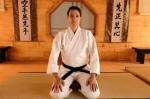
JosiahReishiki comes from two Japanese words, the first is ‘Rei’ which can be interpreted as a bow, courtesy, thanks and appreciation.  The second word “Shiki” can be interpreted as a ceremony.  The word Reishiki can therefore be interpreted as ceremonial manners or etiquette.

The Reishiki procedure that is observed at the beginning and the end of the class is as follows:

  • Ritsu rei – standing bow to Sensei.
  • Seiza – Sensei sits (formal sitting position), the class sits in seiza facing shomen and prepares for class.
    • The head student (Sempai) calls out:
    • Mokuso – which means close your eyes and clear your mind  (Silence for approximately 1 minute or more)
    • Kaimokubowing 1meaning open your eyes or “Mokuso Yame” meaning finish meditation.
    • Zarei – next the class performs three zarei or sitting bows when the head student calls out –
    • Shomen ni rei – meaning bow to the front of the dojo.  After this the Sensei will turn around and face the class.
    • Sensei ni rei – meaning bow to the teacher. As the class bows to the teacher the teacher will return the bow.  As a student bows they recite “Onegaishimasu” which can be interpreted to mean please teach me.
    • Otagai ni rei – meaning bow to each other. Both the teacher and the students will bow to each other at the same time.  This is to acknowledge that we are all students of the art of Karate do.
  • At this point the Sensei will indicate that the class should stand up and training will begin.

After the training session is finished, the above procedure is followed again except in the Sensei ni rei section, the students bow and recite “Sensei arigato gozaimasu” which means thank you.

Dave Hatte – Sensei arigato gozaimasu.


Why Kata?

Karateforlife.net(1)

What is Kata?

  • Kata is a series of pre-determined fighting moves designed by the original founders of karate to pass a dialogue on defense strategies from teacher to student.
  • Kata is made up of both basic and complex karate moves that are sequenced in a specific order to defend against one or many imagined attackers. A practitioner practices these set moves first for memory,  then for proficiency.

Once a kata has been learned, it must be practiced repeatedly until it can be applied in an emergency.  For knowledge of just the sequence of a form in karate is useless. – Ginchin Funakoshi

What are the benefits of Kata?

  • There is no age limitation on learning kata, you can start at any time, even if you haven’t practised karate before, it is never too late.
  • Unlike some activities such as football, running and other heavy impact type games, you can continue to practise kata your entire life, it will not wear your the joints,  it will strengthen their formations.
  • When taught correctly and with meaning kata has been proven to be a an effective means to learn the art of self-defense.
  • Kata practise facilitates proficiency of technique, builds muscle memory, flexibility, strength, mindfulness, stamina and breath control.
  • When learning a kata from a traditional karate style students have the opportunity to learn from the great masters who developed kata as a vehicle to pass on their own self-defence techniques in these neatly packaged gifts we call kata.

Is it difficult to learn Kata?

  • No, but it does take time.  Kata is practiced over and over again.  Until the movements are known intrinsically and become second nature to the practitioner, then they are practiced some more.  Lots more.
  • Kata movements are finely tuned again and again with mindful repetition, where the practitioner pays attention to every required act of it’s  ultimate simplicity.

“In the past, it was expected that about three years were required to learn a single kata, and usually even an expert of considerable skill would only know three, or at most five, Kata.” – Ginchin Funakoshi

“Karate-do is a lifetime study.”  – Kenwa Mabuni

Kata should form the largest part of your karate training.

  • This is a contentious issue amongst many new karate practitioners that believe kumite  to be the crux of training.   Kumite is a game of tag with a live opponent, designed to put you under stress, it is about how many times you can get hit, fall down and get back up again.  If that is how you choose to test your mettle then please go ahead.  I believe that kumite should be reserved as either an event at a sports karate tournament or practised because it is a requisite to achieve your next rank, it should not be the main focus of your training.  A  more experienced karate practitioner will tell you that kata should be ninety percent of your training so that the movements developed through kata will  become so intrinsic within your physical makeup that kata itself will form the foundations of your kumite bouts.

Kata is the Art of Karate, it is where the stories are told and true battles are won.  The repetitive nature of kata practise, quietens your mind and teaches your body how to respond to stress, attachment and fear.  True kata practise requires commitment, focus and mindfulness.  You need to listen to your body and recognise when your muscles are shifting incorrectly and adjust them accordingly.

When practising kata you need to develop timing, fluidity, tension and softness.  It is not enough to tell this karate story in a bland monotone series of techniques, you need to learn how to bring the story alive.

“Don’t practice until you get it right.  Practice until you can’t get it wrong.”  –   Roger Gracie

Benefits of Karate for Children’s Development

In the age of instant gratification, everyday rewards and entitlements Karate teaches us that persistence, respect and humility are the ways forward.  As parents we want the best for our kids and we want our kids to be able to achieve their best.  We want them to be the best version of themselves.

The following list is compiled of the six attributes Karate training in the right dojo will promote in your child.  They only have to turn up, walk through the door and listen.

  1.  Confidence:  Walking through the door on that first day takes courage, curiosity and maybe a little push dappled with parental assurance.  New experiences get easier to approach in time and while the fear never goes away completely, the more times you put yourself in a new situation the more coping mechanisms you build.  Kids learn instinctively that they need to make eye contact, start a conversation, simply smile. Making friends greatly improves all new situations and this is just in the beginning, wait until you see what learning new techniques,  mastering complicated routines and achieving the next phase in their syllabus will do.
  2. Focus: Classes usually run for an hour at a time and are often made up of drills, partner work, group work and solo training.  What a student gets from his class depends on the time actually spent being mindful in the dojo and their ability to do this will increase with practise.  It is a skill they can develop and that will automatically be transferred into all other areas of their lives.
  3. Self-Discipline:  This starts with  getting ready, looking after your gi and equipment, walking through the door and turning up to class, even when it is too hot, or too cold and your favourite show is on the television.
  4. Self-Defense: A common reason to start training but it is not the be all and end all of a students achievement in the dojo.  Rarely do karate students need to defend themselves, they learn to avoid dangerous situations, to take care to themselves and importantly they learn how to behave in situations so that they do not escalate.
  5. Leadership: As a student progresses through the ranks they become a role model for new and younger students.  A good club will encourage students (under guidance) to share their knowledge with others to improve the development of everyone within the dojo.
  6. Respect:  “Karate starts with etiquette and finishes with etiquette”   K Tomiyama,  Fundamentals of Karate-do (1990).  Shihan Tomiyama goes on to write more about rei – a bow or more broadly etiquette [that]”.. signifies the utmost importance of proper etiquette in karate.  Not only karate but all Japanese martial arts stress the importance of proper etiquette as a means of self-defence ……….. A person of good etiquette possesses an aura of dignity and quite naturally gains respect from those he is in contact with.  Thus there is much less chance of his being involved in arguments and being forced to defend himself physically.  This teaching does not stop there,  the real aim of practising the martial arts is to develop a complete person, fit physically and mentally, which is consequently beneficial to society...” p15

For more information visit  Karate for Life