When you start looking for a karate school for yourself or your child, you’ll quickly discover there are different approaches to teaching this martial art. The two main categories are traditional karate and sport karate, and understanding the difference can help you make the right choice for your family.
Sport karate, focuses primarily on competition. Classes are designed to prepare students for tournaments where they perform kata (forms) and kumite (sparring) for judges. The emphasis is on:
– Winning trophies and medals – Point-scoring techniques – Competition strategies – Performance for judges – Speed and flash over substance – Age and weight divisions
Sport karate has its place and can be exciting to watch. However, it’s fundamentally different from the martial art that originated in Okinawa centuries ago.
Traditional karate, like the Kofukan style we teach at Karate for Life, preserves the authentic teachings passed down through generations. Our focus is on:
Real Self-Defense We teach techniques that work in real-world situations, not just in tournaments with rules and referees. Students learn practical applications of every movement, understanding the “why” behind each technique.
Character Development Traditional karate is as much about building character as building fighting skills. Students develop: Respect for themselves and others Discipline that carries into all areas of life Perseverance through challenges Humility and confidence in balance Mental resilience
Lifelong Learning There’s no finish line in traditional karate. Even our black belts are still learning, still growing, still discovering new depths in techniques they’ve practiced for years. This isn’t about getting a trophy and moving on, it’s about continuous self-improvement.
Control and Precision We emphasise control over full-contact. Students learn to execute techniques with power AND restraint. This teaches both physical control and mental discipline. As we often say, we’d run out of training partners quickly if we allowed full contact with our techniques!
Cultural Respect Traditional karate honours its roots. Students learn Japanese terminology, understand the history and philosophy behind the art, and respect the lineage of masters who preserved these teachings.
We don’t ban competition, students who want to compete have opportunities through our inter-club tournaments, the Australian Karate Federation, and International Kofukan competitions. But competition is optional, never required, and never the primary focus.
Instead, we focus on: Mastering traditional kata with understanding Developing real-world self-defense skills Building confidence from the inside out Creating a supportive community Teaching values that last a lifetime
Which is Right for Your Family? If your goal is primarily to win trophies or prepare for sport competition, sport karate might be a better fit.
But if you’re looking for: Life skills that extend beyond the dojo Character development alongside physical skills A martial art that grows with you for decades Practical self-defense knowledge A supportive community focused on personal growth
Then traditional karate is the answer.
The Proof is in the Students We’ve had families training with us for 4, 5, even 6+ years. Students who started as shy children are now confident teenagers. Adults who walked in thinking they were “too old” or “not athletic enough” are now thriving martial artists.
Why? Because traditional karate isn’t about being the fastest or the flashiest. It’s about becoming the best version of yourself and that’s a goal that never gets old.
Ready to experience traditional Kofukan Karate? Book a free trial at Karate for Life and discover the difference for yourself. No pressure, no obligation, just a chance to see what authentic martial arts training can do for you or your child.
by Don McKay (as seen in Martial Arts Magazine Australia, Issue 10)
As a karate instructor who has taught children for over twenty years, I’ve witnessed countless transformations. Shy children discovering their voice. Anxious children finding confidence. Aggressive children learning self-control. But perhaps the most profound transformations I’ve observed involve children affected by bullying. Both those who have been targeted and those who might have become bullies themselves.
Bullying remains one of the most pressing issues facing Australian children today. Statistics suggest that approximately one in four Australian students experience bullying, with consequences ranging from poor academic performance to anxiety, depression, and in tragic cases, self-harm. Parents desperately seek solutions, and many turn to martial arts hoping to help their children. However, there’s often a misunderstanding about what martial arts offers children facing bullying situations.
Let’s explore how traditional martial arts training—particularly styles like karate that emphasise character development alongside physical technique—addresses bullying from multiple angles. It’s not simply about teaching children to defend themselves physically (though that’s one component). More importantly, it’s about building the internal qualities that make children less likely to be targeted, more capable of responding appropriately when they are, and crucially, less likely to become bullies themselves.
Before we talk about how martial arts helps, we must understand what we’re addressing. Bullying isn’t a simple childhood conflict. It’s characterised by an imbalance of power, repetitive harmful behavior, and intent to cause distress. It manifests as physical aggression, verbal abuse, social exclusion, or increasingly, cyberbullying.
Children who are bullied often share certain characteristics: they may appear vulnerable, anxious, or physically weak; they might lack confidence or struggle to assert boundaries; they may be perceived as “different” in some way. Importantly, being bullied is never the child’s fault, but understanding these patterns helps us recognise how martial arts training addresses underlying vulnerabilities.
Children who bully often have their own struggles. Research indicates many lack empathy, have poor emotional regulation, may have experienced aggression themselves, or lack positive role models for respectful behavior. They may feel powerless in other areas of life and attempt to gain power through dominating others.
Martial arts addresses both sides of this equation. Building resilience in potential targets whilst cultivating respect and empathy in all students, including those who might otherwise develop bullying tendencies.
The most immediate and visible change in children who begin martial arts training is the growth of confidence. This isn’t the false bravado that might lead to aggressive behavior; it’s a quiet, genuine self-assurance that comes from competence and self-knowledge.
Mastery builds confidence: When a child struggles to execute a proper front kick for weeks, then suddenly gets it right, something shifts internally. They’ve proven to themselves that persistence pays off, that they can improve, that they’re capable. This achievement is entirely their own—no one can do a kata for them or execute their techniques. The confidence that develops from genuine accomplishment is unshakeable.
Physical capability matters: Let’s be honest—knowing you’re physically capable, that you could defend yourself if absolutely necessary, changes how you carry yourself. Children who train in martial arts develop better posture, stronger body language, and move with more certainty. Bullies instinctively seek out targets who appear vulnerable. A child who walks with confidence, makes eye contact, and occupies space with assurance is simply less likely to be selected as a target.
However, and this is crucial—we never teach children that physical response is the first, or even second, solution to bullying. Physical self-defence is the last resort, used only when in immediate physical danger and escape isn’t possible. The confidence martial arts builds is primarily about internal strength and self-respect, not fighting prowess.
Voice and boundary setting: In our dojo, we regularly practice the verbal components of self-defence—speaking firmly, saying “no” clearly, using assertive body language. Many children who are bullied struggle to assert boundaries. They may freeze, look down, or speak softly when confronted. Karate training, with its emphasis on the kiai (shout) and strong, direct communication, helps children find their voice.
I’ve had many parents tell me that their child’s changed demeanour alone: walking taller, speaking more confidently, making eye contact—led to bullying stopping without any physical confrontation whatsoever. Bullies rarely persist with targets who clearly won’t accept mistreatment.
Martial arts training develops heightened awareness that serves children in multiple ways.
Situational awareness: We teach students to be aware of their surroundings, to notice who’s around them, to identify potential problems before they escalate. This isn’t about paranoia; it’s about being present and observant. A child who’s paying attention can avoid many bullying situations entirely by choosing different routes, staying near adults or friends, or leaving situations that feel unsafe.
Reading body language: Through partner work and sparring practice, students become skilled at reading non-verbal cues. Children learn to recognise when someone is agitated, aggressive, or potentially threatening. This skill helps them navigate social situations more effectively and respond appropriately to warning signs.
De-escalation strategies: Traditional martial arts philosophies emphasise avoiding conflict whenever possible. We explicitly teach children that walking away from confrontation isn’t cowardice—it’s wisdom. We role-play scenarios where children practice:
Using calm, non-confrontational language
Removing themselves from situations before they escalate
Seeking adult help appropriately
Recognising when a situation requires immediate intervention from authorities
Physical awareness: Children who train in martial arts develop body awareness and control that translates to daily life. They’re less likely to accidentally invade others’ personal space, more aware of appropriate physical boundaries, and better able to recognise when their own boundaries are being violated.
The Respect Culture: The Heart of the Solution
Here’s where we reach the core of how martial arts addresses bullying from both sides. Traditional martial arts dojos are, fundamentally, communities built on respect.
In the dojo, respect isn’t just politeness. It’s a comprehensive approach to how we interact with others and ourselves.
Respect for instructors and seniors: Students bow to instructors, address them properly, and listen attentively. This isn’t about authoritarian control; it’s about acknowledging the knowledge and experience others offer us.
Respect for peers: Students of all abilities train together. The advanced student helps the beginner. The strong support the weak. The quick assist the slow. We explicitly teach that everyone’s journey is different, and we celebrate each person’s progress rather than comparing or competing destructively.
Respect for oneself: Perhaps most importantly, we teach self-respect. This means caring for your body, pushing your limits appropriately, acknowledging your achievements, and treating yourself with the same kindness you’d show others.
Respect for the art: Students care for their uniform, maintain the dojo space, and approach training with sincerity and effort. These practices cultivate a general attitude of care and respect that extends beyond the dojo.
Children who genuinely understand and embody respect do not bully others. Let me explain why:
Empathy development: The respect we teach includes recognition that others have feelings, struggles, and value. When you’ve bowed to your training partner, worked together on techniques, helped them improve, and received their help in return, you can’t easily objectify or harm them. Partner training in martial arts builds empathy in a visceral, physical way.
When children practice controlled sparring, they learn directly what it feels like to be hit, even lightly. They understand the vulnerability of allowing someone close to you in combat scenarios. This builds a deep understanding of others’ vulnerability that translates to compassion outside the dojo.
Power and responsibility: Martial arts students are repeatedly taught that with physical capability comes responsibility. We emphasise that techniques are for self-defence only, never for aggression or showing off. Students who violate this principle face serious consequences, including dismissal from the dojo.
I tell my students: The strongest martial artist is the one who never needs to fight. This message—that true strength is shown through restraint, kindness, and protecting others—is antithetical to bullying behavior.
Self-regulation: Martial arts training is challenging. Students face frustration, failure, and discomfort regularly. Through this, they develop emotional regulation and stress management skills. Children who can manage their own emotions don’t lash out at others to feel powerful.
Positive outlet: Children who might have aggressive tendencies or excess energy find an appropriate outlet in martial arts. The physical intensity of training, combined with the disciplined structure, channels energy constructively rather than destructively.
Positive identity: Being a martial artist becomes part of a child’s identity—and it’s an identity built on positive values. Children think, “I’m a karateka, and karateka don’t bully people.” This internal identity becomes a guide for behavior.
The Dojo as Safe Community
For children who’ve been bullied or feel socially isolated, the dojo offers something precious: belonging.
Acceptance: In our dojo, what matters is effort, respect, and character—not social status, physical appearance, academic achievement, or any of the other factors by which children are often judged. The child who’s targeted at school for being “different” finds acceptance in the dojo.
Positive peer relationships: Children train alongside others who share their interest in martial arts. Friendships formed in the dojo often become some of children’s strongest relationships, providing social support that extends beyond training.
Adult mentorship: Quality martial arts instructors serve as positive role models, offering guidance, encouragement, and sometimes simply a listening ear. For children lacking positive adult influences, this relationship can be transformative.
Earned achievement: In a world where children sometimes feel powerless, martial arts offers a clear path to achievement. Belt progression is earned through genuine effort and skill development. No one can give it to you or take it away. This builds a sense of agency and control.
Beyond the psychological and social benefits, martial arts provides children with practical strategies for addressing bullying:
The assertive response: We practice responding to verbal aggression with calm, firm statements: “Stop. I don’t like that.” “That’s not okay.” “Leave me alone.” These simple phrases, delivered with confident body language, are often enough to stop bullying behavior.
The broken record technique: If the bully persists, we teach children to repeat their statement calmly without engaging in argument or showing emotional reaction. Bullies seek a reaction; children who refuse to provide one become less interesting targets.
Strategic distance: We teach children to maintain appropriate physical distance from potential threats. If someone is being aggressive, you step back, creating space. This is both a physical safety strategy and a non-escalatory response.
Seeking help appropriately: We explicitly teach that telling adults about bullying isn’t “snitching”—it’s appropriate help-seeking. We distinguish between tattling (trying to get someone in trouble for minor issues) and reporting (seeking help for serious, harmful behavior).
Documentation: For persistent bullying, we encourage children and parents to document incidents—dates, times, what happened, who witnessed it. This information is crucial when involving school authorities.
We must address this directly: there are situations where physical self-defence may be necessary.
If a child is in immediate physical danger—being hit, grabbed, or physically attacked—they have the right to defend themselves. Martial arts training provides the skills to do so effectively and proportionally. However, we teach clear guidelines:
Use minimum necessary force: The goal is to create an opportunity to escape, not to “win a fight” or inflict harm.
Defend, don’t attack: Martial arts techniques are never for initiating aggression.
Escape is the priority: Even if you could physically dominate the situation, the wisest choice is to get to safety and adult help.
Report immediately: Any physical altercation must be reported to parents and school authorities, even if the child successfully defended themselves.
I’ve taught karate to hundreds of children, and very few have ever needed to use physical self-defence against bullying. The vast majority find that the confidence, awareness, and verbal skills they’ve developed prevent situations from escalating to physical confrontation.
Addressing bullying requires partnership between martial arts training, parents, and schools.
Parents must:
Maintain open communication with children about their social experiences
Take reports of bullying seriously and investigate appropriately
Work with schools to address bullying behavior
Reinforce the values taught in the dojo
Model respectful behavior in their own interactions
Understand that martial arts is one component of addressing bullying, not a complete solution
Address any bullying behavior within the dojo immediately and seriously
Communicate with parents about children’s development and any concerns
Provide age-appropriate reality-based training while maintaining safety
Recognise signs that children may be struggling and offer support
Schools must:
Take bullying reports seriously and investigate thoroughly
Implement evidence-based anti-bullying programs
Create safe reporting mechanisms for students
Apply appropriate consequences for bullying behavior
Support targeted students without stigmatising them
Recognise that martial arts training is legitimate skill development, not promotion of violence
Real Transformation: Stories from the Dojo
Over the years, I’ve witnessed remarkable transformations.
The quiet eight-year-old who was daily targeted with verbal abuse and social exclusion. After six months of training, she walked differently, spoke up in class, and made friends in the dojo. The bullying gradually stopped—not because she fought back, but because she no longer presented as an easy target.
The physically large twelve-year-old boy who was using his size to intimidate smaller children at school. His parents enrolled him in our dojo hoping to “channel his energy.” What actually happened was more profound: through learning to control his power in sparring, receiving correction when he was too rough, and being held to high behavioural standards, he developed restraint and empathy. He became a protective presence for smaller students rather than a threatening one.
The ten-year-old who had been physically bullied and was terrified. Karate didn’t make him capable of fighting off his bullies (though he did develop skills). What it did was build his confidence enough that he could clearly tell adults what was happening, and his changed demeanour meant he was no longer targeted once the school addressed the situation.
These cases are representative of what happens when children are immersed in a culture of respect, capability, and mutual support.
The Bigger Picture: Creating Respectful Humans
Ultimately, the relationship between martial arts and bullying is about something larger than individual incidents. It’s about creating human beings who fundamentally respect others.
A child who has learned genuine respect—who understands that everyone deserves dignity, who recognises others’ vulnerability, who uses power responsibly, who stands up for the weak—is not only unlikely to bully but likely to be part of the solution. These children become the ones who befriend isolated classmates, who speak up when they witness mistreatment, who create inclusive environments.
Conversely, a child who has learned self-respect, who knows their own worth, who possesses genuine confidence and capability—this child is resilient against attempts to diminish them.
Martial arts doesn’t “fix” bullying. Bullying is a complex social issue requiring comprehensive approaches including school policies, parental involvement, social-emotional education, and sometimes professional mental health support. But martial arts can be a powerful component of the solution, addressing root causes rather than just symptoms.
If your child is facing bullying, or if you’re concerned they might be developing bullying behaviours, consider what quality martial arts training offers: a community built on respect, a path to genuine confidence, practical skills for navigating social challenges, positive peer relationships, adult mentorship, and most importantly, a framework for understanding their own worth and the worth of others.
Look for schools that emphasise traditional values alongside physical techniques, that maintain high behavioural standards, that create inclusive environments, and where instructors genuinely care about students’ character development, not just their competitive success.
The techniques children learn in martial arts are useful. The confidence they develop is valuable. But the respect they embody—for themselves and others—is transformative. It changes not just how they respond to bullying, but who they become as human beings.
And perhaps that’s the most important lesson: we don’t just teach children to defend against bullies. We teach them to become the kind of people who make bullying less likely to occur in the first place. That’s the true power of martial arts.
As a parent, you’re probably wondering what actually happens in those classes beyond learning to punch and kick. Fair question. While the physical techniques are certainly part of it, they’re almost the least interesting aspect of what children develop through karate training.
Focus in an Age of Distraction
Your child lives in a world engineered for distraction. Apps designed by the smartest people in technology specifically to capture and fragment attention. Notifications, autoplay, infinite scroll. Then we wonder why kids struggle to focus on homework or follow multi-step instructions.
Karate class offers something radical: an environment where attention is non-negotiable. When you’re learning a kata, you can’t check your phone between moves. When Sensei demonstrates a technique, you can’t pause and rewind. You either pay attention or you miss it. The structure teaches sustained focus—not through lectures about concentration, but through natural consequences of inattention. We see this transformation regularly. Children who arrive scattered and distracted gradually develop the ability to track complex sequences, remember detailed instructions, and stay present for the entire class. It’s not magic—it’s practice.
Body Awareness and Physical Literacy
Modern childhood often means remarkably little actual physical challenge. Children grow up strong enough to tap screens and manipulate controllers but struggle with basic body control—balancing on one leg, coordinating opposing limbs, understanding where their body is in space.
Karate systematically develops this physical literacy. Students learn to control their centre of gravity, generate power from rotation rather than just arm strength, move with precision and intention. They develop awareness of how their body works, what good posture feels like, how to move efficiently.
This foundation translates across every other physical activity they’ll encounter. Better coordination, better balance, better spatial awareness—whether they’re playing sport, learning to drive, or just navigating crowded spaces without bumping into everything.
Learning to Lose (and Win) with Grace
Here’s something you don’t see advertised much: your child will fail regularly in karate class. They’ll attempt techniques they can’t yet perform. They’ll lose in sparring. They’ll watch younger or newer students surpass them in areas where they themselves struggle. And this is absolutely essential.
The dojo provides a structured environment to experience both success and failure without catastrophic consequences. Losing a point in kumite doesn’t mean you’re inadequate—it means you’re learning. Struggling with a particular kick doesn’t mean you lack talent—it means you’ve found your current edge.
Children develop resilience by experiencing setbacks in a supportive context. They learn that losing is information, not identity. They discover that the student who bests them today might be someone they’re helping next month in a different area. They see victory and defeat as temporary states, not permanent labels.
Confidence Through Competence
The quiet confidence that emerges from karate training isn’t the loud, performative kind. It’s not about feeling superior to others or needing to prove yourself. It’s the settled assurance that comes from knowing you’ve earned your progress through genuine effort.
When a child earns their next belt, they know—genuinely know—that they can do things today they couldn’t do six months ago. They have evidence of their own capacity to improve through persistent effort. That knowledge changes how they approach new challenges in other areas of life.
This isn’t confidence granted through participation trophies or inflated praise. It’s confidence built through real achievement: successfully performing techniques under pressure, helping newer students, pushing through the frustration of repeated failure until something finally clicks.
What This Actually Looks Like
Parents often notice changes before their children do. The kid who couldn’t sit still through dinner now practices kata in the backyard without being asked. The one who melted down at every setback starts problem-solving when techniques don’t work the first time. The child who needed constant external validation becomes more comfortable with internal standards of progress.
These aren’t overnight transformations, and they’re not universal. Every child progresses at their own pace. But the structure of traditional karate training creates conditions where these developments become possible—and with consistent practice, increasingly likely.
So yes, your child will learn kicks and punches. They’ll learn blocks and stances and kata. But what they’re really learning is how to focus, how to fail productively, how to persist through difficulty, and how to build genuine confidence through real achievement.
That’s what actually happens in karate class. And it’s considerably more useful than any individual technique they’ll learn.
In a world of quick fixes, viral workout trends, and martial arts franchises promising black belts in eighteen months, traditional karate might seem outdated. After all, who has time for the slow, deliberate path when you can get certified in mixed martial arts fundamentals over a weekend workshop?
Here’s why: because real skill doesn’t work that way. Never has, never will.
What Traditional Actually Means
When we talk about traditional karate at Karate for Life, we’re not talking about dusty museums or rigid adherence to methods that made sense in 1920s Okinawa but don’t translate to modern Western Australia. Traditional doesn’t mean inflexible.
It means something more fundamental: we respect the depth of knowledge that comes from techniques refined over generations. We understand that kata aren’t just choreographed movements to memorise for your next grading, that they are sophisticated teaching tools that encode principles of balance, timing, power generation, and tactical awareness. Strip away the traditional framework, and you lose the systematic progression that makes these principles stick.
The Problem with McDojo Culture
Walk into certain commercial dojos and you’ll find belt factories. Children earning black belts before they hit puberty. Adults collecting coloured belts like merit badges, each one requiring just enough commitment to keep the membership fees flowing but not enough to actually transform how they move or think.
Traditional training operates on a different economy. Progress is measured in years, not months. A black belt isn’t a participation trophy, it’s recognition that you’ve built a foundation solid enough to learn more. This isn’t gatekeeping or elitism. It’s an acknowledgment that some things genuinely take time.
Building Real Resilience
The traditional approach builds resilience precisely because it doesn’t cater to instant gratification. You’ll spend weeks perfecting a basic stance that feels awkward and unnatural. You’ll practice the same block hundreds of times before it becomes reflexive. You’ll plateau—sometimes for months—and the only way through is persistence.
This frustration tolerance transfers. Students who stick with traditional karate develop the capacity to work through difficulty in other areas of their lives. They learn that progress isn’t always linear, that mastery requires repetition, and that there’s profound satisfaction in earning something rather than having it handed to you.
Why It Works in Practice
Traditional doesn’t mean static. Sensei Don has trained for decades, and that experience shapes how he teaches. He knows which principles are non-negotiable and which aspects of training can adapt to modern contexts, different body types, age-related considerations, or specific goals.
A fifty-year-old student won’t train exactly the same way as a twenty-year-old, but both are learning the same fundamental principles. The traditional framework provides consistency while allowing for individual variation. That’s the beauty of it—the system has enough depth to meet people where they are.
The Long Game
Traditional karate matters in 2026 for the same reason it mattered in 1926: because some forms of knowledge can’t be compressed or commodified without losing what makes them valuable. The slow path isn’t inefficient—it’s the actual path. The destination isn’t a belt or a certificate. It’s becoming someone who moves differently, thinks differently, handles stress differently, faces challenges differently.
When our new term kicks off on February 2nd, we’ll welcome students who are ready to invest in that journey. Not because traditional karate is trendy or convenient, but because it works—and it works precisely because it refuses to cut corners.
That’s why traditional karate still matters. And that’s why it always will.
In Japanese martial arts, success in combat often hinges not just on what technique you use, but when you choose to use it. This mastery of timing, developed over centuries of martial tradition, is encapsulated in three fundamental principles: Sen, Go no Sen, and Sen no Sen. These concepts, which can be thought of as initiative in combat, form the backbone of strategic movement in styles like Shito-ryu Karate and extend far beyond simple attack and defence. While they may appear straightforward at first glance – attacking first, countering, or pre-empting – these principles represent increasingly sophisticated levels of martial awareness and tactical thinking. Understanding and applying these concepts transforms basic techniques into effective combat strategies, elevating a practitioner’s ability from mere mechanical reproduction to intuitive mastery.
Sen, Go no Sen, and Sen no Sen are fundamental concepts in Japanese martial arts that deal with the timing of defensive and offensive actions. In Shito-ryu Karate, which combines elements of both Naha-te and Shuri-te traditions, these principles are particularly important.
Sen (先) – basic initiative. This is the simplest form of timing, where you take the initiative to attack first. In Shito-ryu, this is often demonstrated through techniques like mae-geri (front kick) or gyaku-zuki (reverse punch) as opening moves. However, pure Sen is considered somewhat basic because it can be predictable and leaves you potentially vulnerable.
Go no Sen (後の先) – late/reactive initiative. This principle involves letting your opponent initiate the attack, then countering. This is often practiced through defensive techniques followed by immediate counters. For example, when an opponent throws a chudan-zuki (middle punch), you might execute a chudan-uke (middle block) followed by a counter-strike. The timing must be precise – you’re essentially stealing your opponent’s momentum and using it against them.
Sen no Sen (先の先) – pre-emptive initiative. This is considered the most advanced of the three principles. In Sen no Sen, you anticipate your opponent’s attack and move at the same moment they begin their technique, essentially intercepting them before their attack can fully develop. In Shito-ryu, this might manifest as a simultaneous block and counter or moving off-line while striking as the opponent begins their movement. This requires precise reading of your opponent’s intentions (yomi) and precise timing.
Underlying all three timing principles is the concept of zanshin (残心) – a state of continued awareness and readiness. Without zanshin, these timing principles become merely mechanical movements rather than effective martial techniques. Zanshin provides the mental foundation that allows a practitioner to effectively choose and execute the appropriate timing principle in any given situation.
Shito-ryu’s founder, Kenwa Mabuni, emphasised the importance of understanding these principles through both hard (go) and soft (ju) applications. The style’s combination of Shorei-ryu (emphasizing power) and Shorin-ryu (emphasising speed) elements means that these timing principles can be applied with either powerful, direct techniques or lighter, more circular movements.
The development of Sen, Go no Sen, and Sen no Sen follows a specific learning progression that mirrors the traditional martial arts concept of “Shu-Ha-Ri” (守破離) – the stages of learning from rigid adherence to principles, through breaking with convention, to transcendent understanding. This framework helps us understand how to structure training methods effectively:
Initial Phase (Understanding)
Each timing principle first must be understood in isolation.
Students develop basic pattern recognition through controlled practice.
Physical techniques are practiced with deliberate speed to build proper form.
Mental aspects focus on single-point awareness.
Integration Phase (Application)
Combinations of timing principles are introduced.
Speed and power are gradually increased.
Focus shifts to reading opponent’s intention (yomi).
Development of peripheral awareness while maintaining centre.
Introduction of variable timing and rhythm (hyoshi).
Advanced Phase (Intuition)
Seamless transition between timing principles.
Development of mushin (無心) – the “no-mind” state where action becomes intuitive.
Integration of zanshin with natural movement.
Understanding of maai (間合い) – the relationship between space, time, and opportunity.
This theoretical progression informs how we structure training methods, moving from:
Isolated practice (kihon) where each principle is trained separately.
Combined practice where principles are linked together.
Adaptive practice where principles are applied spontaneously based on circumstance.
The key to this progression is understanding that each timing principle represents not just a physical action, but a mental state and strategic approach. For example:
Sen requires the mental clarity to recognise opportunities and the confidence to seize them.
Go no Sen develops patience and the ability to remain calm under pressure.
Sen no Sen cultivates heightened awareness and the ability to read subtle cues.
In Shito-ryu training, these principles are often practiced through:
Kihon (basics): understanding the fundamental timing through basic techniques.
Kata: many Shito-ryu kata contain sequences that demonstrate all three principles.
Kumite: where these principles are applied in real-time against an opponent.
The goal in Shito-ryu is to master all three principles and know when to apply each one appropriately, rather than relying too heavily on any single approach.
Zanshin (残心) – the state of continued awareness and readiness – is absolutely crucial in mastering Sen, Go no Sen, and Sen no Sen.
In relation to Sen:
Zanshin ensures that after taking the initiative to attack, you remain aware and prepared for potential counters.
Without proper zanshin, executing Sen becomes dangerous as you may be vulnerable after your initial attack.
The maintenance of zanshin helps you assess whether your Sen technique was effective and allows you to adapt if needed.
In Sen no Sen:
This principle requires the highest level of zanshin as you must maintain constant awareness of your opponent’s subtle movements and intentions.
Proper zanshin allows you to detect the earliest signs of an attack, making true Sen no Sen possible.
The maintained awareness helps you adjust your timing and technique during the execution of Sen no Sen.
In Practice:
Zanshin should be maintained before, during, and after executing techniques.
It involves both physical and mental aspects: proper posture, breathing, and mental alertness.
Even in kata practice, zanshin should be maintained as if facing a real opponent.
The kime (focus) at the end of each technique should be accompanied by continued zanshin.
Without proper zanshin, these timing principles become merely mechanical movements rather than effective martial techniques.
Training methods to improve each of these timing concepts:
Sen Development:
Practice kihon (basics) with full commitment and power, focusing on clean, direct techniques.
Use makiwara or pad training to develop confidence in initial attacks.
Practice stepping drills focusing on explosive movement from a neutral stance.
Work with a partner on predetermined attack sequences, emphasising proper distance and timing.
Incorporate reaction drills starting from various kamae.
Go no Sen Improvement:
Practice blocking drills with immediate counters, gradually increasing speed.
Work with a partner doing semi-free sparring where you must wait for their attack before countering.
Use mirror training to improve reaction speed to incoming techniques.
Practice kata bunkai focusing on the defensive-to-offensive transitions.
Use multiple attackers in training to develop awareness of timing opportunities.
Sen no Sen Development:
Practice reading body language through partnered exercises, starting slowly.
Work on simultaneous block/strike combinations.
Use slow-motion sparring to develop sensitivity to movement initiation.
Practice intercepting techniques from various angles and distances.
Study video analysis of your own movement to identify earlier opportunities for technique application.
Integration Training:
Practice transitioning between all three timing principles in free sparring.
Use position sparring where you must apply specific timing principles based on your position.
Work with senior practitioners who can create realistic attack scenarios.
Practice kata with different timing emphases to understand how the principles are embedded.
Use blindfolded sensitivity drills to develop better reading of opponent’s intentions.
Sen, Go no Sen, and Sen no Sen principles can be found within Pinán Nidan (平安二段), also known as Heian Nidan in some styles. To illustrate these principles in practical application, we can examine Pinán Nidan (平安二段), which serves as the first Pinán kata introduced in our style’s curriculum and provides clear examples of all three timing concepts within its sequences.
Sen (Basic Initiative):
The opening sequence where you step out into nekoashi-dachi with a tetsui-uke movement demonstrates Sen. You’re taking the initiative to establish a defensive position while simultaneously preparing for a counter.
The double nukite (spear hand) strikes in the kata also demonstrate Sen – they are direct, initial attacks showing basic initiative.
Go no Sen (Reactive Initiative):
The sequence with the age-uke (rising block) followed by the gyaku-zuki (reverse punch) clearly demonstrates Go no Sen. Here you’re blocking an incoming attack (typically a downward strike) and then countering – a classic example of reactive timing.
The gedan-barai (downward sweep) followed by gyaku-zuki is another Go no Sen application. The initial movement defends against an attack before launching your counter.
Sen no Sen (Pre-emptive Initiative):
The age-uke sequence can be applied as Sen no Sen. While often practiced as a block, one bunkai (application) shows it as simultaneously deflecting an incoming attack while striking the opponent’s attacking arm or body – catching them at the very initiation of their movement.
Understanding these principles in Pinán Nidan helps develop proper timing and initiative, which becomes increasingly important in the more advanced Pinán kata.
Japanese martial arts principles, Sen, Go no Sen, and Sen no Sen represent far more than mere tactical options—they embody a comprehensive philosophy of engagement that transcends technical execution. These timing concepts, woven into the fabric of Shito-ryu Karate through both its Naha-te and Shuri-te lineages, provide a framework not only for combat effectiveness but for deeper martial understanding.
The progression from Sen to Go no Sen to Sen no Sen mirrors the traditional learning path of Shu-Ha-Ri—moving from fundamental understanding through practical application to intuitive mastery. This journey is clearly illustrated in kata such as Pinán Nidan, where practitioners can identify and refine these principles through consistent practice. The opening tetsui-uke from nekoashi-dachi demonstrates basic Sen, while the age-uke followed by gyaku-zuki sequences embody Go no Sen, and the more sophisticated applications reveal Sen no Sen opportunities.
Critical to the mastery of these principles is the cultivation of zanshin, that state of continued awareness which transforms mechanical movements into effective martial techniques. Without zanshin, even perfectly executed techniques lack the vital dimension of readiness that enables a practitioner to adapt to changing circumstances. The development of zanshin must accompany each stage of timing development, from the confident commitment of Sen, through the patient receptivity of Go no Sen, to the anticipatory awareness of Sen no Sen.
The integration of these principles through structured training methods—progressing from isolated practice to combined application to adaptive implementation—creates a martial artist capable of responding appropriately to any situation. This methodology honours the wisdom of Kenwa Mabuni’s approach, balancing both hard (go) and soft (ju) applications through Shito-ryu’s unique synthesis of power and speed.
Ultimately, mastery of Sen, Go no Sen, and Sen no Sen transcends the dojo, offering insights applicable to many of life’s challenges. The ability to recognise when to take initiative, when to respond, and when to anticipate represents a strategic mindset valuable in numerous contexts. In this way, these ancient principles of timing continue to provide relevant guidance not only for martial excellence but for navigating the complexities of modern life with awareness, adaptability, and purpose.
As traditional martial wisdom teaches us, true mastery lies not in perfecting any single approach, but in understanding the appropriate application of each principle according to circumstance—a lesson embodied in the continued study and preservation of these fundamental concepts of timing in Japanese martial arts.
Glossary of Japanese Martial Arts Terms
Age-uke (上げ受け) – Rising block; an upward blocking technique typically used against downward strikes.
Bunkai (分解) – The analysis and practical application of techniques found within kata.
Chudan-uke (中段受け) – Middle-level block designed to protect the midsection.
Chudan-zuki (中段突き) – Middle-level punch directed at the opponent’s torso.
Gedan-barai (下段払い) – Downward sweeping block, often used against low attacks.
Go (剛) – Hard or firm; refers to direct, power-based techniques.
Go no Sen (後の先) – Reactive initiative; responding after an opponent initiates an attack.
Gyaku-zuki (逆突き) – Reverse punch; striking with the fist opposite to the forward leg.
Hyoshi (拍子) – Rhythm or timing in martial arts movements.
Ju (柔) – Soft or yielding; refers to circular, flexible techniques.
Kamae (構え) – Stance or posture; the ready position from which techniques are executed.
Kata (型) – Formal exercise consisting of predetermined movements and techniques.
Kihon (基本) – Basic techniques; the fundamental movements of the style.
Kime (決め) – Focus; the concentration of power at the moment of impact.
Kumite (組手) – Sparring; practice fighting with a partner.
Maai (間合い) – Combative distance; the space between opponents including considerations of timing and opportunity.
Mae-geri (前蹴り) – Front kick directed at the opponent’s midsection.
Makiwara (巻藁) – Striking post used for impact training.
Mushin (無心) – “No-mind” state; acting without conscious thought or hesitation.
Naha-te (那覇手) – One of the major Okinawan martial arts traditions; characterized by circular movements.
Nekoashi-dachi (猫足立ち) – Cat stance; weight primarily on the back leg with the front foot lightly touching the ground.
Nukite (貫手) – Spear hand strike using extended fingertips.
Pinán/Heian (平安) – Peace and tranquility; a series of five fundamental kata.
Sen (先) – Basic initiative; taking the first action in combat.
Sen no Sen (先の先) – Pre-emptive initiative; anticipating and moving simultaneously with an opponent’s attack.
Shorei-ryu (昭霊流) – A system emphasizing power development, associated with Naha-te.
Shorin-ryu (少林流) – A system emphasizing speed and mobility, associated with Shuri-te.
Shito-ryu (糸東流) – Karate style founded by Kenwa Mabuni that combines elements of Shorei-ryu and Shorin-ryu.
Shu-Ha-Ri (守破離) – Three stages of learning: following tradition, breaking with tradition, and transcending tradition.
Shuri-te (首里手) – One of the major Okinawan martial arts traditions; characterized by linear movements.
Tetsui uke (鉄槌受け) – Hammer fist block.
Yomi (読み) – Reading or perceiving an opponent’s intentions.
Zanshin (残心) – Continued awareness and alertness after executing a technique.
In an era where family time often competes with screens and busy schedules, Karate offers families a unique opportunity to train, grow, and bond together. This martial art, with its emphasis on respect, discipline, and continuous improvement, has found a special place in our modern culture, where families increasingly seek meaningful activities they can share.
Traditional karate has evolved significantly since its introduction to Australia in the 1960s. What began as primarily individual training has transformed into a family oriented practice, with many dojos now offering specialised family classes. This shift reflects both the changing needs of families and a deeper understanding of karate’s potential to strengthen family bonds.
Traditional karate offers comprehensive physical development for all age groups:
For children (6 -12 years):
Development of fundamental movement skills
Improved coordination and balance
Enhanced flexibility and strength
Better posture and body awareness
For teenagers:
Increased strength and endurance
Enhanced athletic performance
Improved reflexes and reaction time
Healthy weight management
For adults:
Full-body workout
Increased cardiovascular fitness
Better joint mobility
Stress reduction through physical activity
Mental and Emotional Benefits
Karate’s impact extends far beyond physical fitness:
For children:
Improved focus and concentration
Enhanced self-discipline
Better emotional regulation
Increased confidence and self-esteem
For teenagers:
Stress management skills
Enhanced goal-setting abilities
Improved mental resilience
Better self-control and patience
For adults:
Stress reduction
Mindfulness development
Improved mental clarity
Enhanced work-life balance
Family Benefits
Training together creates unique opportunities for:
Shared goals and achievements
Quality time in a structured environment
Mutual support and encouragement
Cross generational learning and teaching
The Thompsons exemplify the multi-generational impact of family karate. When seven-year-old Sarah showed interest in martial arts, her parents, Mark and Lisa, joined her instead of just watching from the sidelines. Within six months, Sarah’s grandmother, Janet, aged 65, also joined after seeing the positive changes in her family members.
“Initially, I was just there to support Sarah,” says Mark. “But watching her train sparked something in me. Now, three years later, we’re all preparing for our next belts together. It’s become our family’s shared passion.”
The Thompsons train twice a week at their local dojo, with additional practice sessions at home. They’ve noticed improvements in their communication, mutual respect, and overall family dynamics. Sarah’s school teachers have commented on her improved focus and confidence, while Janet reports better mobility and energy levels.
Managing Family Karate Training
1. Schedule Management:
Choose a dojo with flexible class times
Plan training sessions around school and work commitments
Consider weekend family classes for easier scheduling
Create a shared calendar for training days
2. Financial Planning:
Look for family membership discounts
Budget for equipment and grading fees
Consider multi-class packages
Plan for tournament and special event costs
3. Equipment Organisation:
Designate a specific area for karate gear
Create individual gear bags for each family member
Maintain a checklist for necessary equipment
Establish a routine for washing and maintaining gi (uniforms)
Overcoming Common Challenges
1. Different Skill Levels:
Embrace individual progress rates
Focus on personal improvement rather than comparison
Celebrate individual achievements
Use varied skill levels as teaching opportunities
2. Time Management:
Coordinate carpooling with other karate families
Combine training with other family commitments
Use travel time for family bonding
Plan meals around training schedule
3. Maintaining Motivation:
Set family and individual goals
Create a reward system for achievements
Document progress through photos and videos
Participate in community events and tournaments
Choosing the Right Dojo for Your Family
1. Teaching Philosophy:
Look for dojos that emphasise traditional values
Ensure the teaching style suits all family members
Check the instructor’s experience with family training
Observe multiple classes before committing
2. Facility Requirements:
Convenient location
Clean and safe training environment
Adequate changing facilities
Family friendly atmosphere
3. Class Structure:
Age appropriate instruction
Clear progression system
Family class options
Flexible scheduling
Getting Started
1. Initial Research:
Research local dojos
Read reviews and testimonials
Check accreditation and affiliations
Contact current members if possible
2. Trial Period:
Take advantage of trial classes
Observe different class times
Meet the instructors
Assess family comfort level
3. Equipment and Preparation:
Purchase appropriate gi (uniforms)
Invest in necessary safety equipment
Create a training schedule
Set initial family goals
Building Sustainable Practice
1. Create a Support System:
Connect with other karate families
Join dojo social events
Participate in community activities
Share experiences with extended family
2. Maintain Balance:
Set realistic training goals
Allow for flexibility in schedule
Respect individual preferences
Celebrate small victories
3. Progress Tracking:
Keep a family training journal
Document belt progressions
Record tournament participation
Share achievements on social media
Integrating Karate Values at Home
1. Physical Practice:
Designate a home training area
Practice basic movements together
Incorporate karate exercises into daily routine
Create family training challenges
2. Mental Application:
Use karate principles in problem solving
Apply dojo etiquette at home
Practice mindfulness techniques
Discuss karate philosophy during family time
Karate offers families a unique opportunity to grow together while maintaining individual development paths. The success stories of families like the Thompsons demonstrate that with proper planning and commitment, karate can become a transformative family activity.
The key to success lies in finding the right balance between commitment and flexibility, choosing an appropriate dojo, and maintaining open communication within the family. As more families discover the benefits of training together, traditional karate continues to develop as a powerful tool for family bonding and personal development.
Every family’s journey is unique, and the path to success may look different for each one. The most important aspect is the shared experience, and the memories created along the way. Whether your goal is physical fitness, mental development, or family bonding, traditional karate provides a comprehensive framework for achieving these objectives together.
As you embark on your family’s karate journey, remember that the benefits extend far beyond the dojo walls. The principles and values learned through traditional karate training can strengthen family bonds, improve communication, and create lasting positive changes in all aspects of life.
For families considering this path, the growing community of karate practitioners offers support, guidance, and inspiration. The journey may begin with a single step into the dojo, but it can lead to a lifetime of shared growth, achievement, and family unity.
“Everything you’ve ever wanted is on the other side of fear.”
George Addair
We’ve all been there. Standing at the edge of something new, heart racing, palms sweaty, thinking of a dozen reasons why “now isn’t the right time.” Whether it’s joining a karate class, learning a new skill, or making a life change, that feeling of fear can stop us dead in our tracks.
FEAR: False Events Acting Real
Let’s break down what’s really happening when fear stops us from trying something new like karate. FEAR is our mind’s way of protecting us from perceived threats. But here’s the thing: most of what we fear never actually happens.
When it comes to starting karate as an adult, these false events might look like:
I’ll look silly in front of everyone.
I’m too old/unfit/inflexible to start.
Everyone else will be better than me
I won’t be able to keep up.
What if I get hurt?
Sound familiar? Let’s get real about these fears and why they’re mostly just stories, we tell ourselves.
“Do one thing every day that scares you.”
Eleanor Roosevelt
As adults, we’ve got a lot more going on in our heads than kids do. We’ve developed this thing called ‘anticipatory anxiety’. Basically, we’re experts at imagining everything that could go wrong. Kids will often just rock up and give things a go. They fall, they get up, they laugh, they learn.
But somewhere along the way, we adults developed this need to be perfect from the get-go. News flash: that’s not how learning works. Never has been, never will be.
Common Fears About Starting Karate (And Why They’re Rubbish)
I’m Too Old/Unfit
Reality check: Many people start karate in their 40s, 50s, and even 60s. Your body is capable of amazing things when you give it time to adapt. Every single person in that dojo started as a beginner, and every single person had to work on their fitness and flexibility.
I’ll Look Silly
Here’s the truth: everyone looks uncoordinated at first. But here’s what happens in most dojos people are too focused on their own training to judge yours. Plus, the karate community is generally one of the most supportive you’ll find. They’ve all been where you are.
I Won’t Be Able to Keep Up
Good news: karate training is adaptable. A good instructor will modify techniques and training intensity to match your current ability level. You’re not expected to keep up with the black belts on day one (or ever, really everyone trains at their own pace).
What If I Get Hurt?
Traditional karate training prioritises safety and control. You’ll learn gradually, starting with basic movements and proper form. Most injuries in martial arts happen when people try to do too much too soon, which a good instructor won’t let you do.
Our brains are wired to protect us from danger, which was great when we were dodging sabre toothed tigers. Not so helpful when we’re trying to learn a new skill. This protection mechanism triggers our fight-or-flight response, making us:
Overthink situations
Create worst case scenarios
Look for reasons to avoid perceived risks
Stick to our comfort zones
But here’s the good bit: we can rewire these responses.
Overcome Your Fears – Start with Research
Read about the dojo and their teaching philosophy
Check out beginner testimonials
Watch some classes (most dojos welcome this)
Chat with current students
Take Baby Steps
Visit the dojo just to watch
Bring a friend for moral support
Start with a trial class
Set small, achievable goals
Reframe Your Thinking – Instead of:
I’m too old → I have life experience to bring to my training.
I might fail → I’m giving myself a chance to succeed.
The 5 4 3 2 1 Method – When Fear Creeps in:
Notice five things you can see
Four things you can touch
Three things you can hear
Two things you can smell
One thing you can taste
Then take action before your brain can talk you out of it.
“I put off starting for two years because I thought I was too unfit. Now I wish I’d started sooner. The hardest part was walking through the door that first time.”
The Hidden Benefits of Facing Your Fears
Starting karate as an adult isn’t just about learning self-defence or getting fit. It’s about:
Proving to yourself that you can do hard things
Building resilience that carries over into other areas of life
Developing a growth mindset
Finding a supportive community
Setting an example for your kids or others in your life
“I was worried about looking uncoordinated. Turns out everyone was so focused on their own training, they didn’t even notice me stumbling around. Three months in, and I’m helping newer students feel welcome.”
Making the Leap: Your Action Plan
1. Acknowledge your fears they’re normal
2. Do your homework knowledge reduces anxiety
3. Start small you don’t have to commit to forever
4. Find your why focus on what you’ll gain
5. Take action set a date for your first visit
At Karate for Life, we get it. We’ve been where you are. Every black belt in our dojo started as a nervous white belt. We’ve created a welcoming environment where everyone can learn at their own pace, make mistakes, and grow together.
Your Turn to Act
Remember: courage isn’t the absence of fear it’s acting despite it. Every person who’s ever achieved anything worthwhile started as a beginner, felt uncertain, and did it anyway.
“The cave you fear to enter holds the treasure you seek.”
Joseph Campbell
Your future self will thank you for being brave today. The hardest part isn’t the training it’s making the decision to start. Once you’re through the door, you’ve already conquered your biggest obstacle.
Ready to take that first step? Drop by our dojo, watch a class, and see for yourself. No pressure, no obligations, just a chance to explore something new.
Because here’s the thing about fear: it’s a lousy fortune teller. The only way to know what you’re truly capable of is to give it a go. What’s the worst that could happen? You might discover you don’t enjoy it (unlikely, but possible). But what’s the best that could happen? You might just discover a whole new version of yourself.
The choice is yours. The door is open. And we’re here to support you every step of the way.
The Australian summer presents unique challenges for martial artists, with temperatures regularly soaring above 35°C in many regions. This guide explores how to maintain effective training while staying safe during the scorching summer months.
The Australian Climate
The Australian summer, typically running from December to February, brings intense heat, high humidity in coastal regions, and prolonged periods of extreme temperatures. Unlike more temperate climates, our summers can see consecutive days above 40°C, making traditional martial arts training methods potentially dangerous without proper modification.
Hydration: The Critical Factor
Proper hydration is crucial when training in Australian conditions. The body loses fluids rapidly through sweating, particularly when training in a gi.
Before Training:
Drink 600ml of water in the two hours before training
Include electrolyte drinks if training will exceed 45 minutes
Avoid caffeine and alcohol in the hours leading up to training
Monitor urine colour – pale yellow indicates good hydration
During Training:
Keep water bottle within easy reach
Take small sips every 10 -15 minutes
Aim for 200 – 250ml every 15 minutes
Consider sports drinks for sessions longer than an hour
Don’t wait until you’re thirsty. That’s already too late
After Training:
Weigh yourself before and after training to gauge fluid loss
Drink 1.5 times the amount of fluid lost through sweat
Include electrolyte rich foods in post training meals
Continue hydrating for several hours after training
Examples of Electrolyte Rich Foods
Sodium-rich foods: table and sea salt, pickled vegetables, seaweed, nori, miso soup, cottage cheese, wholemeal bread, tinned soup, salted nuts. Potassium-rich foods: bananas, sweet potatoes, white potatoes skin on, spinach, yoghurt, avocados, coconut water, rock melon, dried apricots. Magnesium-rich foods: dark leafy greens, pumpkin seeds, almonds, black beans, tofu, dark chocolate, brown rice, quinoa, chia seeds. Calcium-rich foods: dairy products, sardines with bones, fortified plant milks, bok choy, kale, broccoli, figs, tahini. Chloride-rich foods: celery, tomatoes, lettuce, olives, seaweed.
Nutrition for Summer Training
Proper nutrition becomes even more critical during summer training:
Before Training:
Light, easily digestible meals 2 – 3 hours before
Fresh fruits for natural hydration
Complex carbohydrates for sustained energy
Avoid heavy proteins immediately before training
During Training:
Small amounts of fruit if needed
Sports gels for longer sessions
Electrolyte replacement drinks
After Training:
Potassium rich foods (bananas, sweet potatoes)
Lean proteins for muscle recovery
Magnesium rich foods to prevent cramping
Salt replacement through food or sports drinks
Easy Pre/Post Training Snack Ideas:
Banana with a handful of salted nuts
Yoghurt with fruit and seeds
Smoothie made with coconut water and spinach
Apple slices with nut butter
Rice crackers with avocado
Trail mix with dried fruit and nuts
Homemade sports drink (coconut water, pinch of salt, lemon juice)
Remember that timing of these foods is important – eat easily digestible options before training and save heavier foods for post-training recovery.
Recognising Heat Related Illness
The Australian summer demands vigilance in monitoring yourself and your training partners for signs of heat related illness. Here are the key symptoms to watch for:
Heat Exhaustion:
Heavy sweating
Cool, clammy skin
Weakness or fatigue
Dizziness or headache
Nausea
Rapid, shallow breathing
Muscle cramps
Heat Stroke (Medical Emergency):
Cessation of sweating
Hot, dry skin
Confusion or disorientation
Severe headache
Body temperature above 40°C
Rapid, strong pulse
Potential loss of consciousness
Immediate Action for Heat Related Illness:
1. Stop all physical activity immediately
2. Move to a cool, shaded area or air-conditioned space
3. Remove excess clothing, including gi top if necessary
4. Apply cool, wet towels to neck, armpits, and groin
5. Sip water slowly and don’t gulp
6. If symptoms of heat stroke appear, call 000 immediately
7. Use ice packs if available
8. Fan the person continuously
9. Monitor vital signs until help arrives
Training Modifications for Hot Weather
Adapting your training approach becomes essential during the summer months:
Timing and Location:
Schedule training for early morning (before 9am) or evening (after 6pm)
Utilise indoor, air-conditioned dojos where possible
If training outdoors, seek shaded areas
Consider moving certain training elements to swimming pools
Gi and Equipment:
Invest in lightweight, breathable gi material
Keep a spare gi for changing if necessary
Consider training in rash guards for certain sessions
Use sweat bands to prevent sweat affecting vision
Keep equipment clean and dry to prevent bacterial growth
Training Structure:
Extend warm up periods to accommodate the heat
Include more frequent water breaks
Reduce high intensity intervals
Focus on technique rather than power
Modify kata practice to manage exertion levels
Incorporate more paired technical work
Reduce sparring duration and intensity
Using the Heat to Your Advantage
While the summer heat presents challenges, it also offers opportunities for specific training benefits:
Flexibility Enhancement:
Warmer muscles allow for greater stretching potential
Use the natural heat to improve high kicks
Focus on mobility work during peak heat
Incorporate dynamic stretching sequences
Technical Refinement:
Slower, more deliberate movement practice
Focus on stance work and transitions
Perfect basic techniques without power
Work on breathing coordination
Develop efficient movement patterns
Mental Training:
Use heat as a tool for developing mental toughness
Practice meditation and breathing exercises
Work on visualisation techniques
Develop heat tolerance gradually
Recovery Strategies
Enhanced recovery protocols help maintain training consistency through summer:
Cooling Methods:
Cool showers or ice baths
Cold towels on neck and head
Use of cooling fans
Gentle walking to gradually lower body temperature
Rest and Recovery:
Increased sleep during hot periods
Active recovery sessions in air-conditioned spaces
Pool recovery sessions
Gentle stretching in cool environments
Environmental Considerations
Managing your training environment becomes crucial:
First aid kit specifically for heat related issues: digital thermometer to monitor body temperature, multiple instant cold packs (chemical activation type), reusable ice packs (keep frozen in nearby freezer), several clean spray bottles for misting water, electrolyte replacement powder/tablets, oral rehydration solutions (like Hydralyte), clean towels of varying sizes, emergency thermal blankets (can be used to reflect heat), cooling neck wraps or bandanas, clean sponges for cooling
Emergency contact numbers are visible
Cooling equipment is readily available
Trained first aid responders present
Know your heat tolerance limits
Here’s how to understand and assess your personal heat tolerance:
Monitor Your Body’s Signals:
Track how you feel during training at different temperatures
Note when you start feeling uncomfortable or fatigued
Record your heart rate response to exertion in heat
Document any symptoms like dizziness, nausea, or headaches
Pay attention to how quickly you recover after heat exposure
Gradual Testing Method:
Start with short sessions (15 20 minutes) in warm conditions
Monitor your vital signs and comfort level
Gradually increase duration and intensity
Keep a log of temperature, humidity, and your response
Note your performance decline thresholds
Factors That Affect Heat Tolerance:
Fitness level (better fitness usually means better heat tolerance)
Age (tolerance typically decreases with age)
Body composition (more muscle mass generally means higher heat production)
Medical conditions (some conditions affect heat regulation)
Medications (certain medications can affect heat tolerance)
Hydration status
Recent illness or fatigue
Acclimatisation level
Warning Signs You’ve Reached Your Limit:
Difficulty maintaining normal training pace
Excessive sweating or sudden stop in sweating
Mental confusion or difficulty concentrating
Muscle cramping
Rapid heartbeat that doesn’t settle with rest
Feeling unusually tired or weak
Headache or dizziness
Nausea
Practical Assessment Method:
1. Use a training diary to record:
Temperature and humidity
Duration of activity
Intensity level
How you felt during and after
Recovery time needed
Any symptoms experienced
2. Create a personal heat scale:
Green zone: Comfortable, can train normally
Yellow zone: Need modifications but can continue
Red zone: Must stop or significantly modify activity
Getting Professional Input:
Consider consulting a sports physician
Get a fitness assessment that includes heat stress testing
Work with experienced instructors who can monitor your response
Consider having basic health metrics checked regularly
Remember that heat tolerance can change over time and with different circumstances, so it’s important to regularly reassess and adjust accordingly.
Carry emergency contact information
Keep personal medical information available
Understand when to stop training
Know local emergency services locations
By following these guidelines, you can maintain effective training throughout the summer months while ensuring safety and continued progress in your martial arts journey. Remember that adapting to conditions shows wisdom rather than weakness, and maintaining consistent, safe training through summer will lead to better long-term development in your martial arts practice.
In the dimly lit corner of every traditional dojo, there is often a corner where new students wait, nervously adjusting their fresh, stiff white belts. Their eyes dart between the fluid movements of senior students and their own uncertain reflections in the mirror. Every person in that dojo – from the newest white belt to the most seasoned black belt – shares a common beginning: that first step onto the mat.
Lao Tzu told us that, “the journey of a thousand miles begins with a single step”, and in karate, that step often comes with a mix of excitement, uncertainty, and perhaps a touch of fear. It’s a profound moment of vulnerability, admitting that you know nothing and are ready to learn. This humility, rather than being a weakness, becomes the foundation of your entire martial arts journey.
Many newcomers to karate are surprised to learn that some of the most respected masters in history began their journeys with similar uncertainties. Gichin Funakoshi, often called the father of modern karate, started as a sickly child looking to improve his health. Mas Oyama, known for his incredible physical feats, was once a beginner struggling with basic techniques. These masters weren’t born with their skills – they developed them through years of dedicated practice, starting from the very beginning, just like everyone else.
One of the most common misconceptions about karate is that you need to be naturally athletic, flexible, or coordinated to begin. This couldn’t be further from the truth. Karate is a journey of personal transformation that meets you exactly where you are. Whether you’re young or old, athletic or sedentary, confident or shy, the dojo welcomes all who come with an open mind and willingness to learn.
The beauty of karate lies in its scalability. Every technique can be modified and adapted to suit your current ability level. As you progress, these modifications gradually fall away, replaced by more refined movements. This progressive approach ensures that everyone can practice safely while continuously challenging themselves to improve.
The Physical Journey Begins
The first few months of karate training typically focus on fundamental movements: basic punches (tsuki), kicks (geri), and blocks (uke). These foundations might seem simple, even repetitive, but they contain profound lessons that even advanced practitioners continue to explore decades into their training.
Consider the front punch (oi-zuki). At first glance, it appears straightforward – extend your fist forward with power. However, within this simple movement lies a complex interplay of body mechanics:
Proper weight distribution
Hip rotation
Shoulder alignment
Wrist positioning
Breath control
Mental focus
Each of these elements offers a lifetime of study and refinement. As you progress, you begin to understand that mastery isn’t about learning more techniques but about deepening your understanding of the basics.
Beyond the Physical: The Mental Transformation
While the physical aspects of karate are immediately apparent, the mental and spiritual development often catches newcomers by surprise. The dojo becomes a laboratory for self-discovery, where students learn as much about themselves as they do about martial arts.
The regular practice of karate naturally develops:
1. Mental Discipline – training requires focus and dedication. The simple act of showing up consistently, especially when motivation wanes, builds mental strength that extends far beyond the dojo.
2. Emotional Control – learning to control your body under pressure naturally leads to better emotional regulation. The calm focus required during kata and kumite becomes a valuable skill in daily life.
3. Self-Confidence – as you overcome challenges and master new techniques, you develop a quiet confidence that comes from genuine achievement rather than external validation.
4. Mindfulness – the intense focus required in karate training naturally promotes mindfulness. Students often find that their practice becomes a form of moving meditation.
The Social Dimension
One of the most unexpected aspects of karate training is the strong sense of community that develops. The dojo becomes more than just a place to learn martial arts — it becomes a second home where lasting friendships are forged through shared experiences and challenges.
This social aspect plays a crucial role in development. Training partners become mirrors, reflecting our strengths and weaknesses. Senior students provide guidance and inspiration, while helping newer students reinforces our own understanding. The relationship between teacher (Sensei) and student becomes a model for respectful learning that extends into other areas of life.
Embracing the Beginner’s Mind
In Japanese martial arts, there’s a concept called “shoshin” (初心), which translates to “beginner’s mind.” It refers to having an attitude of openness, eagerness, and lack of preconceptions, even when studying at an advanced level. This concept is crucial for understanding that being a beginner is not just a temporary state to be overcome, but a valuable mindset to maintain throughout your journey.
Every time you learn a new technique, face a new challenge, or train with a different partner, you can embrace the beginner’s mind. This approach keeps your training fresh and allows for continuous growth, even after years or decades of practice.
The Never-Ending Journey
As you progress in karate, you begin to understand that the path has no end. Each achievement opens the door to new challenges, deeper understanding, and further growth. The black belt, often seen as the ultimate goal by beginners, is really just the beginning of a deeper study.
This endless potential for growth makes karate such a powerful vehicle for self-discovery. There’s always another layer to uncover, another aspect to refine, another challenge to face. The journey becomes not about reaching a destination, but about who you become along the way.
Starting Your Own Journey
If you’re considering beginning your own karate journey, remember these key points:
1. Everyone Starts as a Beginner
No matter how skilled someone appears now, they once stood where you stand. Every expert was once a novice.
2. Progress at Your Own Pace – your journey is unique to you. Don’t compare your chapter one to someone else’s chapter twenty.
3. Embrace the Process – focus on small, consistent improvements rather than dramatic transformations. The joy is in the journey, not just the destination.
4. Stay Open-Minded – be ready to challenge your assumptions and learn from everyone around you, regardless of their rank or experience level.
5. Commit to Consistency – regular practice, even if brief, yields better results than sporadic intense training.
The journey of karate is ultimately a journey of self-discovery. Through consistent practice, mindful study, and patient progression, you’ll discover capabilities you never knew you had. You’ll face challenges that seem insurmountable, only to overcome them through persistence and dedication.
Remember, every master was once a beginner. The only difference between them and those who never achieve mastery is that they began the journey and stayed the course. Your own journey of self-discovery through karate awaits. The first step is simply showing up and being ready to learn.
Take that step. Tie on that white belt. Join the generations of practitioners who have discovered that karate is not just about learning to fight – it’s about learning to live with purpose, dignity, and continuous growth. Your journey begins now.
Standing in the dojo, facing a new kata for the first time, it’s natural to feel a mix of excitement and apprehension. Many practitioners find themselves worried about making mistakes, feeling self-conscious about their coordination, or concerned they won’t grasp the sequence quickly enough. These feelings are a completely normal part of the learning process – even the most accomplished martial artists were once beginners who had to learn their first kata. What sets successful practitioners apart isn’t natural talent or immediate understanding, but their approach to learning and their willingness to embrace the journey. The journey of learning kata is both an art and a science, requiring dedication, patience, and systematic practice.
This article summarises twelve proven methods for learning kata, each offering a different pathway to understanding these complex forms. Whether you’re a visual learner, prefer hands-on practice, or thrive on analytical approaches, these techniques can be combined and adapted to suit your individual learning style.
Traditional Step-by-Step Breakdown
Start by learning the basic sequence without power or speed.
Break the kata into smaller sections or combinations.
Practice each section until you can perform it smoothly before moving to the next.
Gradually connect the sections together.
Follow Along Learning
Train with an instructor who performs the movements while you follow.
Use video resources as supplementary aids at home.
Focus on getting the general pattern first before refining details.
Mirror Training
Practice in front of a mirror to check your form.
Pay attention to stance details, hand positions, and overall alignment.
Use the mirror to spot and correct common mistakes.
Line by Line Method
Learn the kata by directional changes or “lines” of movement.
Master each directional sequence before moving to the next.
Focus on proper turning and transitional movements.
Bunkai –Application Based Learning
Learn the practical applications of movements as you learn them.
Understanding the purpose helps you to memorise the sequence.
Practice with a partner to better grasp the techniques.
Visualisation Techniques
Mentally rehearse the kata.
Create memory aids like counting patterns or movement sequences.
Visualise opponents’ positions and attacks.
Video Recording
Record yourself performing the kata.
Review the footage to identify areas needing improvement.
Compare your performance with reference examples.
Pattern Walking
Practice just the footwork pattern without techniques.
Focus on proper stances and transitions.
Add upper body movements once the pattern is memorised.
Slow Motion Practice
Perform the entire kata in slow motion.
Focus on perfect form and breathing.
Gradually increase speed as proficiency improves.
Teaching Others
Explaining the kata to others helps reinforce your own understanding.
Break down complex movements for others.
Answer questions about details you might have overlooked.
Kata Journaling
Maintain a structured timeline of your kata progression by documenting each training session with specific details about what you practiced, challenges you encountered, and breakthroughs you experienced.
Create detailed technical breakdowns of each kata section, including notes on stance details, hand positions, weight distribution, and breathing patterns.
Use your journal to track feedback and corrections from instructors.
Kata Mapping
This spatial representation helps practitioners understand the overall flow and rhythm of the kata.
Gain deeper insights into the internal mechanics and energy flow of the kata.
Mapping out opponent positions, attack angles, and defensive responses transforms abstract movements into meaningful martial applications.
Learning a new kata is a journey that becomes more rewarding as you develop your own unique approach to mastering these traditional forms. The twelve methods outlined above aren’t meant to be used in isolation – they form a toolkit from which you can select and combine techniques that resonate with your learning style. Some days you might focus on slow-motion practice and visualisation, while others might call for pattern walking and mirror training.
Remember that every martial artist’s journey is different. What works best for one practitioner might not be the optimal approach for another. The key is to remain patient with yourself and maintain consistency in your practice. Start with methods that feel most natural to you, then gradually incorporate others as your confidence grows. Through regular practice and the systematic application of these learning techniques, you’ll find that even the most complex kata become accessible and meaningful.
Most importantly, don’t be afraid to make mistakes along the way – they’re an essential part of the learning process. Each training session, whether it feels successful or challenging, contributes to your growth as a martial artist. Trust in the process, stay dedicated to your practice, and remember that every master once stood where you stand now, learning their first kata one step at a time.
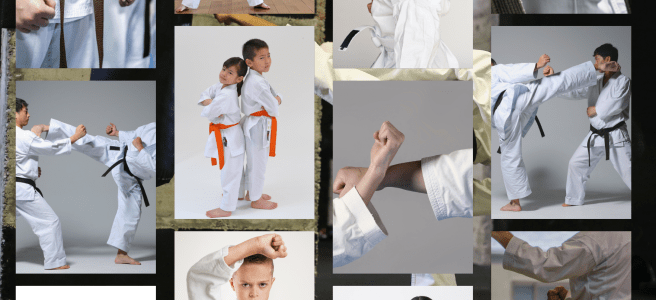

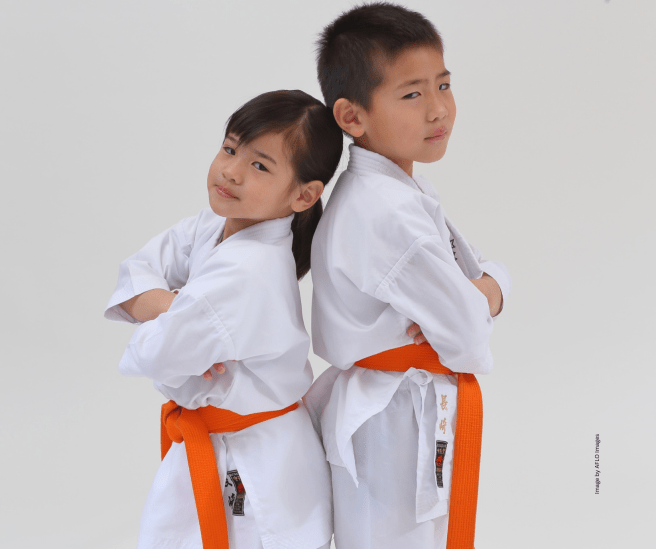
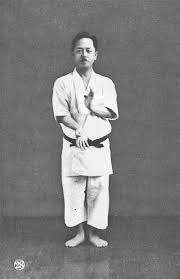
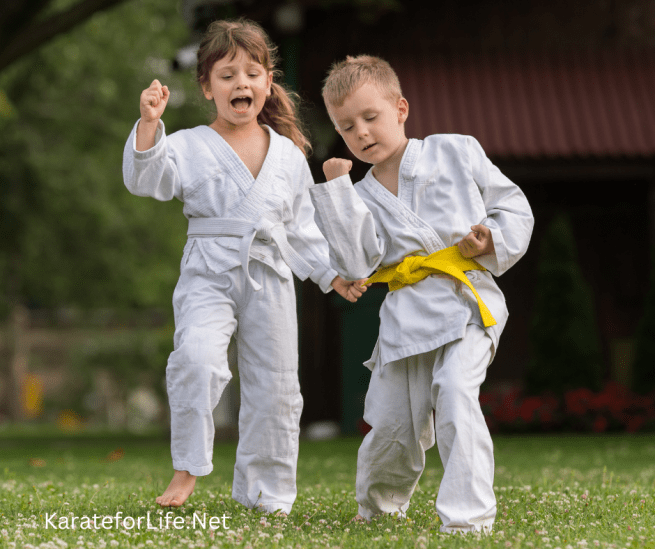
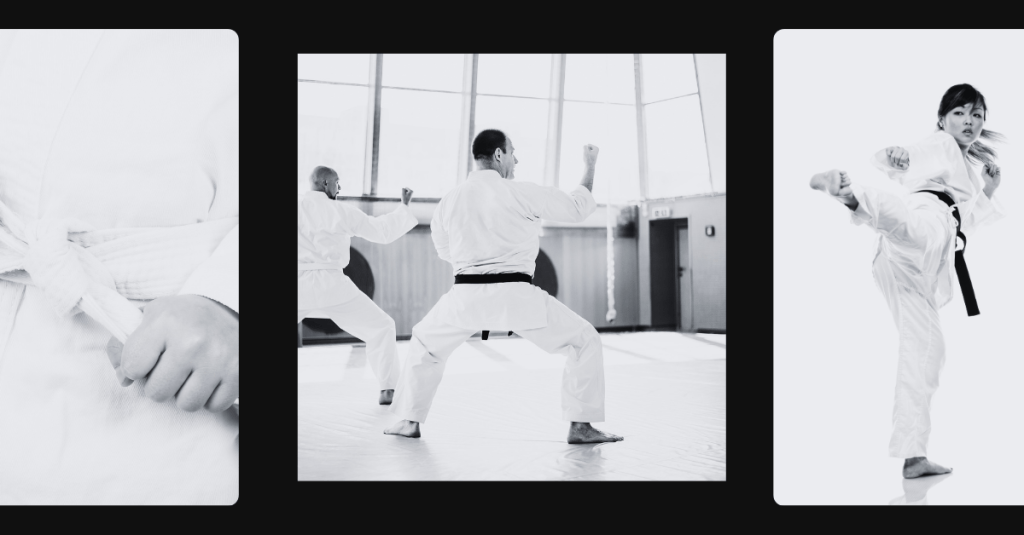


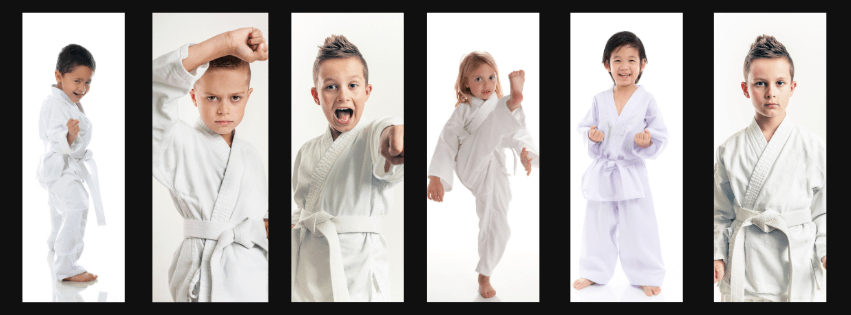
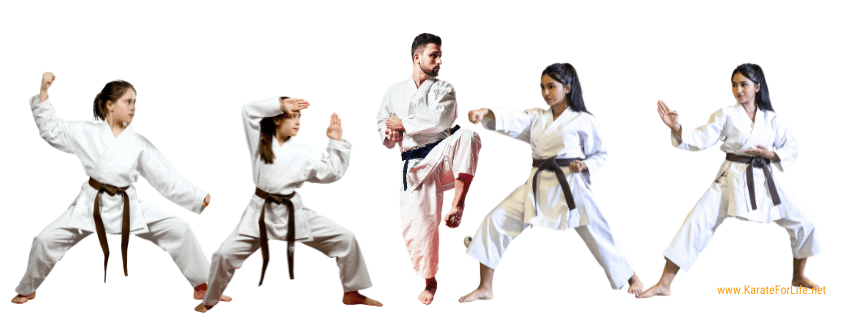
 karateforlife.net
You must be logged in to post a comment.