
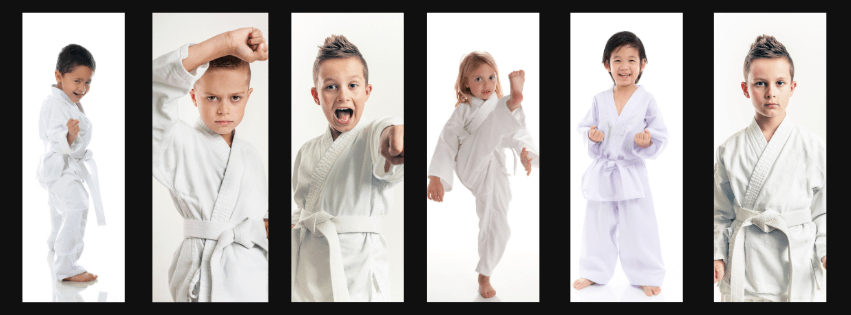
In the dimly lit corner of every traditional dojo, there is often a corner where new students wait, nervously adjusting their fresh, stiff white belts. Their eyes dart between the fluid movements of senior students and their own uncertain reflections in the mirror. Every person in that dojo – from the newest white belt to the most seasoned black belt – shares a common beginning: that first step onto the mat.
Lao Tzu told us that, “the journey of a thousand miles begins with a single step”, and in karate, that step often comes with a mix of excitement, uncertainty, and perhaps a touch of fear. It’s a profound moment of vulnerability, admitting that you know nothing and are ready to learn. This humility, rather than being a weakness, becomes the foundation of your entire martial arts journey.
Many newcomers to karate are surprised to learn that some of the most respected masters in history began their journeys with similar uncertainties. Gichin Funakoshi, often called the father of modern karate, started as a sickly child looking to improve his health. Mas Oyama, known for his incredible physical feats, was once a beginner struggling with basic techniques. These masters weren’t born with their skills – they developed them through years of dedicated practice, starting from the very beginning, just like everyone else.
One of the most common misconceptions about karate is that you need to be naturally athletic, flexible, or coordinated to begin. This couldn’t be further from the truth. Karate is a journey of personal transformation that meets you exactly where you are. Whether you’re young or old, athletic or sedentary, confident or shy, the dojo welcomes all who come with an open mind and willingness to learn.
The beauty of karate lies in its scalability. Every technique can be modified and adapted to suit your current ability level. As you progress, these modifications gradually fall away, replaced by more refined movements. This progressive approach ensures that everyone can practice safely while continuously challenging themselves to improve.
The Physical Journey Begins
The first few months of karate training typically focus on fundamental movements: basic punches (tsuki), kicks (geri), and blocks (uke). These foundations might seem simple, even repetitive, but they contain profound lessons that even advanced practitioners continue to explore decades into their training.
Consider the front punch (oi-zuki). At first glance, it appears straightforward – extend your fist forward with power. However, within this simple movement lies a complex interplay of body mechanics:
- Proper weight distribution
- Hip rotation
- Shoulder alignment
- Wrist positioning
- Breath control
- Mental focus
Each of these elements offers a lifetime of study and refinement. As you progress, you begin to understand that mastery isn’t about learning more techniques but about deepening your understanding of the basics.
Beyond the Physical: The Mental Transformation
While the physical aspects of karate are immediately apparent, the mental and spiritual development often catches newcomers by surprise. The dojo becomes a laboratory for self-discovery, where students learn as much about themselves as they do about martial arts.
The regular practice of karate naturally develops:
1. Mental Discipline – training requires focus and dedication. The simple act of showing up consistently, especially when motivation wanes, builds mental strength that extends far beyond the dojo.
2. Emotional Control – learning to control your body under pressure naturally leads to better emotional regulation. The calm focus required during kata and kumite becomes a valuable skill in daily life.
3. Self-Confidence – as you overcome challenges and master new techniques, you develop a quiet confidence that comes from genuine achievement rather than external validation.
4. Mindfulness – the intense focus required in karate training naturally promotes mindfulness. Students often find that their practice becomes a form of moving meditation.
The Social Dimension
One of the most unexpected aspects of karate training is the strong sense of community that develops. The dojo becomes more than just a place to learn martial arts — it becomes a second home where lasting friendships are forged through shared experiences and challenges.
This social aspect plays a crucial role in development. Training partners become mirrors, reflecting our strengths and weaknesses. Senior students provide guidance and inspiration, while helping newer students reinforces our own understanding. The relationship between teacher (Sensei) and student becomes a model for respectful learning that extends into other areas of life.
Embracing the Beginner’s Mind
In Japanese martial arts, there’s a concept called “shoshin” (初心), which translates to “beginner’s mind.” It refers to having an attitude of openness, eagerness, and lack of preconceptions, even when studying at an advanced level. This concept is crucial for understanding that being a beginner is not just a temporary state to be overcome, but a valuable mindset to maintain throughout your journey.
Every time you learn a new technique, face a new challenge, or train with a different partner, you can embrace the beginner’s mind. This approach keeps your training fresh and allows for continuous growth, even after years or decades of practice.
The Never-Ending Journey
As you progress in karate, you begin to understand that the path has no end. Each achievement opens the door to new challenges, deeper understanding, and further growth. The black belt, often seen as the ultimate goal by beginners, is really just the beginning of a deeper study.
This endless potential for growth makes karate such a powerful vehicle for self-discovery. There’s always another layer to uncover, another aspect to refine, another challenge to face. The journey becomes not about reaching a destination, but about who you become along the way.
Starting Your Own Journey
If you’re considering beginning your own karate journey, remember these key points:
1. Everyone Starts as a Beginner
No matter how skilled someone appears now, they once stood where you stand. Every expert was once a novice.
2. Progress at Your Own Pace – your journey is unique to you. Don’t compare your chapter one to someone else’s chapter twenty.
3. Embrace the Process – focus on small, consistent improvements rather than dramatic transformations. The joy is in the journey, not just the destination.
4. Stay Open-Minded – be ready to challenge your assumptions and learn from everyone around you, regardless of their rank or experience level.
5. Commit to Consistency – regular practice, even if brief, yields better results than sporadic intense training.
The journey of karate is ultimately a journey of self-discovery. Through consistent practice, mindful study, and patient progression, you’ll discover capabilities you never knew you had. You’ll face challenges that seem insurmountable, only to overcome them through persistence and dedication.
Remember, every master was once a beginner. The only difference between them and those who never achieve mastery is that they began the journey and stayed the course. Your own journey of self-discovery through karate awaits. The first step is simply showing up and being ready to learn.
Take that step. Tie on that white belt. Join the generations of practitioners who have discovered that karate is not just about learning to fight – it’s about learning to live with purpose, dignity, and continuous growth. Your journey begins now.
 karateforlife.net